Marketing teams are producing more content, managing more channels, and coordinating with more stakeholders than ever before. Yet the systems that support collaboration haven’t always kept up.
If you’ve worked on a busy marketing team, the pain points are familiar.
- Deadlines slip because feedback arrives late.
- Slack threads stretch into dozens of messages.
- Comments live in Google Docs, email, project tools, and direct messages at the same time.
- Teams are expected to ship more campaigns with the same headcount.
And experienced project managers who can bring order to the chaos are increasingly difficult to hire.
At the same time, expectations for marketing performance continue to rise. AI tools have leveled the playing field for content creation, which means more brands can produce high volumes of marketing work. The real competitive advantage now comes from execution. Teams that move faster, collaborate clearly, and eliminate wasted effort are the ones that consistently deliver results.
That’s where strong team collaboration strategies make the difference.
Instead of constant context switching and unclear ownership, marketing teams with strong collaboration processes operate with clarity. Everyone knows what they’re responsible for, how work moves forward, and where communication happens.
Why Team Collaboration Is So Hard For Marketing Teams
Marketing work is naturally collaborative.
A single campaign might involve content writers, designers, social media managers, SEO specialists, paid media teams, product marketing, sales leadership, and executive stakeholders.
But coordination across those groups is where problems often start.
- Multiple stakeholders bring different priorities.
- Timelines are often aggressive.
- Campaign requirements shift quickly as strategies evolve.
Because of this, marketing team collaboration frequently breaks down when communication lacks structure.
The good news is that most collaboration problems aren’t caused by people. They’re caused by missing systems.
The right collaboration strategies bring structure to how marketing teams plan, communicate, and execute their work.
Strategy 1: Build Clear Ownership For Every Marketing Project
One of the fastest ways to improve marketing project management is to define ownership clearly.
Many teams fall into the trap of shared responsibility. Everyone is technically responsible for a project, which often means no one is fully accountable for its completion.
A simple ownership structure helps avoid this problem.
For each marketing project, define three roles.
Owner
The person responsible for making sure the project moves forward and gets completed.
Contributors
Team members who actively work on parts of the project.
Reviewers
Stakeholders who provide feedback and approvals.
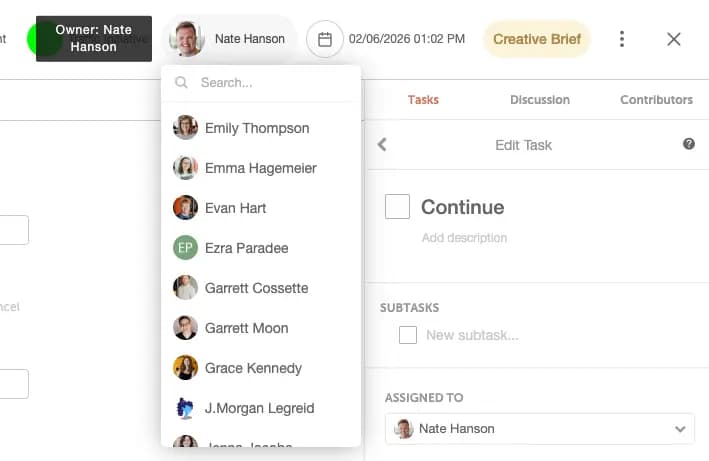
When ownership is clear, collaboration becomes more efficient. Team members know who to contact with questions, who makes final decisions, and who keeps timelines on track.
Visibility also plays a major role in accountability. When projects clearly display owners and deadlines, teams are far more likely to follow through on commitments.
Strategy 2: Centralize Communication Around The Work
Many marketing teams struggle with scattered communication.
A single campaign might involve conversations in Slack, comments in documents, status updates in meetings, and feedback sent through email. Important details quickly become difficult to track.
Centralizing collaboration solves this problem.
Instead of discussing work in separate tools, conversations should happen directly alongside the work itself. Feedback, updates, and decisions stay connected to the task or project they relate to.

This approach creates several benefits.
- Team members no longer need to search across tools for context.
- New contributors can quickly understand project history.
- Feedback stays organized and actionable.
For marketing teams, collaboration tools designed around campaigns and content calendars make this especially effective. When communication happens directly within the project timeline, teams spend less time searching for information and more time moving work forward.
Strategy 3: Create A Repeatable Content Collaboration Process
Content creation is one of the most collaborative parts of marketing. Writers, editors, designers, SEO specialists, and social media managers often contribute to the same asset.
Without a defined content collaboration process, this workflow can easily become chaotic.
A repeatable process helps teams move ideas from concept to publication without unnecessary delays.
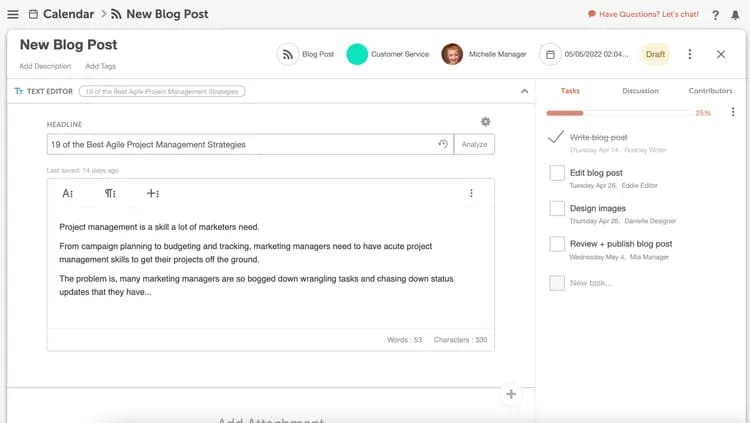
Start by documenting the typical lifecycle of a content project.
- Idea generation
- Draft creation
- Editing and feedback
- Design or visual assets
- Final approval
- Publishing and promotion
Each stage should have clear expectations. Who reviews the work? How is feedback delivered? How many revision rounds are expected?
Standardized workflows reduce confusion and prevent bottlenecks. Instead of reinventing the process for every blog post or campaign asset, teams follow a system that keeps work moving smoothly.
Over time, these processes become one of the biggest drivers of marketing team productivity.
Strategy 4: Use Cross Functional Collaboration Without Slowing Work Down
Cross functional collaboration in marketing is essential. Campaigns often require support from product teams, sales leaders, designers, analysts, and executives.
However, involving too many stakeholders at the wrong time can slow work down.
The key is to bring people into the process early enough to avoid surprises but not so frequently that collaboration turns into endless meetings.
One effective approach is to identify the critical input points in a project.
For example, product marketing might provide messaging guidance early in campaign planning. Designers may review creative direction before production begins. Sales leaders might validate positioning before launch.
By identifying when each group should contribute, teams can gather valuable insights without interrupting progress.
Structured collaboration prevents last minute changes and keeps projects moving efficiently.
Strategy 5: Make Collaboration Visible With Shared Timelines
Many marketing problems happen because teams lack visibility.
Content creators don’t see upcoming campaigns. Social media managers discover promotions too late. Designers receive last minute requests because project timelines weren’t shared.
Shared timelines solve this problem by giving the entire team a clear view of what’s happening next.
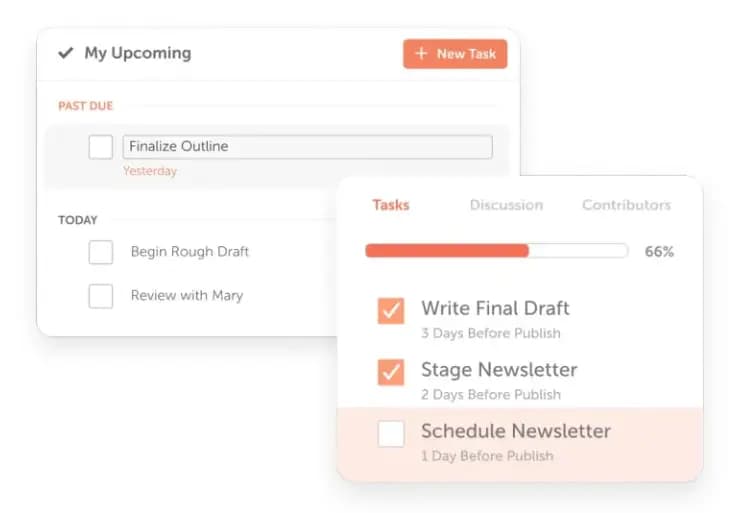
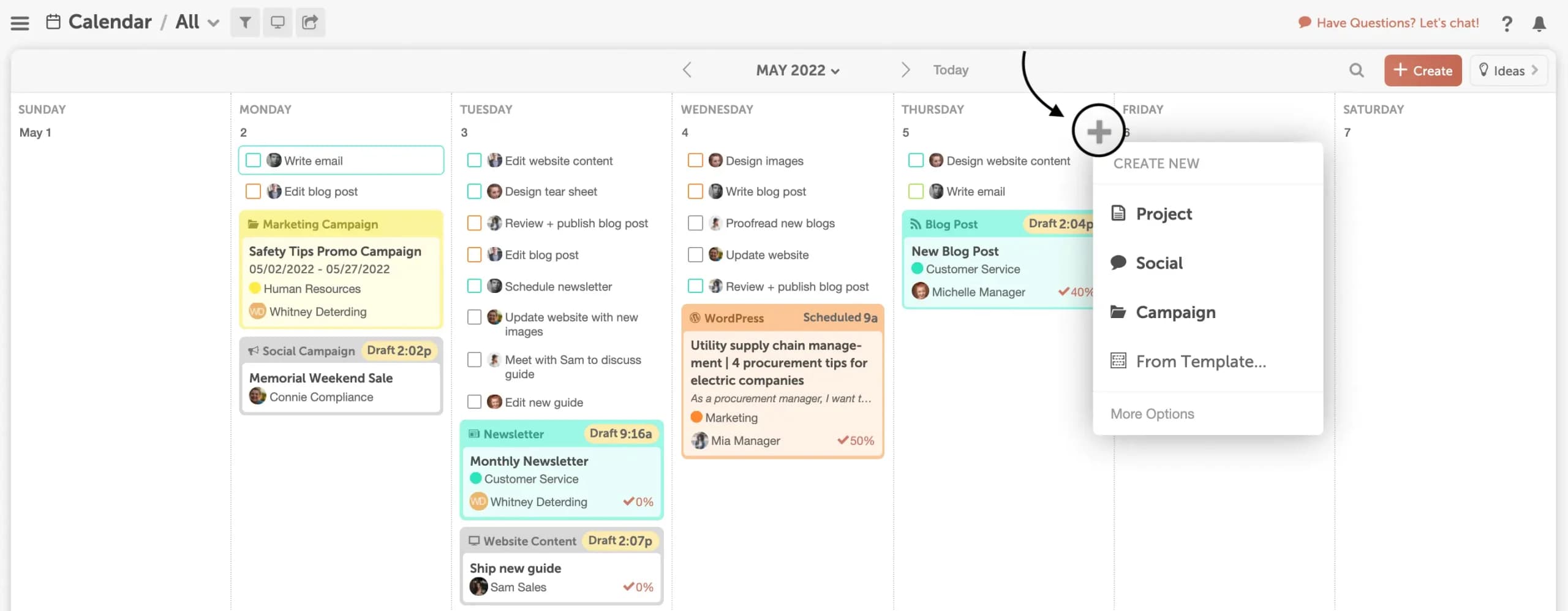
Marketing calendars make collaboration visible.
Teams can see upcoming blog posts, social campaigns, product launches, and promotional campaigns in one place. Dependencies become easier to manage, and teams can plan work together instead of operating in silos.
Visibility also helps reduce burnout.
When managers can see the full marketing workflow, they’re better equipped to balance workloads and prevent overlapping deadlines.
Instead of reacting to surprises, teams collaborate around a shared plan.
Strategy 6: Support Remote And Hybrid Marketing Teams
Remote work has changed how many marketing teams collaborate.
Distributed teams can work incredibly efficiently, but they require different collaboration habits than traditional office environments.
Remote marketing team collaboration works best when communication is intentional and well documented.
Asynchronous collaboration becomes especially important. Instead of relying on meetings for updates, teams document decisions, provide feedback in shared tools, and track project progress transparently.
A few practices help remote teams stay aligned.
- Clear project deadlines and task owners
- Written feedback and documentation
- Shared project dashboards or calendars
- Structured workflows that guide work forward
When these systems are in place, remote teams often move faster because collaboration doesn’t depend on everyone being online at the same time.
Strategy 7: Automate What Slows Collaboration Down
Many collaboration delays are caused by manual work.
Team members spend time assigning tasks, sending status updates, or reminding stakeholders to review projects. These small actions add up and slow the entire workflow.
Automation helps remove these friction points.
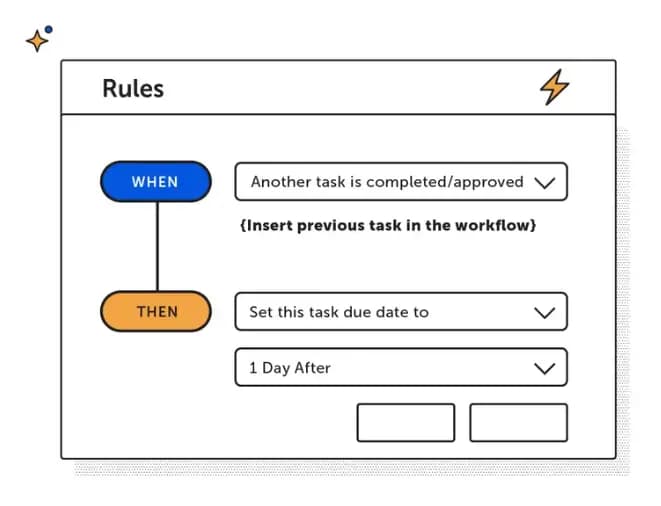
For example, workflows can automatically assign tasks when a project reaches the next stage. Notifications can alert reviewers when feedback is needed. Status updates can be generated automatically as work progresses.
Instead of spending time coordinating logistics, teams focus their collaboration on creative and strategic work.
Automation doesn’t replace collaboration. It supports it by removing the busywork that gets in the way.
How CoSchedule Helps Marketing Teams Collaborate Better
While strong collaboration strategies are important, the tools teams use also play a major role.
Many collaboration platforms are built for general project management, not the specific needs of marketing teams. As a result, marketing work often gets forced into systems that don’t fully support campaigns, content planning, or editorial workflows.
CoSchedule was designed specifically for marketing collaboration.
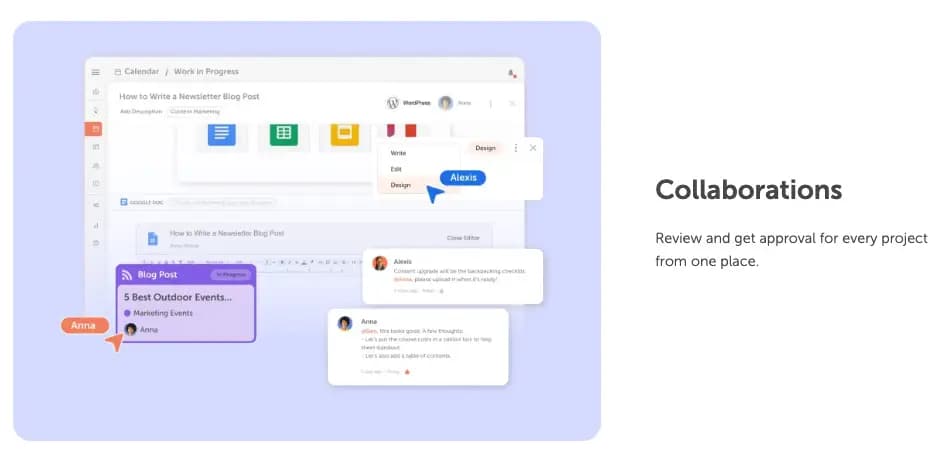
Its centralized marketing calendar gives teams a complete view of campaigns, projects, and content in one place. Everyone can see what’s planned, what’s in progress, and what’s coming next.
Built in workflows make it easy to assign task ownership, define contributors, and keep projects moving through structured processes.
Most importantly, collaboration happens around real marketing work. Feedback, updates, and planning stay connected to the campaigns and content that teams are actually producing.
For marketing teams and agencies managing high volumes of work, this structure makes collaboration dramatically simpler.
Try CoSchedule To Put These Team Collaboration Strategies Into Action
Strong collaboration doesn’t happen by accident. It’s the result of clear ownership, structured processes, shared visibility, and the right tools.
But the easiest way to apply these strategies consistently is with a system designed specifically for marketing workflows.
CoSchedule helps teams plan campaigns, manage projects, centralize communication, and automate repetitive tasks inside one unified marketing calendar.
If your team is ready to reduce chaos and collaborate more effectively, try CoSchedule and see how much smoother marketing execution can become.