
Not long ago, tracking brand visibility felt manageable. If you ranked well in search, stayed active on social, and supported it with paid campaigns, you had a clear sense of what was driving attention.
Now it’s scattered.
Your brand shows up in search results, LinkedIn feeds, AI-generated summaries, newsletters, Slack communities, and private groups. Each platform works differently. Each distributes content on its own terms.
When attention is this fragmented, depending too much on algorithms or paid reach puts your performance at risk. One pricing shift or algorithm update, and your visibility drops.
That’s why owned media now plays a larger strategic role in marketing today.
What Is Owned Media?
Owned media is any marketing channel your brand fully controls. If you can publish to it without paying for placement and you manage the audience relationship directly, it’s owned.
Common owned media channels are:
- Your website
- Your blog
- Your email list
- Your podcast
- Your social media profiles
- Your gated resources and content hubs
These channels function as marketing infrastructure. You decide what goes live, how it’s positioned, how long it remains live, and how it evolves.
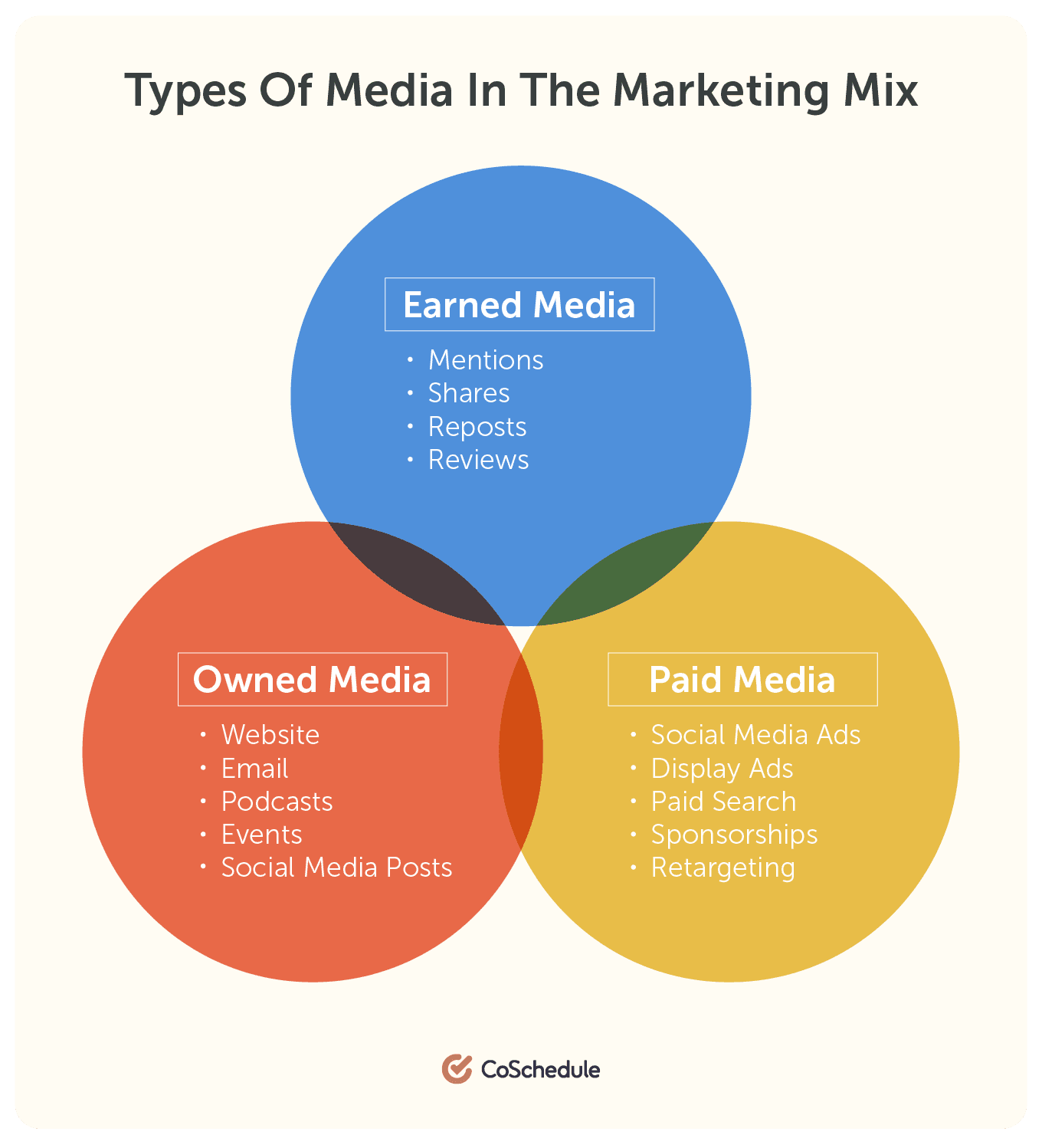
That control is what separates owned media from other media types:
- Paid media requires ongoing spend to stay visible (ads, sponsored placements).
- Earned media depends on others amplifying you (press mentions, backlinks, shares).
- Owned media is built and maintained by you.
All three matter in a balanced marketing mix. But only owned media compounds.
Paid campaigns stop the moment the budget stops, and earned coverage creates only short-term spikes. On the other hand, owned media assets continue generating value long after publication.
Take email as an example. As your subscriber data deepens, your segmentation improves. Better segmentation leads to more relevant messaging. That drives higher engagement and faster conversions.
It’s no surprise that 1 in 4 marketers say email is their strongest channel for ROI, according to CoSchedule’s AI Marketing Statistics Report.
Why Owned Media Matters For Marketers And Agencies
When most visibility sits on platforms you don’t control, your marketing strategy turns reactive. Building owned media brings part of that growth back under your control and makes performance more stable.
Predictable Visibility
Publishing content aligned to buyer intent and nurturing subscribers creates recurring exposure you can measure and improve. You move from campaign-by-campaign thinking to optimizing a system. That eventually strengthens forecasting and makes growth sustainable.
Control Over Messaging And Audience
Owned channels let you shape the narrative in full. You choose how deeply to educate. You decide which use cases matter most. You frame your product within the broader category on your terms.
For agencies, this builds long-term authority for clients. When positioning is clear and consistent, paid and earned efforts perform with more efficiency because the owned foundation is already strong.
Easier To Measure And Optimize
Because owned media sits within your ecosystem, performance tracking is more structured. You can follow the journey from traffic to conversion to pipeline impact. You know exactly which assets contribute to revenue.
As planning, publishing, and measurement become systematized, agencies can apply the same framework across clients and industries.
Core Owned Media Channels To Invest In
Blog And SEO Content
For most brands, the blog anchors owned media.
SEO content captures demand when buyers are actively researching. When you publish around clear intent and connect related pieces through internal links, each article builds on the last.
Here’s what that looks like in practice:
- A B2B SaaS company ranks for high-intent problem searches and generates demo requests from buyers who didn’t know a solution existed.
- An agency publishes in-depth strategy guides that bring in qualified inbound leads.
- An ecommerce brand supports product pages with educational content that increases category rankings and lifts conversion rates.
Unlike paid ads, a strong SEO article stays visible without daily spend. When you distribute it through email and organic social, one asset fuels multiple touchpoints.
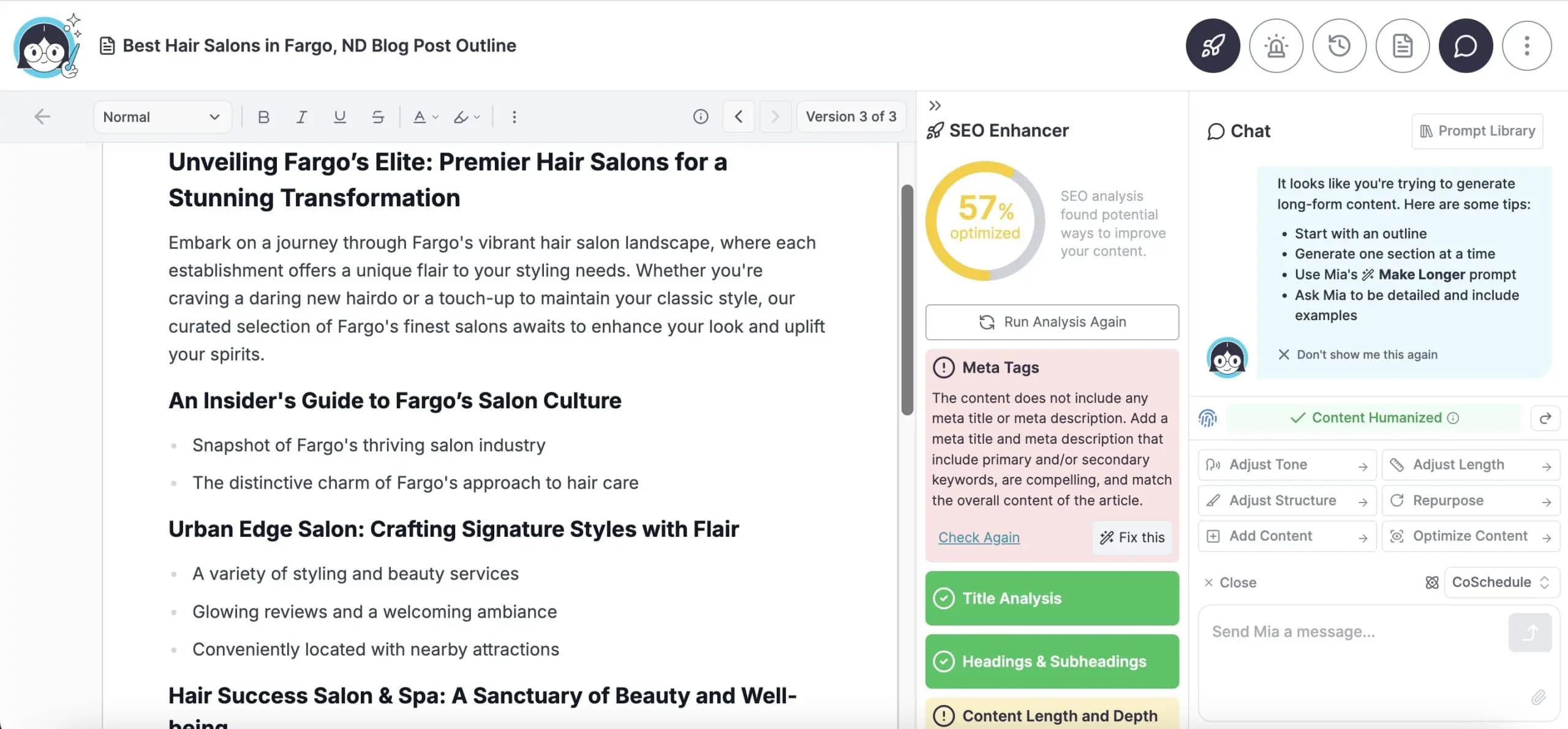
Top Tip: Use SEO Enhancer inside CoSchedule while you write. It shows your SEO score and highlights improvements for meta descriptions, structure, links, and overall optimization. Apply the recommendations before publishing to strengthen your blog posts and landing pages.
Gated Content And Resource Hubs
Gated assets—templates, reports, webinars, toolkits—convert anonymous traffic into known leads. When someone trades an email address for something specific they want, that gives you permission to nurture.
Resource hubs bring structure to your best work. Instead of scattered articles, you organize content around a focused theme so buyers can explore it logically. Depth builds trust, and structure improves discoverability.
Read More: A Framework to Kickstart Your B2B Content Strategy
Email Newsletters
Email gives you a direct line to your audience.
You can tailor messaging based on behavior, promote new content, and see exactly how subscribers move from click to purchase or demo. That makes it easier to refine your approach and improve performance over time.
It also connects your owned ecosystem. When someone discovers a blog post or downloads a resource, they enter your list. From there, your newsletter keeps the conversation going—sharing insights and new content, and bringing them back when they’re ready to act.
Social Media (Organic)
Organic social isn’t “owned” in the pure sense, but it’s still a practical part of the owned media system because you control your voice and publishing cadence.
Think of it as distribution infrastructure to support the broader content system. Your blog becomes LinkedIn posts, and gated reports can turn into educational threads on X.
How To Build An Owned Media Strategy That Works
An owned media strategy is a clear plan for building marketing assets you control—like organic traffic in focused topic areas or a steady inbound pipeline.
It outlines what you’re trying to grow, who it’s for, and how each piece of content supports that goal. It also connects performance to real business outcomes, whether that’s demos, qualified opportunities, or revenue influence.
Here’s how to build and execute an owned media strategy in 2026:
Step 1: Define Clear Goals And KPIs
Define the business outcome your owned media strategy is meant to drive. Are you trying to:
- Grow qualified organic traffic in specific categories?
- Build an email audience you can nurture over time?
- Increase demo requests from high-intent content?
- Strengthen authority in a competitive space?
Your answer determines how you build your owned ecosystem
If authority is the priority, you’ll invest in deep topic coverage and search visibility in key areas. If audience growth matters most, you’ll design strong entry points into your email list and focus on repeat engagement. For revenue influence, you’ll develop BOFU content that supports evaluation and pipeline movement.
Once the end goal is clear, success metrics become obvious—and every asset you publish has a role inside the system.
Step 2: Choose Your Core Focus Areas
Next, narrow the surface area.
Trying to publish across every topic weakens compounding. Strong owned media concentrates on defined themes that align with your product, positioning, and buyer journey.
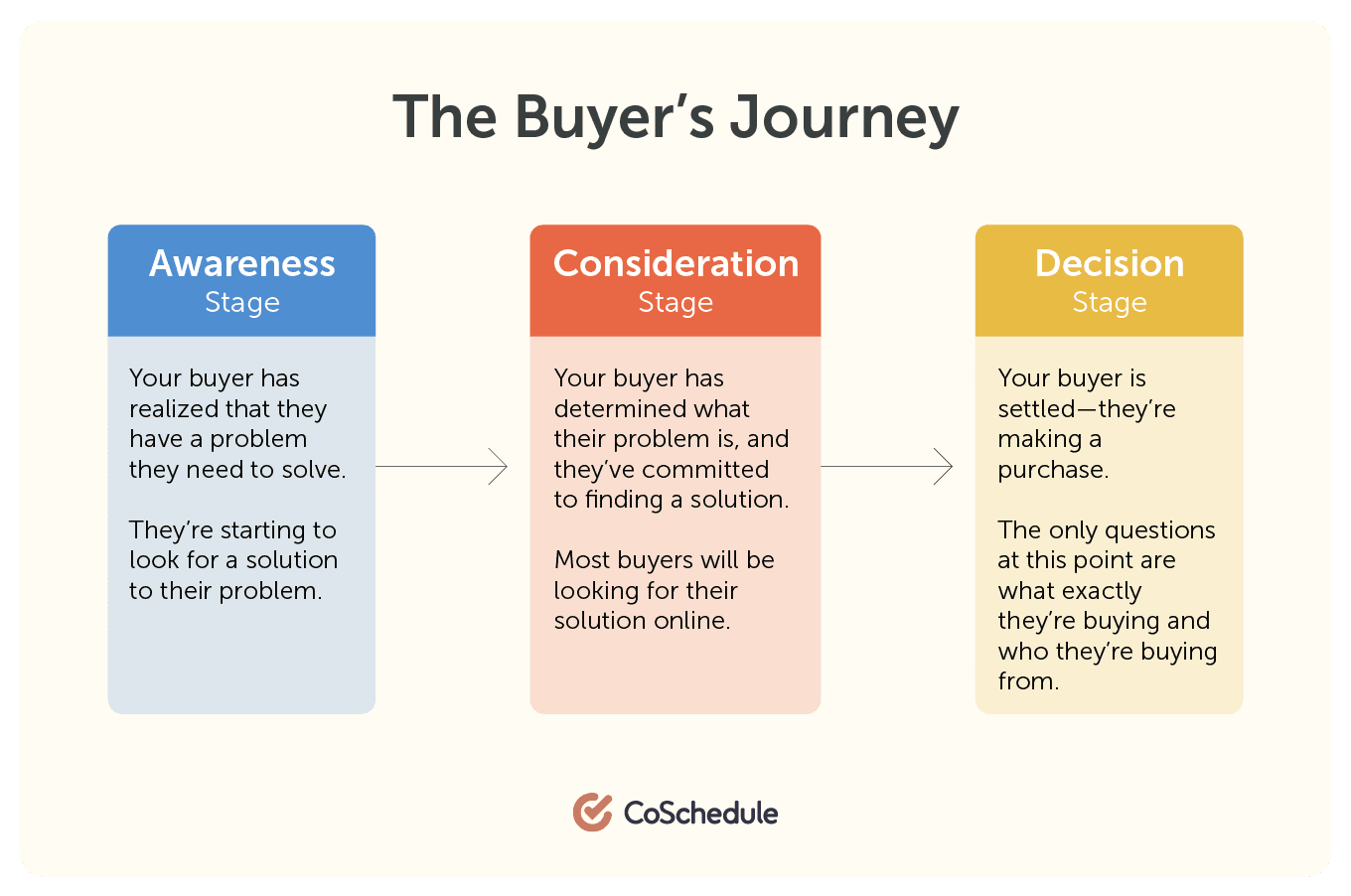 For example, a B2B SaaS company might decide to dominate one strategic problem area rather than covering ten loosely related topics. An agency might build authority around a specific service model or industry vertical instead of offering commentary on everything in marketing.
Clarity here creates depth. Depth builds authority. Authority drives demand.
Step 3: Map How Someone Moves Through Your Ecosystem
Think about progression.
When someone discovers your brand through a blog post, what should happen next? If they download a guide, how do you continue the conversation? If they attend a webinar, where do you direct them afterward?
Strong owned media reduces friction between touchpoints.
Suppose a reader finds an article on SEO strategy. Within that article, they see a link to a deeper framework guide. That guide invites them to subscribe for weekly insights. Then, the newsletter shares case studies and product education. Eventually, a demo request feels like a logical next step.
Notice how each asset connects intentionally. The path forward feels coherent, which helps increase engagement.
Step 4: Operationalize Publishing
Now you build cadence.
Consistency matters because compounding requires volume and reinforcement. Search visibility expands as coverage deepens. Trust strengthens when audiences see sustained effort.
Your cadence must match your resources.
That could mean:
- Two strategic articles per month tied to cluster expansion
- A weekly newsletter that sharpens positioning
- Quarterly updates to high-impact evergreen content
The key is sustainability.
Short bursts of output followed by long gaps stall momentum. A steady rhythm creates accumulation, which eventually turns into defensible visibility.
Step 5: Plan Distribution Before You Publish
Every asset needs a distribution plan before it goes live.
Before an article goes live, decide how it fits into the broader ecosystem. Will it anchor an email campaign? Support sales enablement? Be repurposed into LinkedIn posts?
Thinking about distribution early changes how you create.
You might structure the piece to answer specific objections sales hears regularly. You might design visuals that work natively on social media. You might add clear transitions to other assets that need more exposure.
When distribution is intentional, each asset works harder without increasing workload.
Step 6: Measure System Performance
Step back and look at the system as a whole.
Some assets will outperform others. That’s normal. What matters is whether your owned media, as a whole, is driving meaningful progress toward the goal you defined in Step 1.
Look at how your priority topics are performing over time. Are they gaining traction? Is your audience becoming more engaged and returning? Is content contributing to business outcomes you can trace?
When you review performance this way, you make smarter decisions. You build on what’s working, fix what’s underperforming, and strengthen the overall system without overreacting to short-term swings.
The Real Challenge: Operational Consistency
Owned media demands coordination across writers, designers, strategists, SEO specialists, and stakeholders. Without clear ownership and shared visibility, workflows drift. Planning happens in one place, deadlines in another, feedback somewhere else. Alignment from the kickoff rarely survives production.
As a result, your team misses deadlines because responsibilities aren’t clear. Campaigns overlap because no one sees the full calendar. Publishing slows because no one tracks dependencies in real-time.
Industry research reflects this pattern. Only 29% of marketers rate their content strategy as very or extremely effective, with workflow consistency cited as a major constraint.
Agencies feel this across multiple client accounts. In-house teams feel it through constant context switching between campaigns.
To ensure consistency, you need shared visibility and structured execution.
Turning Strategy Into Structured Execution With CoSchedule
CoSchedule brings blog posts, newsletters, campaigns, and social promotion into a single marketing calendar. This lets you manage your entire owned media plan in one place.
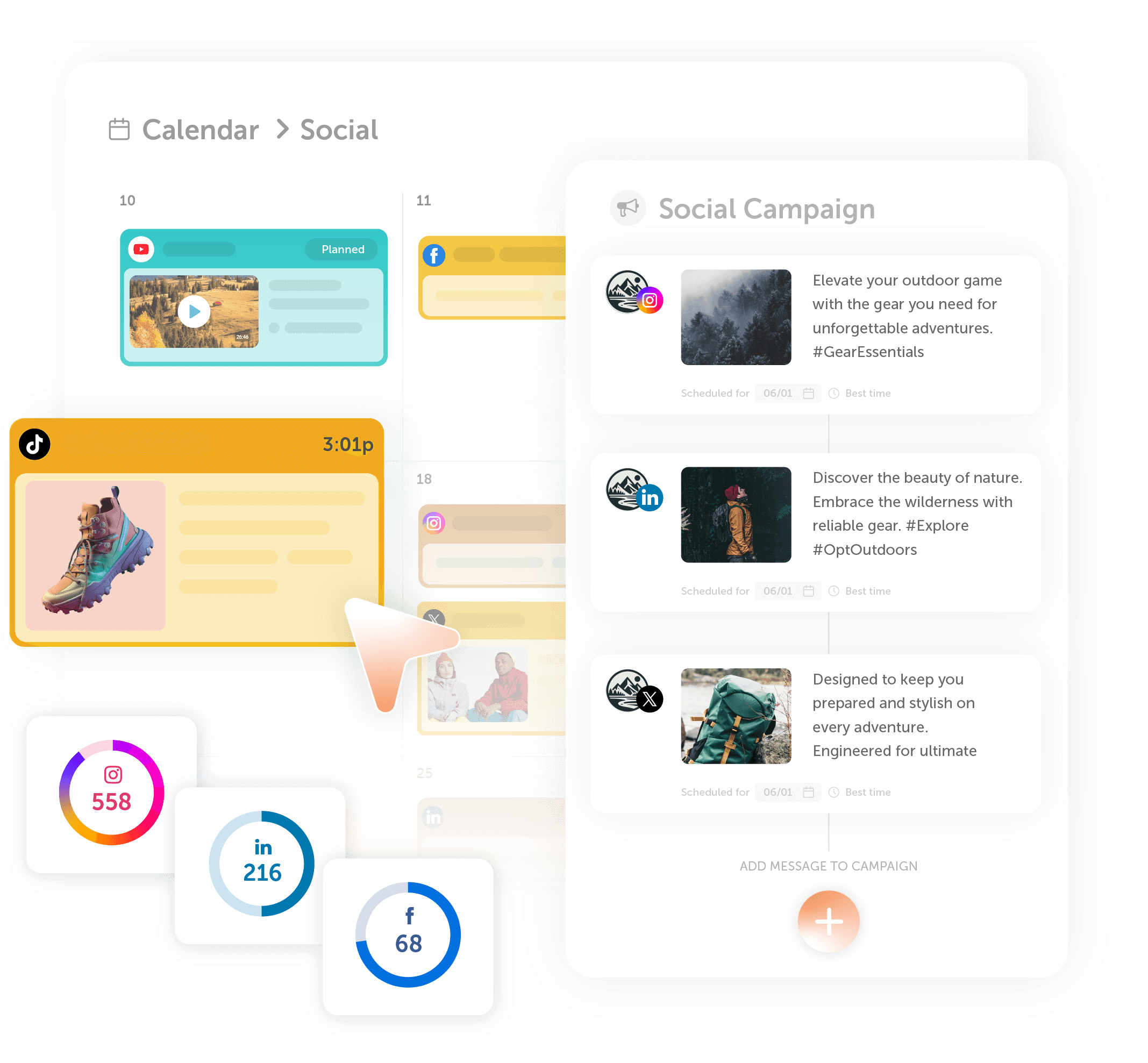
When you can see timelines, dependencies, and campaign context together, you map handoffs early and assign ownership clearly. Everyone understands how their work contributes to the larger initiative, so projects move forward without unnecessary friction.
As a result, publishing stabilizes. Your campaigns build on one another rather than overlap. Each asset supports a measurable goal, and performance reflects coordinated effort.
For agencies, this translates into more predictable timelines and better client transparency. For in-house teams, it reduces operational friction and tightens the connection between planning and execution.
CoSchedule gives you the operational foundation to accelerate your owned media efforts. Explore the platform and start building your next campaign inside a single, structured marketing calendar.

