
Every content library past a certain size hits the same fork. Organic traffic flattens. Meanwhile, the content calendar is full of topics pitched in the last planning meeting, and there is capacity for maybe eight pieces this quarter.
Fix what’s slipping, or publish what’s missing?
The wrong answer costs a quarter, sometimes two. Keep publishing while the best-converting posts decay, and the team ends up in a harder spot to explain: output goes up, traffic goes down, and leadership starts asking why the content budget stopped working.
Content still earns its budget when it’s run with discipline. It builds trust, holds search positions, grows subscriber lists, and feeds pipelines at a lower cost than most outbound programs.
Much of that return depends on making the refresh-or-create call correctly, one URL and one topic at a time.
What A Refresh Covers
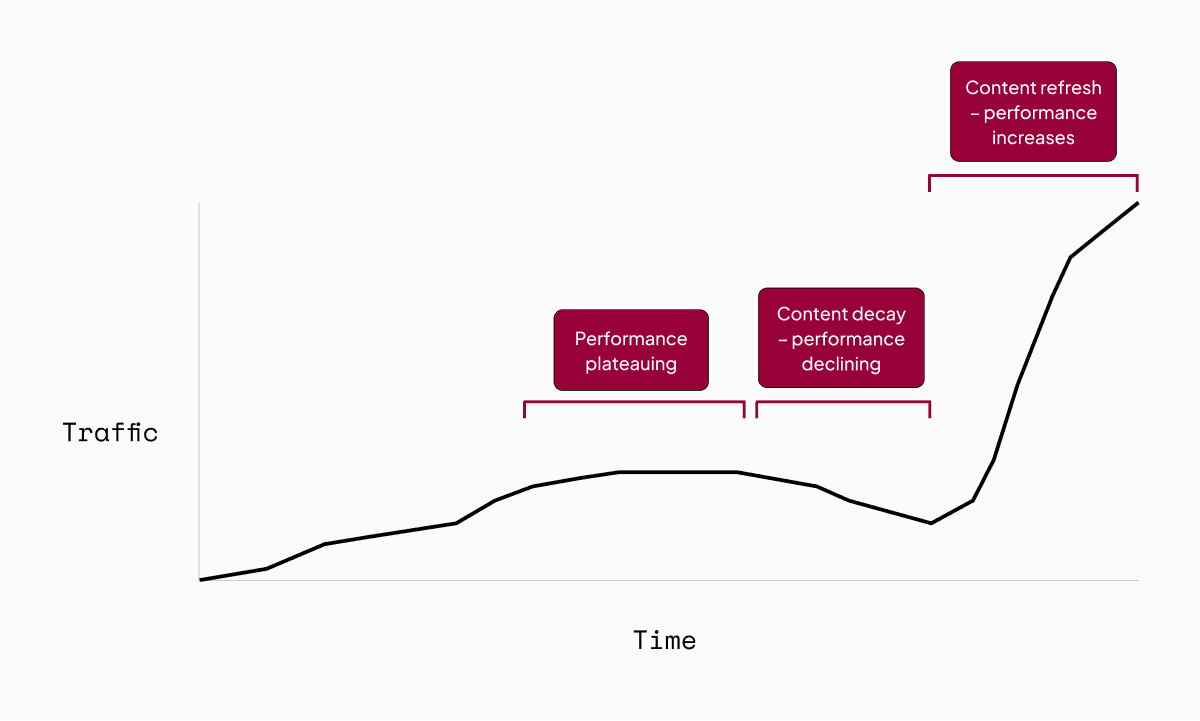
A refresh works on a URL that already has equity: backlinks, ranking history, internal links pointing at it, and whatever trust Google has built up for that page over a year or three. The job is to make it the best answer for its query again, using the assets it already has.
On a typical refresh, the work includes some mix of:
- Replacing stale statistics and broken source links
- Rewriting headers so they match what the current results page rewards
- Cutting the intro down so the answer arrives in the first few lines
- Adding subtopics that competing pages cover and yours skips
- Updating screenshots, which matters most for software walkthroughs where the interface has changed since publishing
- Fixing CTAs and internal links so a reader has an obvious next step
Bumping the publish date and changing nothing else does not count. Search engines compare the page against what was there before.
Freshness also carries more weight for some queries than others. Google’s ranking systems include a freshness component for searches where recent information is expected. A query like “best project management software” needs current pricing, current features, and current screenshots. “How to tie a bowline knot” will be answered the same way in ten years, and refreshing that page for recency alone rarely moves anything.
Bryan Henry, President of PeterMD, a men’s telehealth clinic that provides testosterone replacement therapy and hormone care online, sees how fast health content goes out of date.
He says, “In men’s health, clinical guidelines, insurance coverage, and treatment options change regularly. A page explaining TRT that was accurate two years ago can mislead a patient today. We review our educational pages on a schedule and treat every outdated statistic as a trust problem, because patients notice when the information doesn’t match what their doctor tells them.”
Content Decay
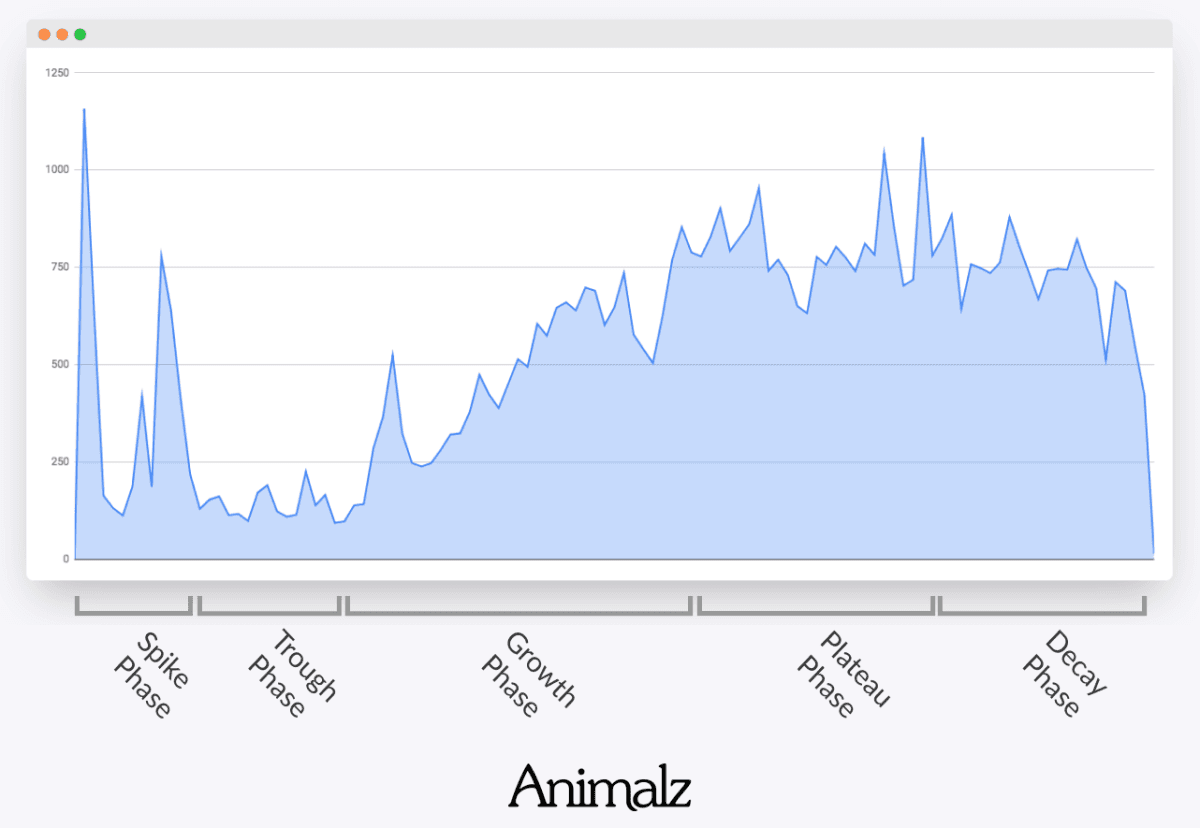
Most pages that lose traffic get there slowly.
A common version looks like this.
A software comparison post goes live and holds a top-three spot for two years. A competitor publishes a longer version with a pricing table, a feature matrix, and a current-year date in the title. The original drops to fifth, then seventh. Clicks fall by half over five months, but each monthly report shows a modest decline, the kind that gets blamed on seasonality.
By the time someone flags it, the page has also stopped producing the sign-ups it used to drive, and the competitor has picked up the backlinks that would otherwise have gone to the original.
How early the slide gets caught decides a lot. A page that slipped from second to sixth can usually be pulled back with a solid update. A page that slipped to page three a year ago may need a full rebuild, and by then a new URL is sometimes the cheaper option.
Animalz has a detailed breakdown of the decay pattern with charts that make the curve easy to recognize in your own data.
Gregor Emmian, Deputy Chief Digital Growth Officer at Rise, a mobile and web trading platform covering stocks, crypto, forex, and indices, deals with decay on a much shorter cycle.
He says, “Trading guides age faster than almost any other content. A guide to trading a particular market can be out of date after one volatile quarter, once spreads, regulations, or the assets people follow have changed. We track which guides lose engagement and update them before readers start trusting a competitor’s version instead.”
Signals That A Page Needs A Refresh
Pull these from Google Search Console and GA4:
- Organic clicks or impressions declining over the last three to six months
- Average position or CTR slipping for the page’s primary queries
- High impressions with low CTR, which usually points to a weak title, meta description, or angle
- Steady traffic with weak conversions, where CTAs, comparison blocks, or next steps need work
Then open Ahrefs or Semrush and look at the pages that recently passed yours. The gap is often visible within a minute: a section on pricing, an FAQ block, a use case for a segment your page never mentions.
What The Results Look Like
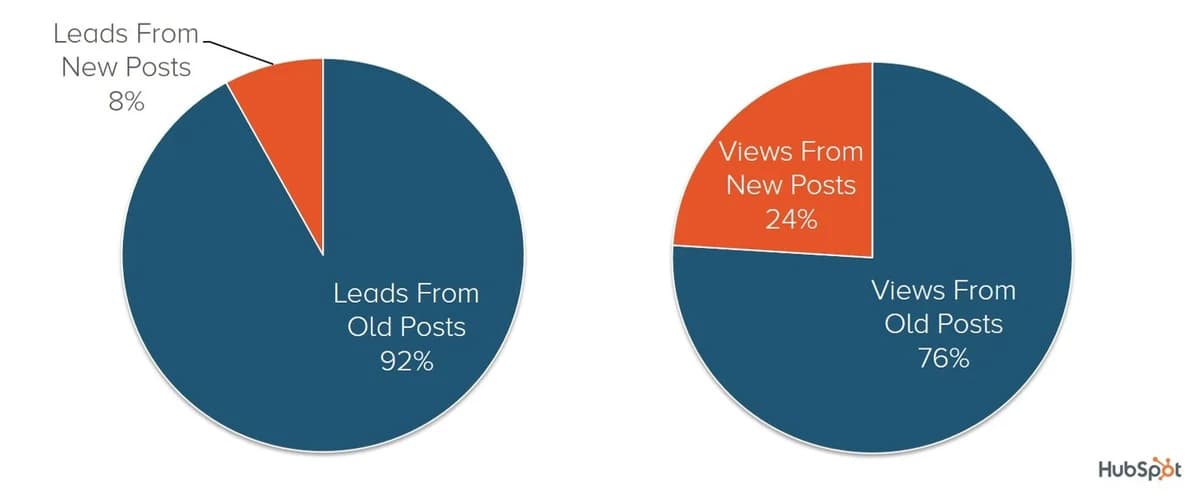
HubSpot built an entire program around this, which it calls historical optimization. The team prioritized older posts with proven performance and updated them on a structured schedule, and reported meaningful gains in both organic traffic and leads. They have kept teaching the playbook for years, which says something about how well it held up.
Backlinko took a more aggressive route with a single in-depth guide. A full content relaunch, with deeper research, new sections, better visuals, and a rewritten intro, produced a traffic lift of more than 260%. The page was central to the site’s topic authority, so the effort paid back far more than a new post on the same budget likely would have.
When New Content Earns Its Cost
No amount of updating will get a page about onboarding checklists to rank for “customer churn prediction.” Some queries need their own URL, and some audiences will never find you through the pages you already have.
New content tends to justify the spend in three situations.
- Untapped keywords and rising topics. A product launches a new feature, a regulation changes, or a question starts showing up in sales calls that no page on the site answers. Google Trends and Exploding Topics help separate a real rise in interest from a one-week spike.
- Scale through repeatable formats. Zapier’s app integration pages are the standard example. Each page targets a specific “connect X to Y” query, and together they capture thousands of searches that no single guide could cover.
- Authority and links. Original research and statistics pages attract citations for years. Ahrefs’ SEO statistics page is a good model: other writers link to it every time they need a number. REI’s Expert Advice hub works on a similar principle for consumers, answering practical questions people ask long before they shop and moving readers toward products without forcing it.
Echo Mao, Head of Marketing at AIReel, an AI video generation platform that turns text and images into short-form video, sees each model release open up searches that older pages can’t answer.
She says, “Search behavior around AI video shifts every few months as new models launch. People search for how to use the new model, how it compares, and what it costs, and none of our older pages can answer those questions. Publishing new pages for each release brings in searchers who would never find an article written before that model existed.”
Where New Content Goes Wrong
The most common failure is volume without demand. Ahrefs found that the vast majority of pages get no organic traffic from Google, usually because they target keywords nobody searches or are too thin to compete. A team publishing four posts a week on topics picked from a brainstorm will add to that count.
Then there is the wait. A new URL starts with no backlinks and no ranking history, so it usually takes months to reach its potential. Any plan that needs traffic this quarter should not depend on posts that haven’t been written yet.
Refresh vs. New: The Trade-Offs
| Refresh | New content | |
|---|---|---|
| Effort | Lower. Builds on existing authority, links, and assets | Higher. Research, writing, design, and promotion from zero |
| Time to results | Weeks, sometimes days on strong pages | Months, with promotion and iteration |
| Upside | Recovered rankings, better CTR, stronger on-page conversion | New queries, new audiences, new link prospects |
| Main risk | Updating a page that never had demand | Publishing into keywords nobody searches |
Industry shifts the balance.
SaaS, fintech, and other fast-moving categories need frequent refreshes because pricing, features, and regulations change every few months, and a guide with last year’s screenshots loses trust fast.
Cooking, DIY, and outdoor skills reward building a large library of new evergreen pages, since a well-written guide to sharpening a knife can rank for years with light maintenance.
E-commerce falls somewhere in between. A retailer’s guide to designing custom t-shirts for a team event can hold its rankings for years with occasional updates, while a store selling patio furniture should refresh its category pages before every spring, when search interest climbs, and competitors update their own.
How To Make The Call
Start with the goal. If the quarter needs organic lift or pipeline contribution soon, lean toward refreshing. If the business is entering a new category, targeting a new buyer, or launching a product, lean toward new content. Then let the data confirm or overrule that lean.
Pull The Right Data
For existing URLs, look at six to twelve months of Search Console clicks, impressions, average position, and CTR, plus GA4 engagement and conversions. Check backlinks and whether the results page itself has changed. A SERP that now opens with a video carousel and an AI overview is a different competitive problem than the one the page was written for.
For new topics, check search volume, keyword difficulty, intent fit, SERP, the quality of what currently ranks, and whether there are realistic link prospects.
Greg McRoberts, Founder and CMO of Verde Fulfillment USA, a third-party logistics company that handles warehousing, order fulfillment, and shipping for e-commerce brands, judges content by what happens after the click.
He says, “Traffic alone tells us very little. A page about shipping rates can pull thousands of visitors who will never need a fulfillment partner. When we decide whether to update a page or write a new one, we look at which pages bring in brands that actually request a quote, and we put our time there first.”
Match The Situation To The Move
| What the data shows | Move |
|---|---|
| Declining clicks on a page with a ranking history | Refresh |
| High impressions, low CTR | Rewrite title, meta description, and intro, then test |
| Good traffic, weak conversions | Refresh CTAs, structure, and internal links |
| Outdated facts, examples, or screenshots | Refresh with current data |
| Topic not covered, or covered thinly | Create new |
| Growing trend or emerging query set | Create new |
| Product launch, new ICP, or category point of view | Create new |
Scope It Honestly
Refreshes come in three sizes. A quick tune takes an hour or two and covers titles, meta descriptions, a few stats, and internal links. A medium overhaul takes half a day to a day. A full relaunch runs several days and adds new sections and assets.
New content ranges from a short explainer to an in-depth guide, a data study, or an interactive tool. A data study can take weeks once you count data collection.
Mislabeling the size is how refresh projects blow up. A “quick update” that turns into a rewrite eats the time planned for three other pages.
Set Review Windows Before Shipping
Give refreshes 30 to 60 days and new content 60 to 120 days or longer before judging them. Track rankings, CTR, engagement, conversions, and assisted revenue. Agree on the window in advance, so nobody pulls a new post off the plan at week three because it hasn’t ranked yet.
Setting The Mix Each Quarter
Start the quarter with the 20 URLs that drive the most conversions, and check each one against the signals above. Any page showing decline gets a refresh slot before a single new topic is approved. The pages that pay the bills get protected first.
Whatever capacity is left goes to new content, ranked by search demand, difficulty, and how closely each topic connects to what sales is hearing. A topic that shows up in three customer calls in a month deserves a page even if the keyword tool shows modest volume.
At the end of the quarter, compare what each piece did within its review window and adjust the split. Some quarters will be mostly refreshes. A product launch quarter might be almost all new.
To keep refreshes and new content on one schedule, sign up for CoSchedule and plan your next quarter in its Marketing Calendar.
