
AI is now a standard tool of modern marketing. Teams use it to plan content, support campaigns, and improve execution speed. As adoption increases, many marketers realize that tools alone are not enough. They need practical AI marketing training that teaches real skills they can apply inside real workflows.
But AI does not replace marketers. It strengthens their ability to plan, create, and optimize. With structured AI marketing training, teams learn how to guide tools effectively, automate repeatable work, and make better decisions using clear data.
This guide explains what AI marketing training should include, how to use AI for marketing in daily work, and where to find reliable AI marketing training online.
Why AI Marketing Training Matters Right Now
AI tools are now part of daily work across content marketing, SEO, social strategy, and marketing operations. Most teams can access tools. Fewer teams know how to use them in a consistent, repeatable way. The real gap is not access. The gap is skill.
Without structured AI marketing training, teams often rely on trial and error. Prompts change from person to person. Workflows break when team members are out. Performance insights stay trapped inside tools instead of guiding real decisions.
Many teams struggle with:
- Writing clear, reusable prompts that produce predictable outputs
This includes knowing how to structure instructions, define constraints, and give the right level of context. - Automating workflows to save time
This includes knowing how to connect content creation, approvals, scheduling, and reporting into one process. - Using data to build practical dashboards
This includes turning raw analytics into clear views that show what is working and what needs attention. - Keeping content aligned with brand standards
This includes controlling tone, formatting, and accuracy when multiple people use AI tools.
Without AI marketing training, teams work more slowly, make more mistakes, and waste time rebuilding processes.
With structured AI marketing training, teams gain:
- Faster execution because prompts and workflows are standardized
- More consistent output because processes are documented and shared
- Better cross-team alignment because work is visible and traceable
- Stronger decision-making because data is easier to interpret
- The ability to work at scale because systems don’t depend on individual talent or tribal knowledge
AI marketing training has become a requirement for teams that want predictable performance and cleaner workflows.
What Effective AI Marketing Training Should Include
Prompt-Building Skills
Strong prompts are structured instructions that guide AI to produce usable work. Good AI marketing training teaches marketers how to write prompts that behave like operating procedures.
Key skills include:
- Setting a clear context so the AI understands the goal
- Defining audience and tone to control voice and style
- Using formatted instructions such as steps, bullet rules, and constraints
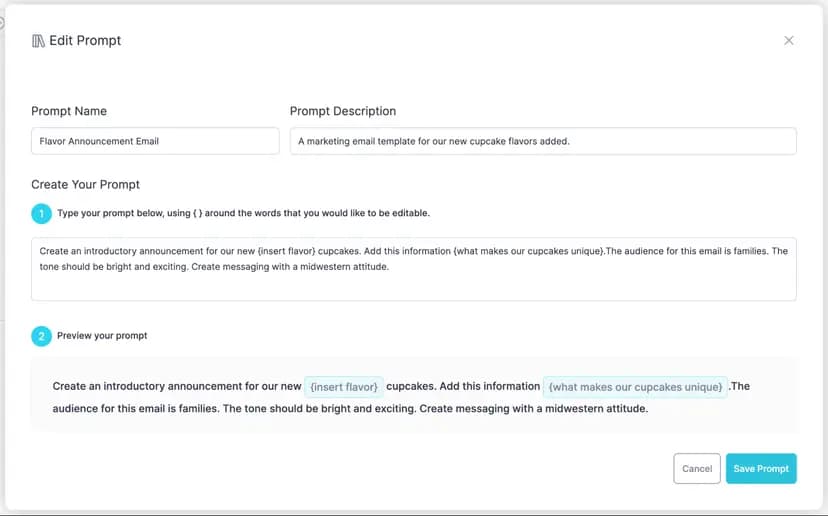
- Building reusable prompt templates that teams can store and share
When teams follow these structures, they spend less time editing and more time refining ideas.
Workflow Automation For Marketers
Workflow automation means using AI to reduce the number of manual steps in repeatable work. Effective AI marketing training shows marketers how to build simple systems that connect tasks.
Focus areas include:
- Automating social drafts by generating post variations from a single source
- Generating content outlines that follow consistent frameworks
- Creating briefs that pull in goals, audience, and channel details automatically
- Streamlining recurring reports so that performance summaries are created on a schedule
This reduces the number of handoffs and approval delays.
AI-Powered Dashboards And Reporting
Dashboards are shared workspaces that show project status and results. AI marketing training teaches teams how to turn data into clear, usable views.
Training covers how to:
- Summarize performance by highlighting trends instead of raw numbers
- Track campaign progress so teams can see bottlenecks
- Align tasks across teams so handoffs are visible
- Reduce unnecessary status meetings because work is documented
Dashboards give teams one source of truth.
Ethical and Brand-Safe AI Usage
Good AI marketing training includes safeguards.
This training covers:
- Voice consistency so content sounds like the brand instead of generic copy
- Fact-checking to prevent inaccurate claims
- Data privacy to protect internal and customer information
- Human review processes so AI output is approved before publishing
These practices protect credibility and reduce risk.
How To Use AI For Marketing In Your Daily Workflow
AI marketing training focuses on application. Teams learn how to use AI for marketing inside real tasks instead of one-off experiments.
Content Idea Generation
AI supports structured brainstorming by turning audience pain points, product features, and performance data into topic ideas. Teams can generate editorial calendars faster and reduce time spent staring at blank documents.
SEO Research
Teams use AI to:
- Identify keywords by analyzing search behavior patterns
- Build optimized outlines based on high-performing competitors
- Evaluate competitive content to find gaps
- Improve internal linking by mapping topic relationships
This creates stronger foundations before writing begins.
Repurposing Large Content Pieces
AI helps teams plan content reuse. A single long-form blog can be systematically transformed into:
- Social posts with different hooks
- Email content tailored to segments
- Video scripts built from key sections
- Landing page drafts that reuse messaging frameworks
This increases return on existing content.
Campaign Planning
Teams use AI to:
- Organize timelines by sequencing tasks
- Align messaging so each channel supports the same narrative
- Coordinate channels so content does not overlap or conflict
- Standardize asset creation so formats and lengths stay consistent
This improves execution speed.
Audience Research
AI helps summarize large data sets.
Teams can analyze:
- Engagement patterns across channels
- Interests based on behavior
- Common questions from comments and search data
This helps marketers make informed targeting decisions.
Social Media Batching
AI marketing training shows teams how to generate weeks of social content in one session by using structured prompts and consistent formats. This supports better scheduling and reduces daily posting pressure.
This section supports secondary terms such as AI marketing online course, AI marketing training online, AI marketing course, and how to use AI for marketing.
The Skills You Need To Become An AI-Powered Marketer
AI marketing training builds practical, job-ready skills that improve how marketers plan, execute, and optimize their work. These are not theoretical abilities. They are workflow skills that directly affect output, efficiency, and results.
Core abilities include:
- Prompt Engineering
Writing structured, repeatable instructions that produce consistent, high-quality outputs for content, campaigns, and strategy work.
- Workflow Design
Creating clear, repeatable systems that connect planning, creation, approval, and publishing into one organized process. - Tool Evaluation
Knowing how to assess AI tools based on security, reliability, use case fit, and team adoption instead of chasing new platforms. - Data Interpretation
Turning performance data into clear priorities, content improvements, and smarter campaign decisions. - Saved Automations
Building reusable systems that handle recurring work like scheduling, reporting, and content generation.
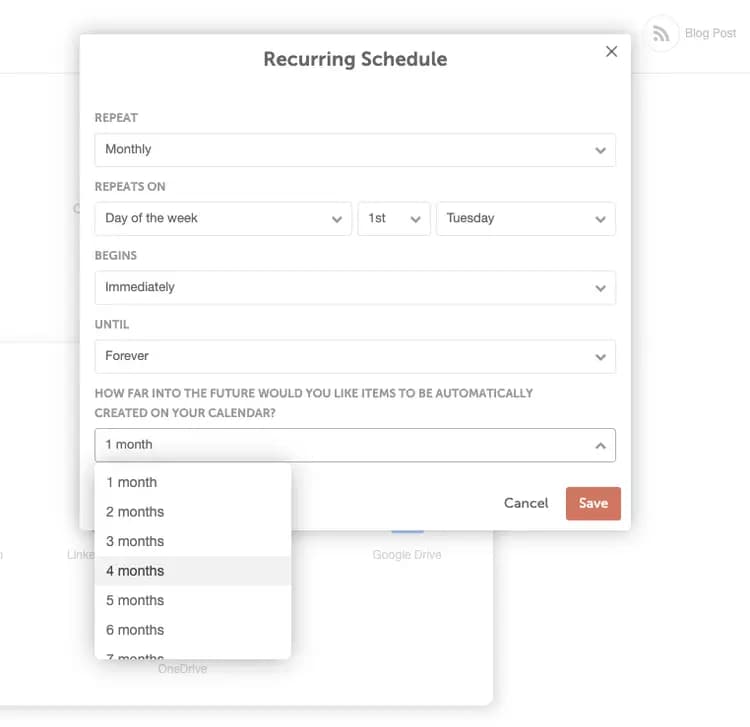
These skills give teams control over their workflows. Instead of reacting to deadlines or tool limitations, trained marketers build repeatable systems that support consistent output and better decision-making.
Where To Get High-Quality AI Marketing Training Online
Actionable Marketing Institute offers structured AI marketing training online that is built for real marketing work. The training is designed for teams that need reliable systems, not surface-level overviews.
AMI focuses on practical execution. Lessons are built around real marketing scenarios, not generic examples. The goal is to help marketers build workflows they can reuse every day.
Their programs provide:
- Step-by-step lessons that walk through complete marketing workflows
- Fill-in-the-blank prompt frameworks that remove guesswork
- Real-use workflow examples taken from active marketing teams
- Practical templates that can be applied immediately
Training covers:
- Prompt structure that improves output accuracy and reduces rework
- AI planning methods that align tools with real campaign goals
- Team adoption frameworks that help marketers standardize processes
AMI stands out because it teaches systems that teams can repeat, scale, and improve over time.
CoSchedule’s AI Tools For Marketers
Training only creates value when teams can apply what they learn inside real workflows.
CoSchedule provides the foundation to turn AI marketing training into everyday execution. The platform connects planning, creation, scheduling, and performance tracking into one system.
Core capabilities include:
- AI Prompt Library that helps teams store and reuse structured prompts
- AI automation that reduces manual work across content and campaign workflows
- AI dashboards that centralize tasks, timelines, and performance signals
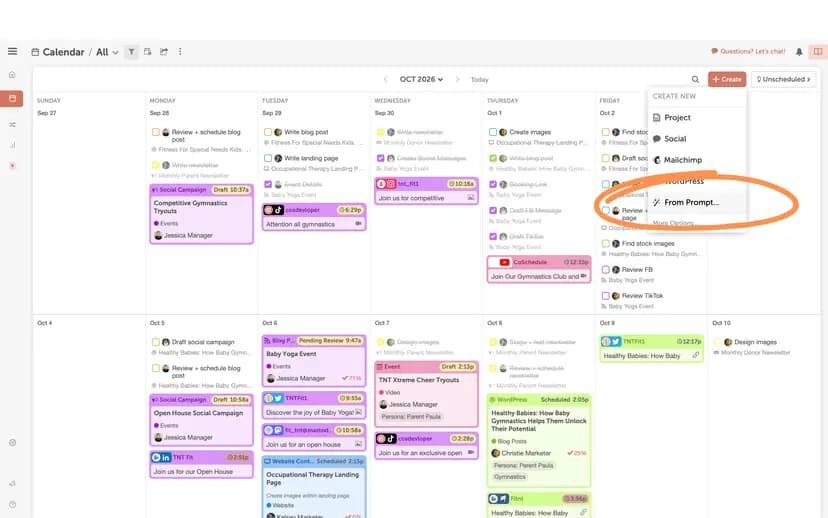
CoSchedule supports consistency and visibility. Teams can see what is being worked on, what is scheduled, and how content is performing without switching between systems.
When used together, AMI training and CoSchedule tools help marketing teams move from learning to execution without friction.
A Step-By-Step AI Marketing Training Plan For Your Team
- Identify AI-Ready Workflows
Start by mapping where your team spends the most time. Look for tasks that are repetitive, predictable, and happen on a schedule. Good examples include writing first-draft blog outlines, creating social post variations, summarizing meeting notes, building content briefs, and preparing weekly reports.
How to do this: Create a simple list of daily, weekly, and monthly tasks. Highlight any task that follows the same steps each time. Those tasks are your first AI training targets.
- Build A Standardized Prompt Library
A prompt library is a central document or workspace where your team stores reusable instructions for AI. Instead of rewriting prompts every time, teams save approved versions.
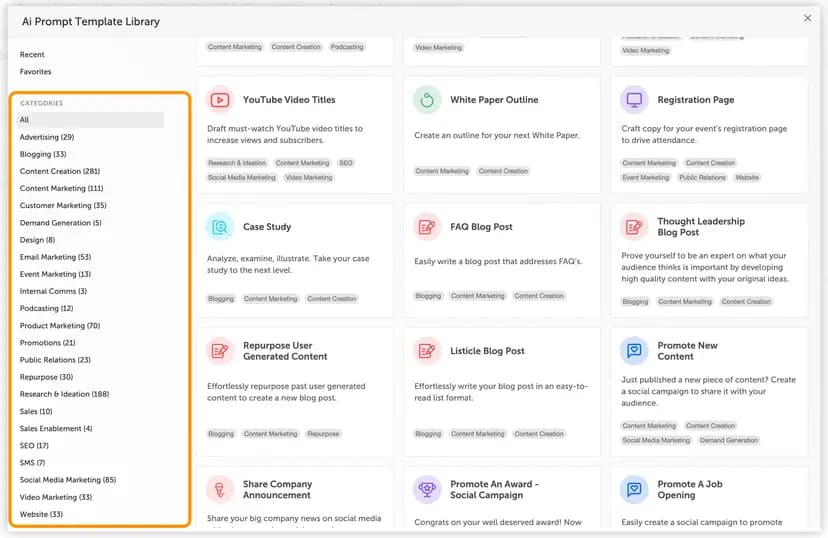
How to do this: Create shared prompts for common work such as blog outlines, social captions, email drafts, and campaign briefs. Store them in a shared workspace so everyone uses the same structure.
Inside CoSchedule, teams can save and reuse structured prompts to keep output consistent across contributors.
- Train Team Members Using AMI Lessons
Training works best when it is practical and tied to real work.
How to do this: Assign specific AMI lessons to team members and pair each lesson with a real task. For example, after prompt training, have the team build prompts for upcoming campaigns. After automation lessons, have them build one real automated workflow.
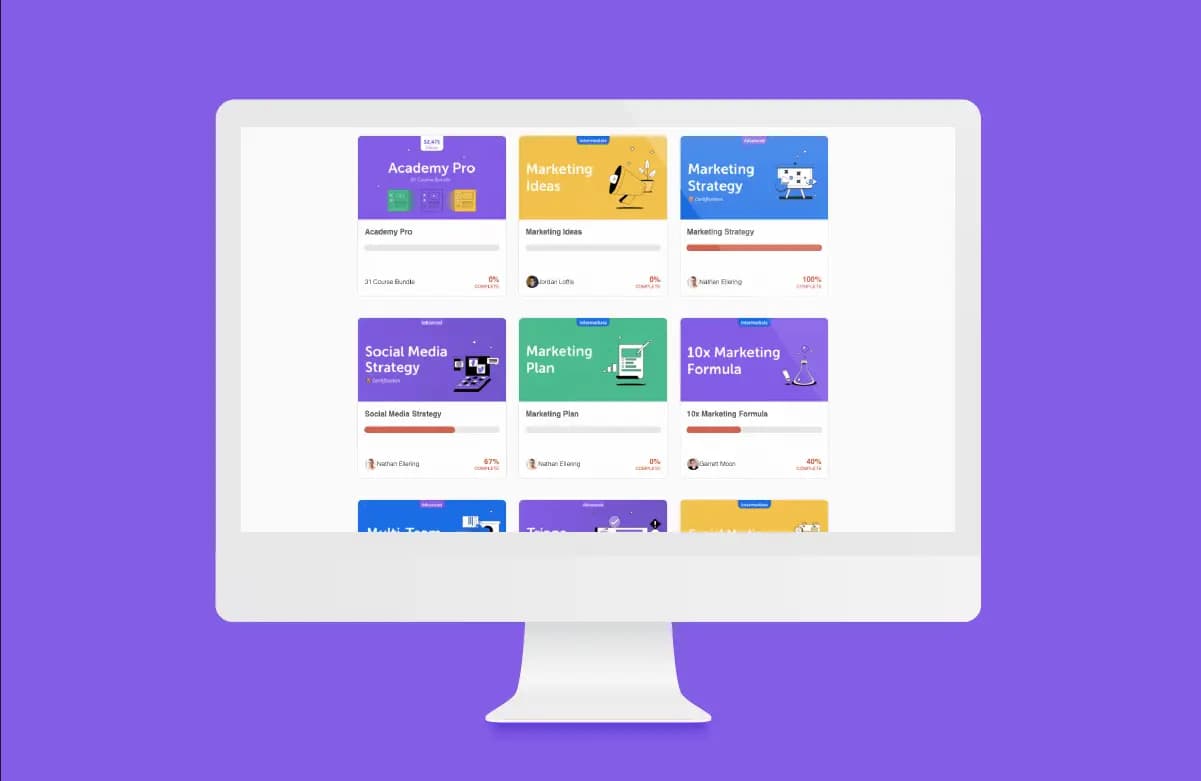
This approach turns AI marketing training into skill-building instead of theory.
- Implement Workflows Inside CoSchedule
Training becomes useful only when it is applied to real systems.
How to do this: Move your trained processes into CoSchedule by creating repeatable workflows, saved prompts, and shared calendars. Use CoSchedule to connect planning, creation, approvals, and publishing in one place.
This keeps AI work visible and controlled.
- Track Output And Performance
You should measure whether training is improving results.
How to do this: Track time saved on tasks, publishing consistency, campaign completion times, and engagement results. Use CoSchedule dashboards to monitor content performance and project progress in one view.
- Improve Processes Based On Data
Training does not stop after the first workflow.
How to do this: Review what worked and what slowed the team down. Adjust prompts, refine workflows, and simplify steps. Improve based on real performance instead of assumptions.

- Automate Repeatable Systems
Once a workflow works consistently, automate it.
How to do this: Use CoSchedule to schedule recurring tasks, save workflows, and automate content planning steps. This keeps quality high while reducing manual labor.
This approach keeps AI marketing training structured and measurable.
How To Evaluate AI Marketing Courses And Certification Programs
Choosing the right AI marketing course depends on how usable the training is. The best programs focus on practical work you can apply immediately.
Real Examples
Strong AI marketing training online includes full workflows, not theory. Look for courses that show how to turn briefs into outlines, campaign ideas into social copy, and raw data into clear reports, along with the exact prompts used. AMI’s AI Marketing Training uses real campaign scenarios so teams can reuse proven workflows.
Repeatable Systems
High-quality courses teach structures, not shortcuts. Look for standardized prompt formats, clear organization systems, and naming conventions for saved workflows. AMI focuses on building repeatable systems that scale across teams and projects.
Workflow-Focused Content
The best AI marketing online courses show where AI fits inside real processes, from planning through publishing. AMI maps AI into end-to-end marketing workflows so teams know exactly where to apply it.
Tools You Can Actually Use
Good training shows how to store prompts, turn outputs into real assets, and move work through teams. AMI teaches practical systems that work seamlessly with tools like CoSchedule.
Templates And Implementation Support
The best AI marketing courses include reusable prompt templates, workflow checklists, and clear implementation guidance. AMI provides all three, helping teams move from learning to execution faster.
Why AMI Stands Out
AMI’s AI Marketing Training stands out because it focuses on execution over theory. It teaches marketers how to build systems, create repeatable workflows, and implement AI inside real team environments. The training aligns tightly with CoSchedule’s AI capabilities, making it easier for marketers to turn learning into measurable results.
Recommended AI Tools To Support Your Training
CoSchedule plays a central role in AI marketing training. With CoSchedule, you can:
- Teams can use CoSchedule for AI content creation to generate structured drafts for blogs, emails, and social content.
- Saved prompts allow teams to create consistent outputs without rebuilding instructions each time.
- Automated routines support recurring workflows such as scheduled content planning, reporting, and approvals.
- Centralized dashboards give teams visibility into projects, publishing schedules, and performance in one workspace.
These tools turn AI marketing training into real operational systems.
Additional tools can support focused work, such as keyword research, visual creative, and video production, without replacing centralized workflow platforms.
Getting Started Today
The best way to improve results with AI marketing training is to take the first step. Enrolling in AMI’s AI Marketing Training gives marketers a clear structure to follow and practical systems they can apply to real work immediately.
Strong skills come from hands-on use. The more teams practice using AI, the better their prompts, workflows, and decision-making become over time.
Start with one AI workflow. Choose a task your team already performs regularly, such as content planning, blog outlining, or social post batching. Build the process, test it, and refine it before expanding into more complex workflows.
Once the process is working, test CoSchedule’s AI tools to bring that workflow to life. Saved prompts, automation, and centralized dashboards make it easier to turn training into consistent execution.
Enroll in AMI’s courses today!
Read more: