
A growing share of searches now end without anyone leaving Google. Someone types a question, reads what shows up at the top of the page, and moves on. In the industry, this is known as zero-click search.
AI is pushing that behavior even further. Google’s AI Overviews now appear on a noticeable share of searches; we’re talking roughly 15–24% of queries. These boxes pull information from several websites and present it as a single answer right above the usual results.
At the same time, the starting point for research is moving. CoSchedule found that 53% of marketers now rely on AI tools, not Google, as their primary way to find information.
When those AI-generated answers appear, fewer people scroll down and click links. Some industry analyses suggest click-through rates on those searches have dropped by as much as 60%.
For marketers, this forces a rethink. Being “ranked” is no longer the whole story. What matters more often is whether your content shows up inside the answer itself.
That shift is what people mean when they talk about AI Search Optimization.
What Is AI Search Optimization?
AI Search Optimization (AISO) is the practice of creating and structuring content and improving brand authority to be discovered, cited, and summarized by AI
You still care about ranking pages, but now there is another layer on top of that.
AI pulls pieces of information from many sites, stitches them together, and shows the result right on the page. If your content is easy for AI to understand and reuse, your brand becomes part of the answer.
Like so:
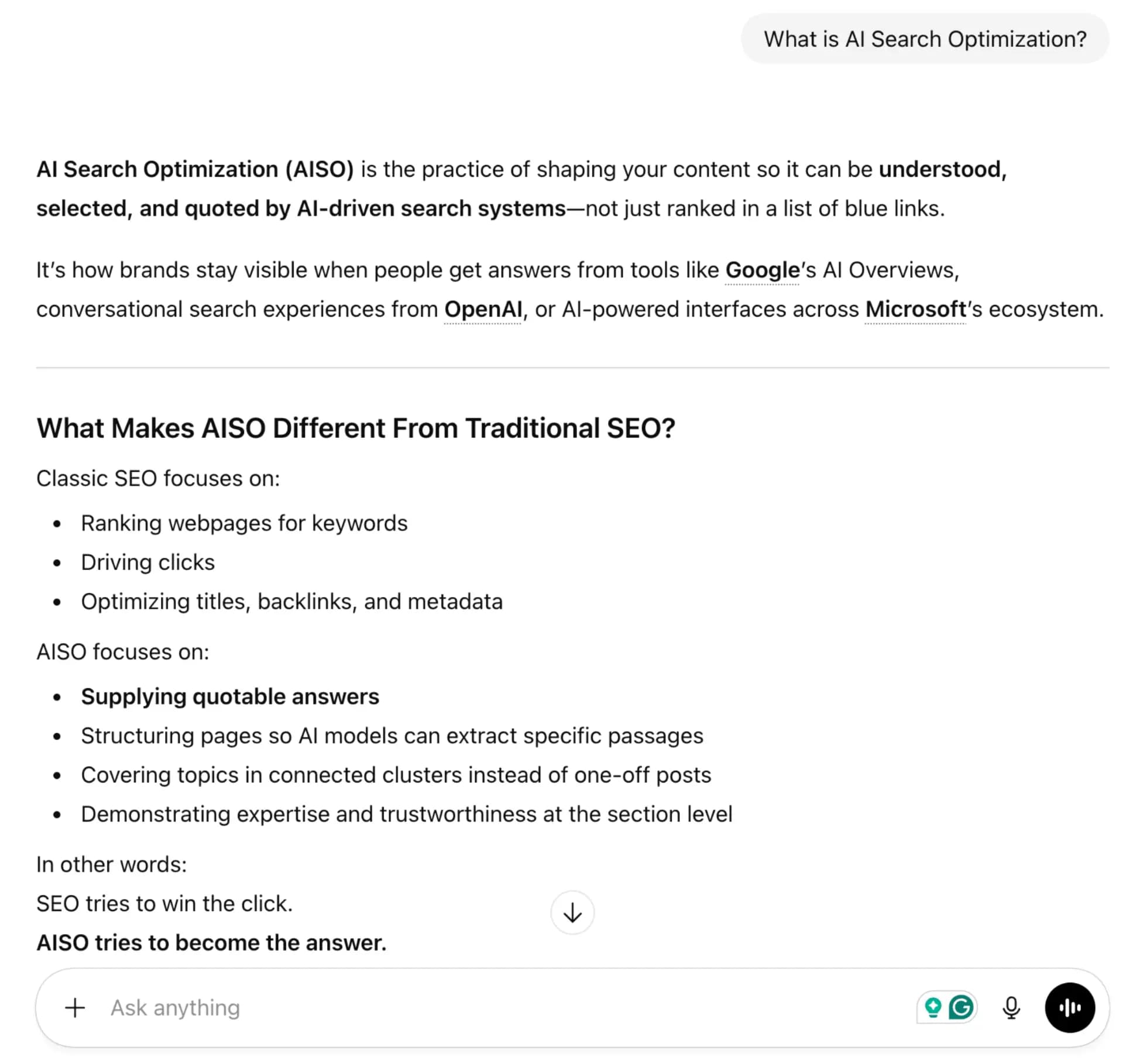
Consequently, this changes how “optimization” works.
- Keyword matching vs. intent understanding: For years, SEO revolved around specific phrases. You picked a keyword, wrote a page around it, and tried to rank.
Large Language Models (LLMs) work differently. They try to figure out what someone is actually asking and what they might ask next. A search for “best project management software” is not just about those four words. It signals research, comparison, pricing questions, setup concerns, and team use cases.
Your content needs to reflect that full line of thinking.
- Page ranking vs. content synthesis: Classic SEO tracks where a page ranks. AI Search Optimization also cares about whether systems reuse your work when generating answers. Your article might show up inside summaries for dozens of related questions, even if it never holds the number one spot for a single query.
You already see this shift in today’s search experiences. For example, Google AI Overviews pull together explanations from several publishers and display them above the regular listings. Conversational AI marketing tools let people ask follow-ups without starting over.
How AI Search Engines Decide What Content To Use
Generative search answers the question right on the results page.
When someone types a query, systems like Google’s AI Overviews usually run two steps. First, they go looking for useful material across the web. Then, they rewrite pieces of that material into a single response.
What gets picked during that first step depends on several AI marketing signals:
Intent And Context Understanding
AI systems interpret what a query is really asking. Someone searching for “best summer tents” usually means “what should I buy for warm-weather camping?” The model recognizes that as purchase research and looks for pages that talk about use cases, trade-offs, and recommendations.
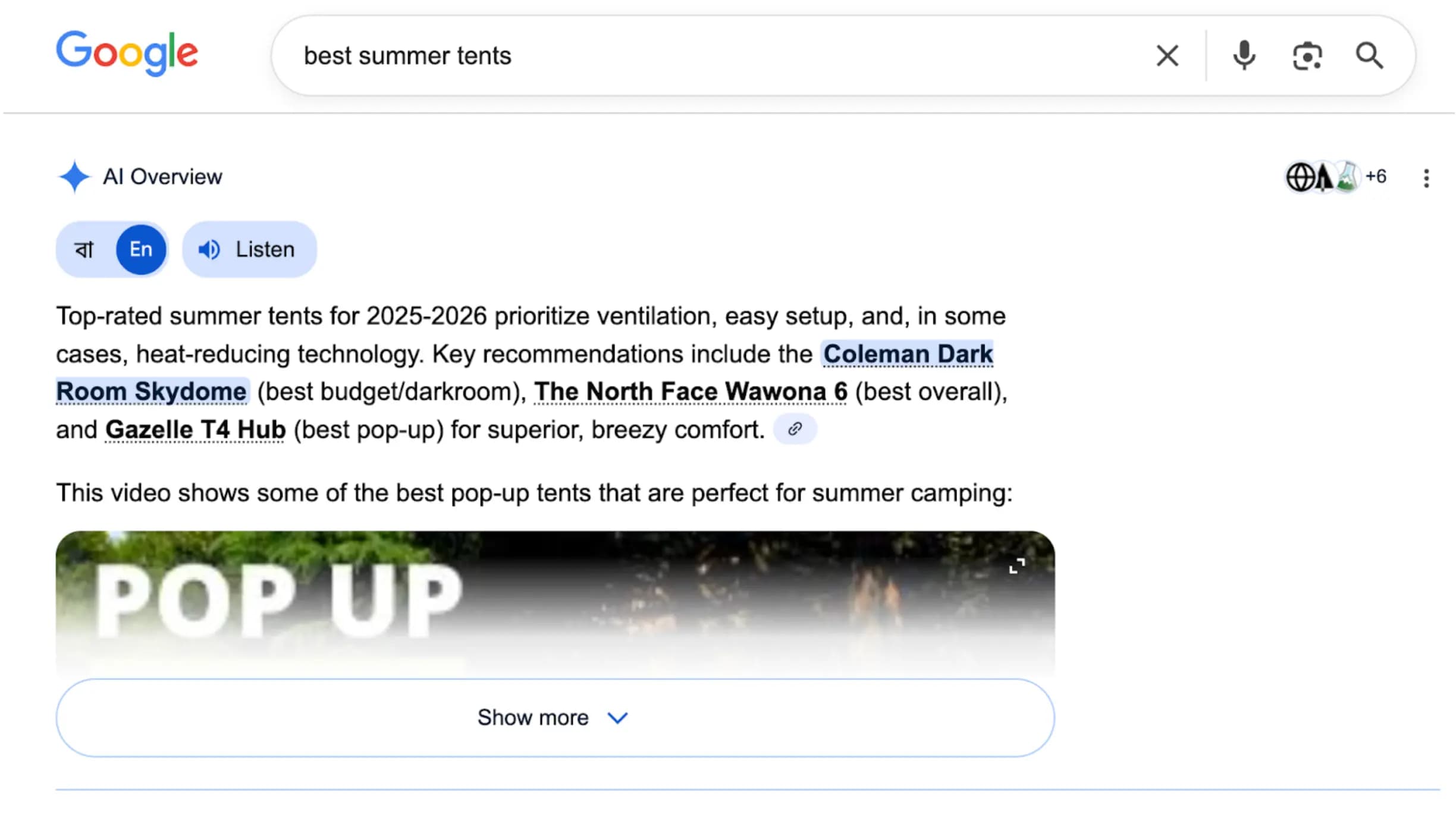
This shift from literal wording to meaning drives most of what you see in generative results.
Topical Authority Across A Subject Area
Generative systems pay attention to whether a site keeps showing up across related questions. When you publish several connected pieces on the same subject and use consistent language across them, the model starts to treat your site as a place that actually knows that topic.
Links still matter, but they sit alongside signs of real subject coverage. A network of articles about the same category usually carries more influence than a single page tuned for one query.
Structured, Extractable Information
When a system builds an answer, it needs clean chunks of information to work with.
Pages that define ideas clearly and break things into sections give the model something it can lift and summarize. FAQs, numbered processes, short explanation blocks, and tightly focused sections all make that easier.
Entity Relationships And Conceptual Networks
LLMs think in terms of entities. That includes companies, products, people, and abstract ideas, plus how those things relate to one another.
When your content links related topics together and keeps terminology consistent (e.g., linking content operations to topical authority, tooling, and platforms like CoSchedule), you give the model a clearer picture of how your subject area fits together.
That map makes it easier for your material to show up when answers pull from several sources at once.
Trust And Explanatory Quality
Generative systems tend to borrow from pages that explain things plainly and show signs of real experience.
That can be specific examples, careful interpretation of data, or descriptions of what tends to go wrong in practice. Those details give the system something solid to summarize.
How AI Search Optimization Changes Content Strategy for Marketers

At this point, one thing is clear: discovery still happens, but it does not always come with a visit.
That means you need to rethink how you plan content, what you measure, and how publishing programs run week to week.
Plan Around Intent Groups
Generative systems treat many different searches as versions of the same underlying question. If your editorial plan creates a new article every time wording changes slightly, you end up with thin coverage across the whole topic.
A more useful approach starts with intent groups.
An intent group is the full trail someone follows while learning or buying. It includes the first question, the follow-ups that usually come next, the comparisons people make, and the actions they consider once the basics are clear.
Take marketing calendars. Searchers often move from setup questions into workflow design, then into team coordination, and later into reporting needs. One post cannot carry that entire journey. A connected set of pages can.
Keyword research still plays a role here. But you use it to uncover decision paths and missing coverage rather than to spin up dozens of pages for tiny wording changes.
Build Connected Topic Coverage
AI Overviews and other generative interfaces assemble answers from multiple sources at once. Sites that keep publishing around the same subject give those systems more to draw from over time.
Organize your site into topic clusters:
- A central guide that frames the category
- Supporting pages that explore real situations
- Internal links that clarify how ideas relate
Plan and grow these clusters over time. Publish the main resource first, then add supporting pages as new questions appear. As the category changes, keep refreshing the main asset.
That kind of steady coverage gives your perspective more opportunities to surface across related searches.
Measure Visibility Alongside Sessions
You also need to track whether your brand appears inside AI-generated answers and what happens after someone sees it.
Add reporting that looks at:
- Where your brand or pages show up inside AI summaries for important topics
- How often specific articles get quoted or paraphrased in those answers
- Which queries lead people to search for your brand name afterward
- Which pieces of content show up earlier in journeys that later convert
This enables you to pull up signals from several places.
Publish With Continuity
Models refresh their view of the web all the time. Sites that keep building around a subject leave a stronger impression than those that jump from topic to topic.
That pushes editorial calendars in a different direction. You can:
- Schedule refreshes for foundational guides.
- Plan follow-ups when questions evolve.
- Expand hubs as new use cases appear.
Align Every Content Surface
Generative systems pull from blog posts, product pages, help centers, and documentation when they form answers. When those areas explain things differently, the signal gets messy.
Tight alignment helps. To ensure this, create shared topic maps that guide every team. Keep definitions stable, and review documentation and campaign copy against the same standards used in long-form guides.
This part of AI Search Optimization looks less like clever writing and more like good operational hygiene. Clear language across the whole site makes it easier for systems to understand what you actually know and what you want to be known for.
AI Search Optimization Tactics for Marketers
If you strip away the hype, optimizing for AI search comes down to one thing: making your content easy for a model to understand and reuse when it answers questions.
Here are some practical AI search optimization tips to improve your AI marketing strategy:
Start With The Answer, Then Build Outward
Think about how you read things yourself. If you ask a question and the first three paragraphs warm up to the point, you probably scroll.
AI systems behave the same way.
When someone searches, the AI systems hunt for passages that state the idea clearly. Pages that circle the topic for several paragraphs before explaining give it very little to work with.
Put the answer near the top. Say what the thing is, or what someone should know, in plain language. Then explain why. After that, bring in examples, limits, and real situations.
Write In Sections That Can Stand On Their Own
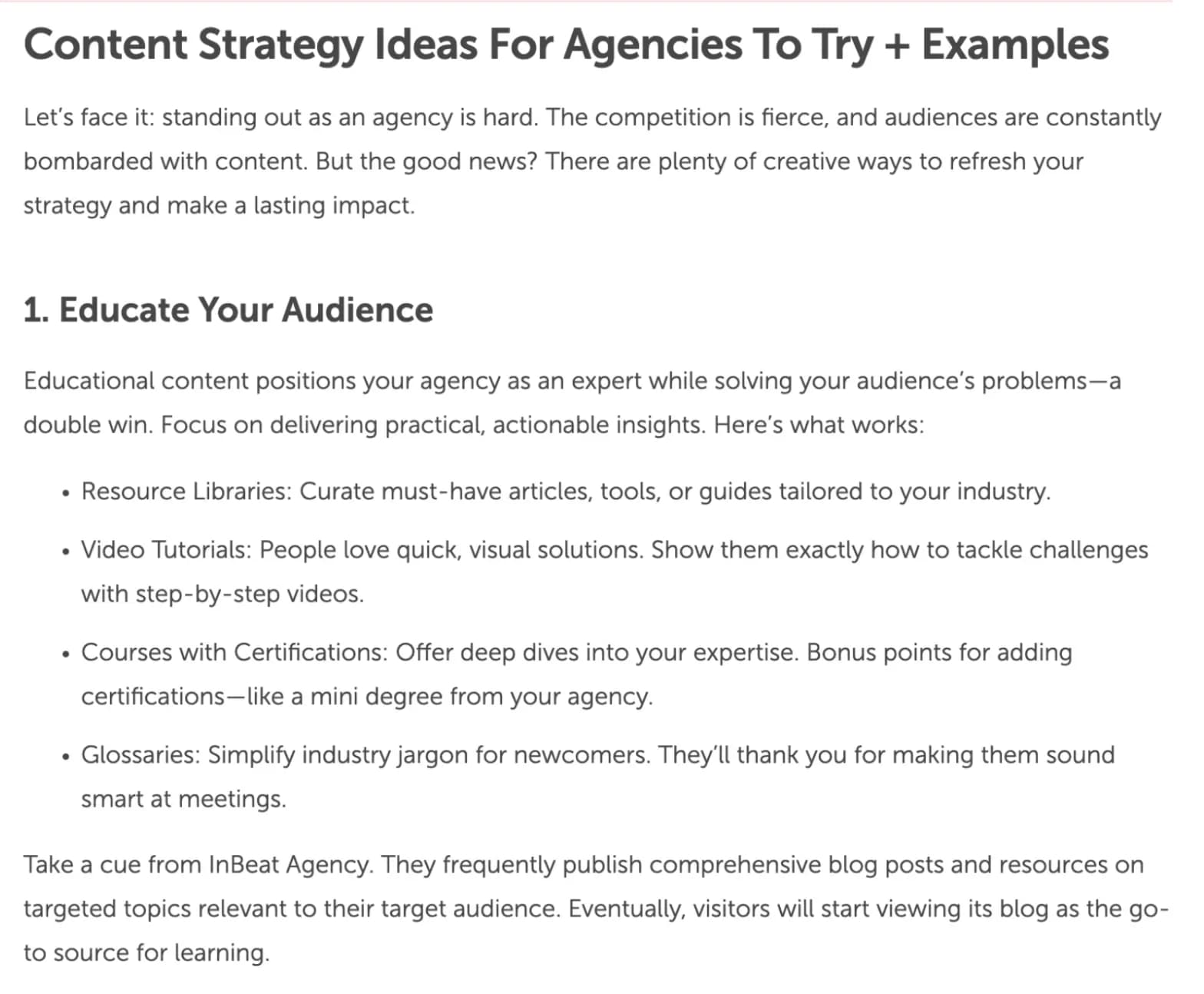
Each section of your content needs to make sense even when read in isolation.
Use headings that sound like real questions people ask. Avoid labels that only make sense if you read the whole piece. Right under each heading, state the main idea. Don’t assume the reader saw the paragraphs above it.
Here’s an example from our Content Marketing Strategies to Boost Your Agency’s Success blog:
Expand Topics Through Connected Pages
Stick to the priority categories you already chose during planning. Break each one into specific problems people run into. Create a main guide that sets the stage, then publish follow-ups that dig into those problems in detail.
Link those pieces to each other on purpose. Over time, when your content keeps appearing across many versions of the same topic, models start to associate your brand with that subject area.
Refresh High-Value Pages For AI Visibility
AI summaries now show up on a wide range of searches. Semrush’s 2025 analysis found AI Overviews expanding beyond purely informational queries, which makes older content worth another look.
Pull up pages that already get impressions, and read them with fresh eyes. Where would a reader naturally have a follow-up question that never gets answered? Which parts feel vague? Which sections bury the point in long paragraphs?
Add short definitions where terms could confuse someone. Break dense sections into clearer blocks. Update examples and stats so the page reflects how things work now.
Let Real User Questions Guide Expansion
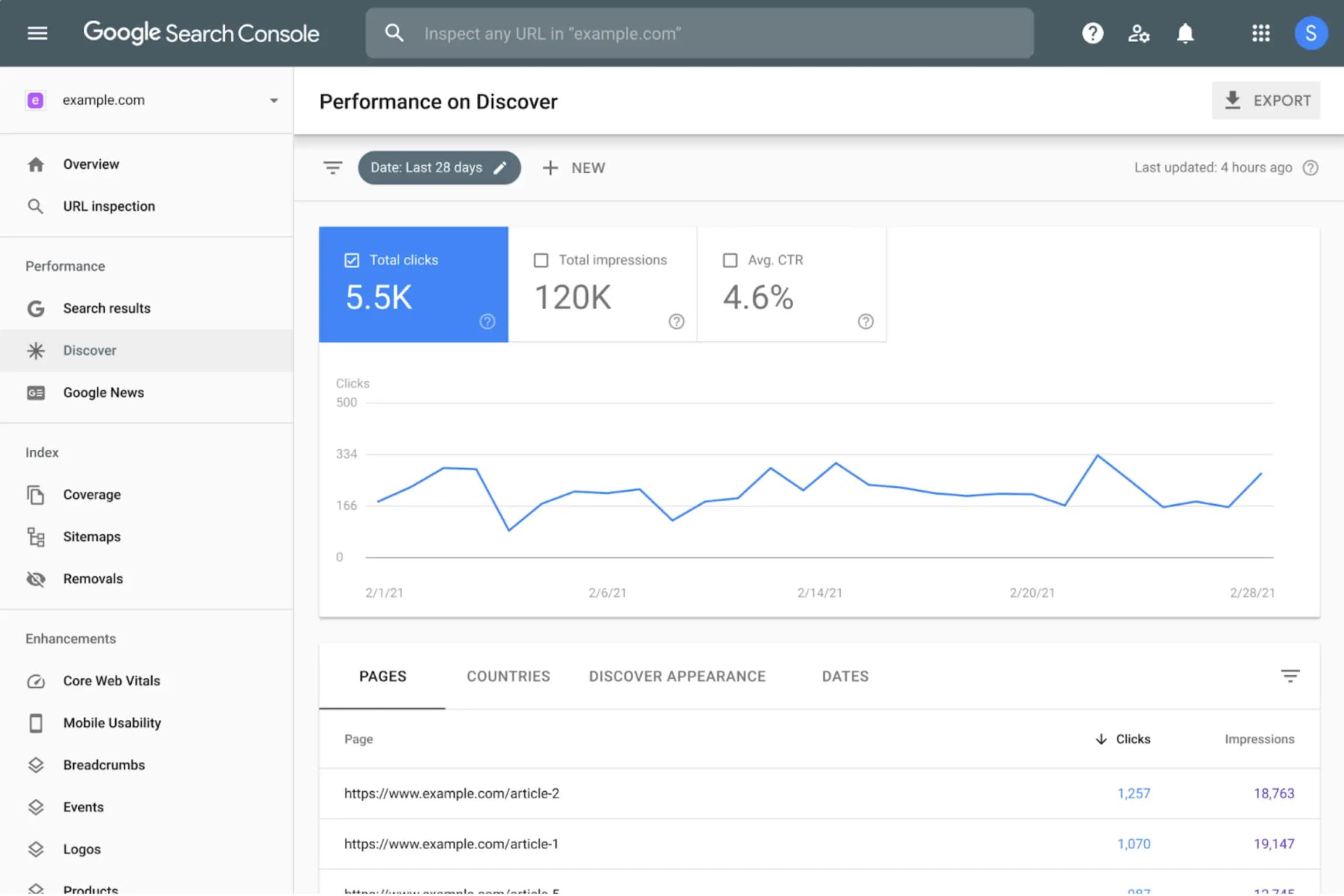
Search Console data, on-site search logs, support tickets, and sales calls reveal how people actually ask about your product or category.
Those questions can form the raw material for future pages and updates, so collect them regularly. Group the questions by theme, then decide which pages to add to a topic cluster and which older ones need expansion.
This keeps your coverage aligned with how people actually think and search, rather than frozen keyword lists.
How Google SGE Optimization Fits Into AI Search Optimization
Think of Google’s AI Overviews as an extra layer sitting on top of regular search.
They came out of Google’s Search Generative Experience (SGE) experiments, but under the hood, they still depend on the same basics: Google crawls pages, indexes them, checks whether they meet Search Essentials. If a page can’t be found, rendered, or understood, it never even gets considered for an AI summary.
So SGE is just another place where your existing SEO work shows up. Where things change is how Google pulls information.
Normal search results rank whole pages. AI Overviews often grab specific chunks from inside a page. That means every section has to stand on its own. If your article is solid overall but hides the real explanation halfway down or under a fuzzy subheading, you can lose to a competitor who puts the answer front and center in each section.
SGE also seems drawn to content that clears up messy questions. When someone is comparing options or figuring out how to get started, the passages that show up tend to be the ones that spell those things out plainly.
Another thing you notice is how fast things move here.
AI Overviews change more often than classic rankings because the system keeps rebuilding answers as new pages get indexed or old ones change. You can sit at the same organic position for weeks and still disappear from the overview after another site updates and gets pulled in.
Look at it this way: SGE is basically a stress test for your AI search strategy.
It shows you whether:
- Individual sections actually make sense on their own
- Your pages help people make decisions
- Refreshed content gets reconsidered quickly
- The same topics keep popping up across lots of related searches
Measuring Success in AI Search Optimization
You want answers to two things: how often your content appears inside generated answers and whether that exposure shapes later behavior. Clicks won’t tell you that anymore, so you have to work backward from visibility to outcomes.
First, confirm that your content is actually showing up in AI answers. Search Console doesn’t provide dedicated reporting for AI Overview citations, so some manual tracking is still necessary. Google Analytics (GA4) can help you spot traffic from certain AI-driven surfaces and referral sources, even if it can’t label specific AI Overview placements. Treat that as a directional signal alongside your manual checks.
Keep a shared log of priority queries, whether an AI summary appears, which sources are cited, linked pages when available, and the date. Review it monthly for the topics that matter most.
Once you know where you’re appearing, look for signs that people noticed. You may see branded search demand shift after repeated AI visibility, even if traffic stays flat. Track branded impressions in Search Console and branded sessions in GA4. Watch for new “brand + topic” queries after you refresh a guide or launch a hub.
From there, shift your focus to downstream impact.
AI exposure usually influences people later. Use GA4 and CRM data to review conversion paths that include early organic discovery and revenue tied to topic hubs. BrightEdge has reported rising impressions alongside falling click-through rates on queries with AI summaries. In other words, people are seeing your brand more often but clicking less, so last-click attribution will undercount your impact.
Finally, zoom out to the topic level.
Group related pages into hubs and evaluate total impressions, branded demand for the subject, how often AI summaries appear, and any pipeline influence tied to those clusters. That keeps reporting aligned with how generative systems surface information across multiple pages.
Turning AI Search Optimization Into A Repeatable System With CoSchedule
Most teams run into trouble with AI Search Optimization because the work gets scattered.
One person is tracking hubs in a spreadsheet. Someone else has keyword clusters sitting in an SEO tool. Social posts are queued in a scheduler that most of the content team never opens, and the refresh list is buried in Slack.
That fragmentation hurts more in AI-driven search. These systems surface answers from groups of related pages over time. If part of a cluster is stale or missing entirely, your coverage thins out—and your chances of showing up drop with it.
This is the gap CoSchedule is designed to close.
You can turn each topic cluster into a campaign on the Marketing Calendar. From there, the hub page, supporting articles, refresh work, distribution, and check-ins all live on one shared timeline so everyone can see how the pieces fit together.
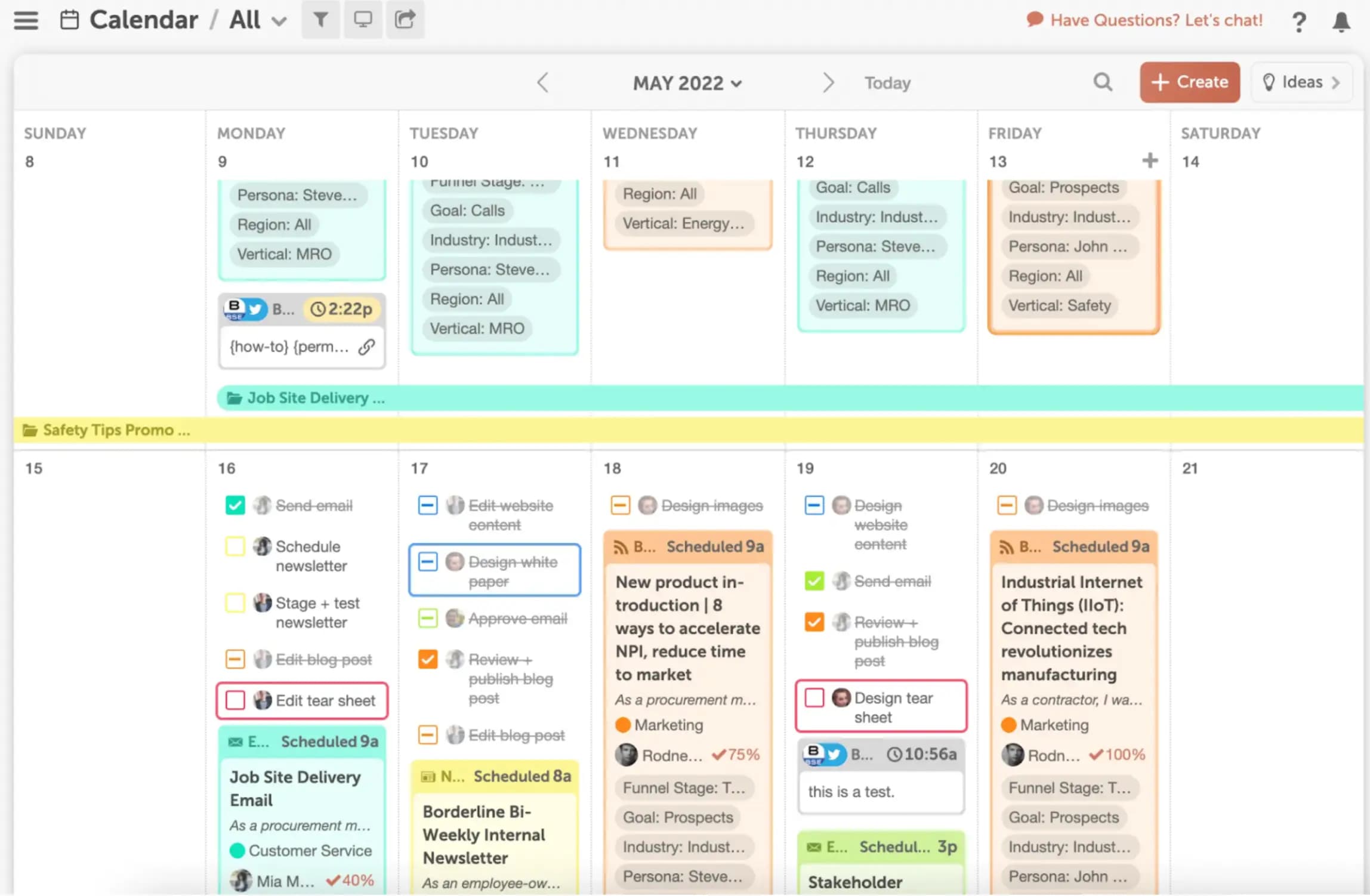
Agencies can run the same structure across accounts using the Agency Calendar and Client Calendars, which makes it easier to reuse AISO frameworks rather than rebuilding plans every quarter.
As drafts move closer to publishing, the AI tools inside the calendar support outlines, first-pass copy, rewrites, and production tasks without forcing the team into yet another app. That matters when several clusters are in play at once, and deadlines start stacking up.
Once you’re managing AISO across months, coordination becomes the work. You’re lining up hub launches, planning refresh cycles, and making sure distribution doesn’t quietly fall behind.
CoSchedule turns that into something you can run day to day, with a shared calendar that keeps strategy tied to production instead of parked in a slide deck.
Read to build your workflows for AI-driven discovery? Sign up with CoSchedule for free.