Predictive AI is changing how marketers plan, launch, and optimize campaigns. Instead of reacting to results after the fact, marketing teams can now forecast performance, reduce guesswork, and make proactive decisions based on data.
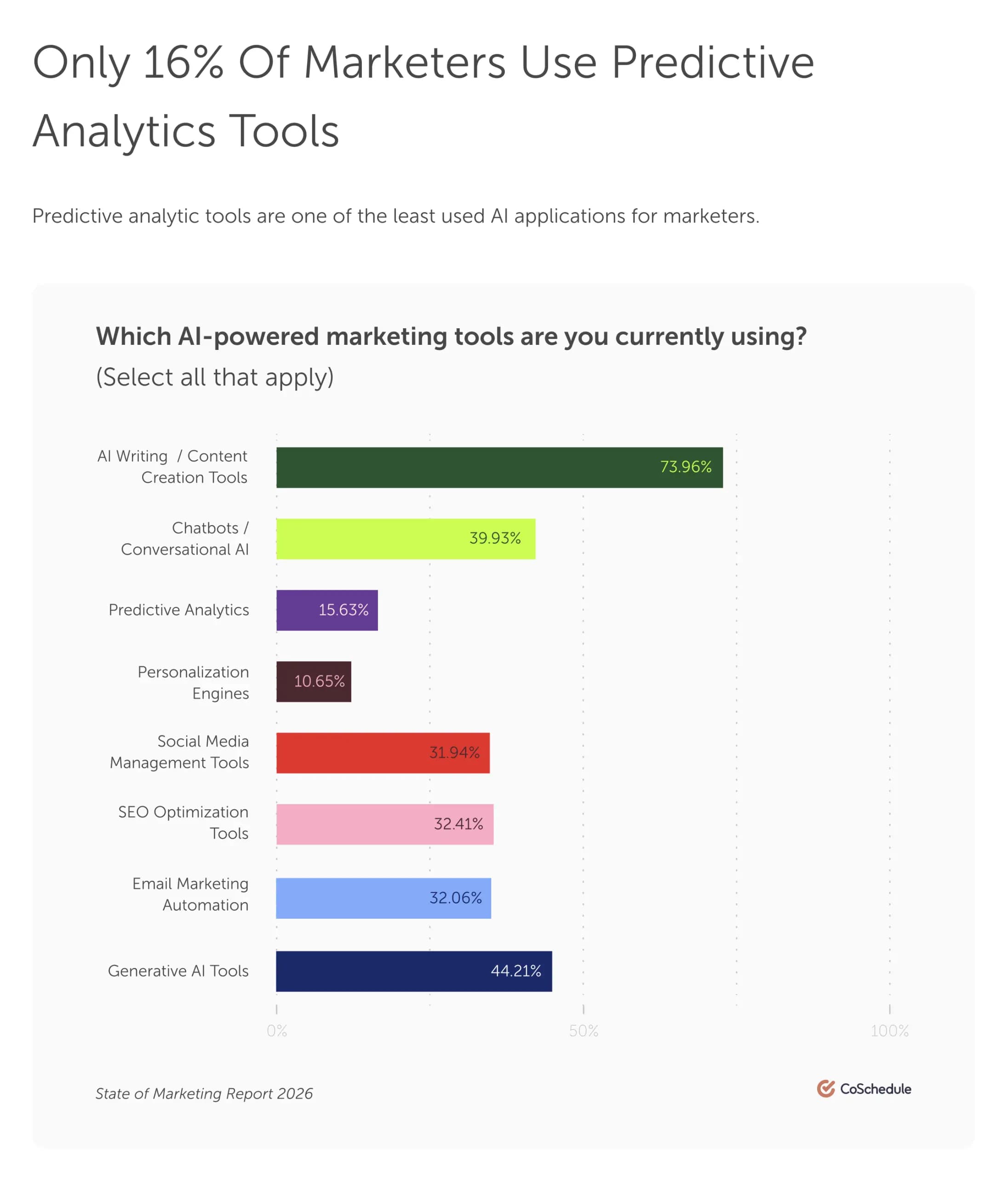
Yet despite its growing importance, adoption remains surprisingly low. According to CoSchedule’s 2026 AI marketing survey, only 16% of marketers use predictive analytics tools, leaving a massive opportunity for teams ready to move ahead of the curve.
In this article, we’ll explore why Predictive AI matters now, how it improves strategy, and how CoSchedule’s platform helps you make it actionable.
Why Marketers Need Predictive AI Now
Marketing analytics has traditionally been reactive. You look at what happened after the campaign ends, then try to apply those learnings to the next one. But in today’s competitive landscape, that delay is too costly.
While marketers widely use AI for efficiency and content production, far fewer apply it to predictive analytics, the tools that forecast outcomes before they happen. AI’s made it easier, but marketers aren’t taking advantage of it.
This reactive approach leaves teams guessing about what will work. Predictive AI bridges this gap by shifting from “What happened?” to “What’s going to happen and what should we do?”
What Is Predictive AI In Marketing?
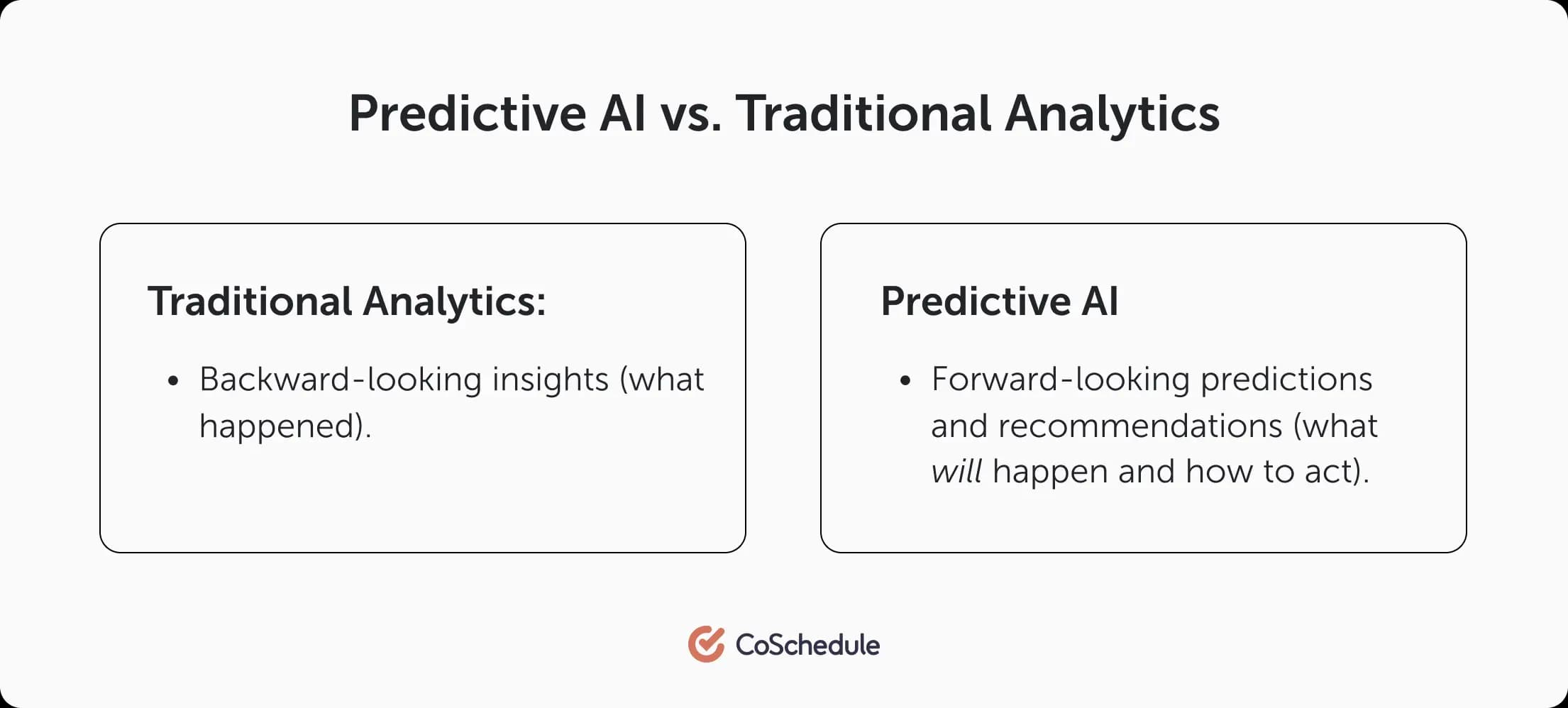
Predictive AI analyzes patterns across past campaigns, audience behavior, content performance, and channel trends to estimate what is most likely to happen next. Traditional analytics answer questions like, “How did this campaign perform?”
Predictive analytics ask:
- Which content will resonate most with your audience?
- Which content topics or formats are most likely to perform well next month?
- What offers or messages are most likely to convert a specific audience segment?
- When is engagement likely to peak across different channels?
- Which campaigns are at risk of underperforming before they launch?
Instead of reporting what already happened, Predictive AI gives you foresight and strategy. By surfacing these insights early, predictive AI enables marketers to adjust strategy in advance. Optimizing campaigns before they go live so you’re not scrambling after results fall short.
Predictive models draw from a wide range of inputs, including historical campaign data, content engagement trends, audience behavior patterns, posting cadence, channel performance, and timing signals. By synthesizing these signals, predictive AI delivers forecasts and recommendations that guide decision-making before execution.
In short, traditional analytics explain the past. Predictive AI helps you shape the future.
How Predictive AI Improves Marketing Strategy
Predictive AI elevates marketing from reactive optimization to strategic forecasting. Instead of relying on intuition or static benchmarks, marketers gain data-backed confidence in their planning decisions.
Turn Insights Into Proactive Decisions
Predictive models allow teams to identify what is likely to succeed before committing time and budget. This means fewer wasted campaigns, stronger alignment across teams, and faster iteration when priorities shift.
For example, rather than testing content themes blindly, predictive insights can highlight which topics are expected to resonate most with your audience, enabling smarter prioritization from the start.
Predict Outcomes, Don’t Just Review Results
With predictive AI, marketers can forecast performance across key metrics, including:
- Expected traffic and reach
- Engagement and conversion likelihood
- Channel-level ROI
- Campaign performance risk
Instead of reviewing last quarter’s results and hoping for improvement, teams can proactively optimize their next quarter’s plans using forecasts grounded in real data.
Examples Of Strategic Decisions Predictive AI Can Inform
- Content planning: Determine which topics, formats, and headlines are predicted to perform best.
- Campaign timing: Forecast peak engagement windows based on historical behavior.
- Channel prioritization: Focus resources on platforms where AI forecasts the strongest ROI.
- Budget planning: Anticipate which campaigns will deliver the strongest ROI and adjust spend accordingly.
Key Use Cases Of Predictive AI For Marketers
Predictive AI unlocks value across multiple marketing disciplines:
Customer Behavior Prediction
Use past engagement and behavior data to estimate likelihoods such as:
- When a prospect is ready to convert
- What content type engages specific segments the most
- Forecasted lifetime value
Understanding content resonance before you publish saves time and increases campaign impact.
Campaign Performance Prediction
Rather than launching campaigns and hoping for the best, predictive AI helps you estimate:
- Reach and engagement
- Conversions
- ROI projections
- Content performance likelihoods
This helps you tailor messaging and budget allocation before launch.
Predictive Lead Scoring
Predictive lead scoring identifies which contacts in your funnel are most likely to convert. This helps improve alignment between marketing and sales and enables smarter prioritization.
Why Predictive AI Works Best With Organized Marketing Data
Predictive AI’s effectiveness depends heavily on the quality of your data.
Predictive AI Depends on Clean, Structured Data
When data is fragmented across tools, inconsistent in naming conventions, or incomplete, predictive models struggle to detect reliable patterns. This leads to weaker forecasts and less actionable recommendations.
Common Marketer Challenges
- Disconnected tools and platforms
- Inconsistent workflows across teams
- Analytics silos that limit visibility
- Fragmented campaign and content data
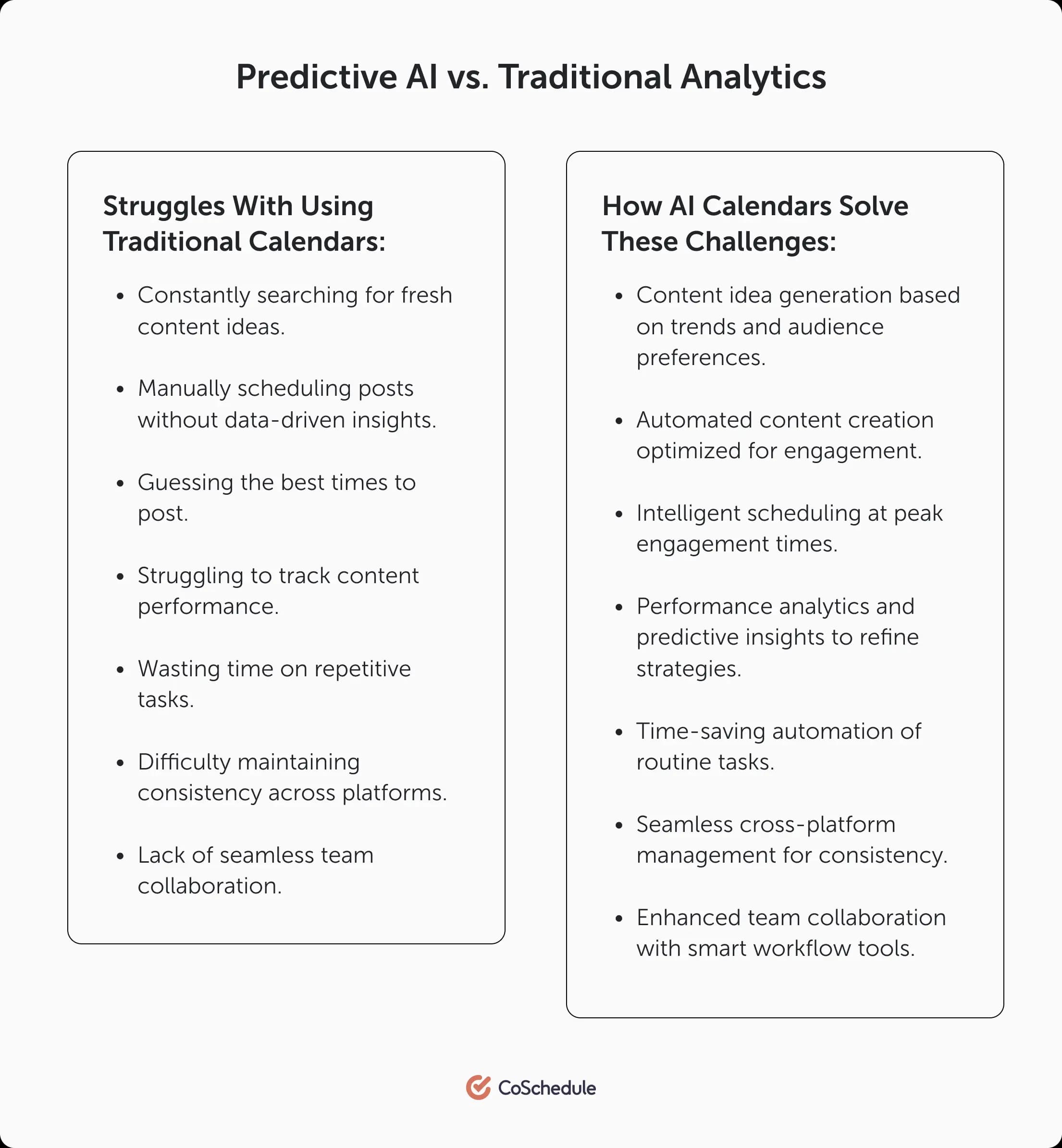
Tools like an AI Content Calendar help keep your planning organized and unified, making predictive inputs stronger and easier to act on.
How CoSchedule Helps Power Predictive AI–Driven Marketing
CoSchedule empowers marketers to not only track performance but to anticipate better results with features designed to turn data into strategic foresight.
Insights Assistant: Predictive and Actionable
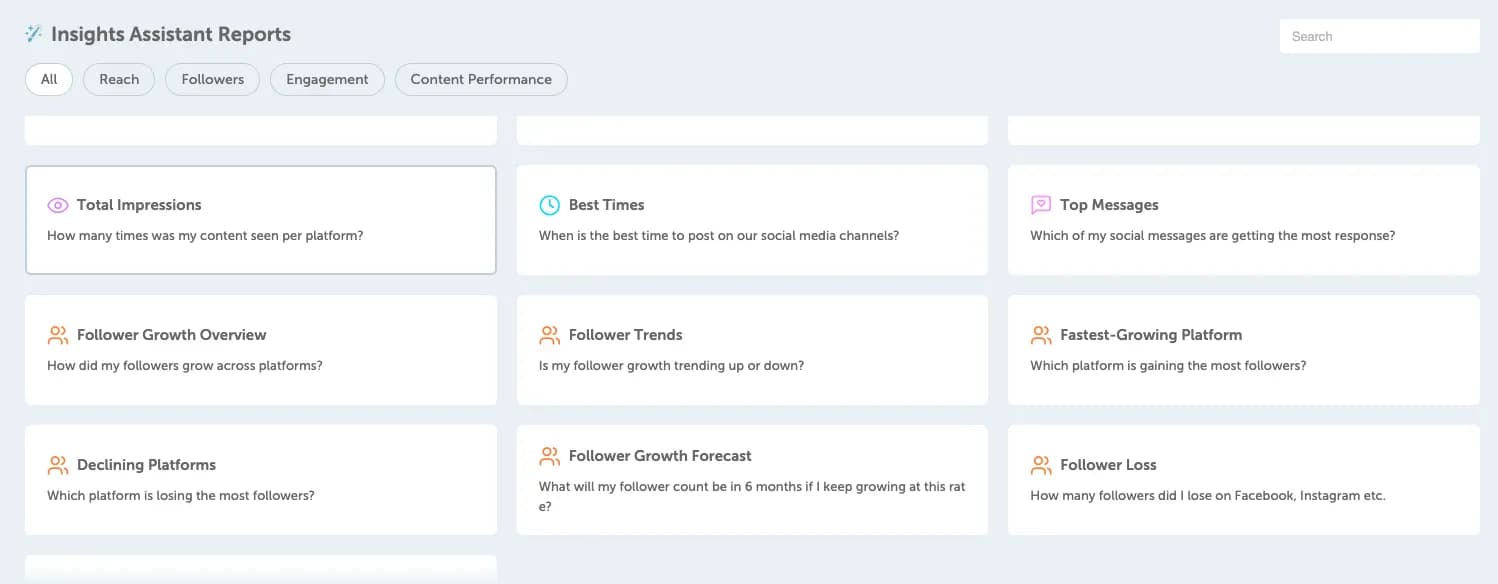
CoSchedule’s Insights Assistant uses AI to interpret performance data and recommend next steps — turning raw numbers into prioritizable insights. It highlights patterns, explains anomalies, and suggests what to do next so you can act with confidence.
This isn’t just performance reporting — it’s predictive suggestions designed for real strategy.
Related: How to Master Content Marketing Basics & Boost Your ROI — a wider look at structured strategic planning, including analytics and forecasting.
Integrated, Unified Workflow
Instead of manually exporting and interpreting data, CoSchedule centralizes analytics alongside planning tools like AI calendars and campaign scheduling, making predictive outputs easier to integrate into your team’s workflow.
How Marketers Can Get Started With Predictive AI Today
If you’re new to predictive AI, take a structured approach:
1. Audit Existing Marketing Data
Start by evaluating the current state of your data:
✔ Do you have centralized performance tracking?
✔ Is data clean and consistent?
✔ Are analytics stored in a unified place?
2. Start With One Predictive Use Case
Rather than trying to predict everything at once, focus on a single, high-impact use case, such as:
- Forecasting top-performing content themes
- Predicting engagement by channel
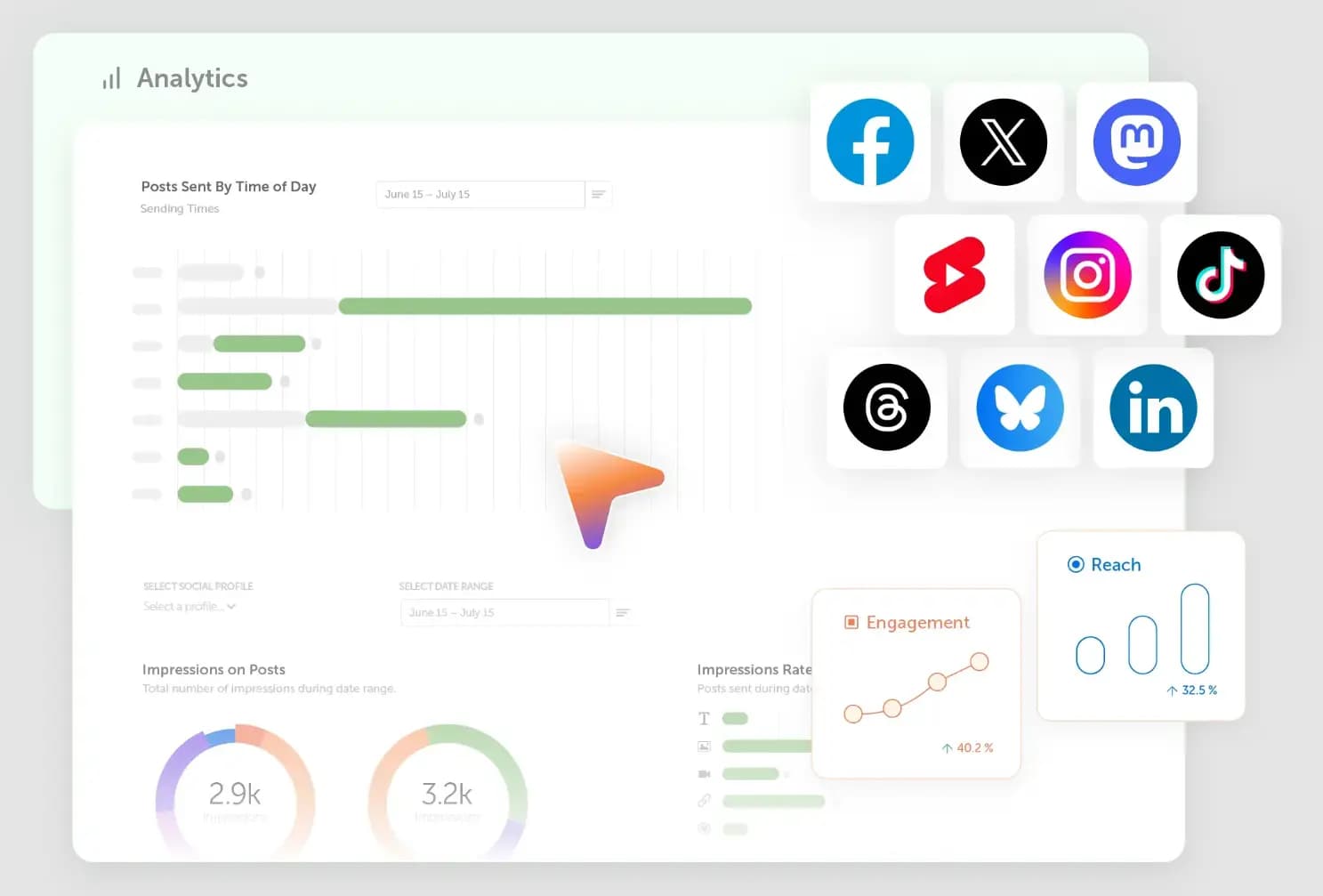
- Identifying optimal posting times
Early wins build confidence and momentum.
3. Combine Predictive Insights With Execution Tools
Predictions only create value when they inform action. Integrated platforms like CoSchedule make it easier to translate forecasts into concrete plans, aligning calendars, campaigns, and teams around predictive insights.
4. Make Consistency Your Competitive Edge
Let AI guide your forecasts, but consistency in execution is what compounds results. Use AI to guide decisions, while maintaining disciplined workflows and long-term strategic focus.
Predictive AI Turns Marketing Data Into Competitive Advantage
Predictive AI transforms marketing from a reactive function into a strategic foresight engine. Marketers gain the ability to not just understand what happened, but to forecast what will happen and plan accordingly.
By forecasting outcomes, optimizing campaigns before launch, and scaling insights across teams, predictive approaches unlock higher performance, more confident decisions, and a real competitive edge.
Ready to put predictive insights into action? Try CoSchedule to organize campaigns, track performance, and build a smarter, more predictable marketing strategy.