
Marketing has steadily shifted toward data-driven decision-making. Teams now rely on dashboards, reports, and forecasts to understand performance and plan future campaigns. Descriptive analytics explains what happened, while predictive analytics estimates what might happen next. These approaches provide valuable insight, but they still leave marketers with a critical gap.
Knowing what happened or what could happen does not automatically tell you what to do next. That gap is where prescriptive analytics comes in. Prescriptive analytics helps marketers move from insight to action by recommending specific decisions that are most likely to improve results.
For many teams, advanced analytics has historically required technical expertise and complex infrastructure. Today, tools like CoSchedule’s AI Insights make prescriptive analytics accessible by translating data into clear recommendations marketers can use without a data science background.
What Is Prescriptive Analytics?
Prescriptive Analytics
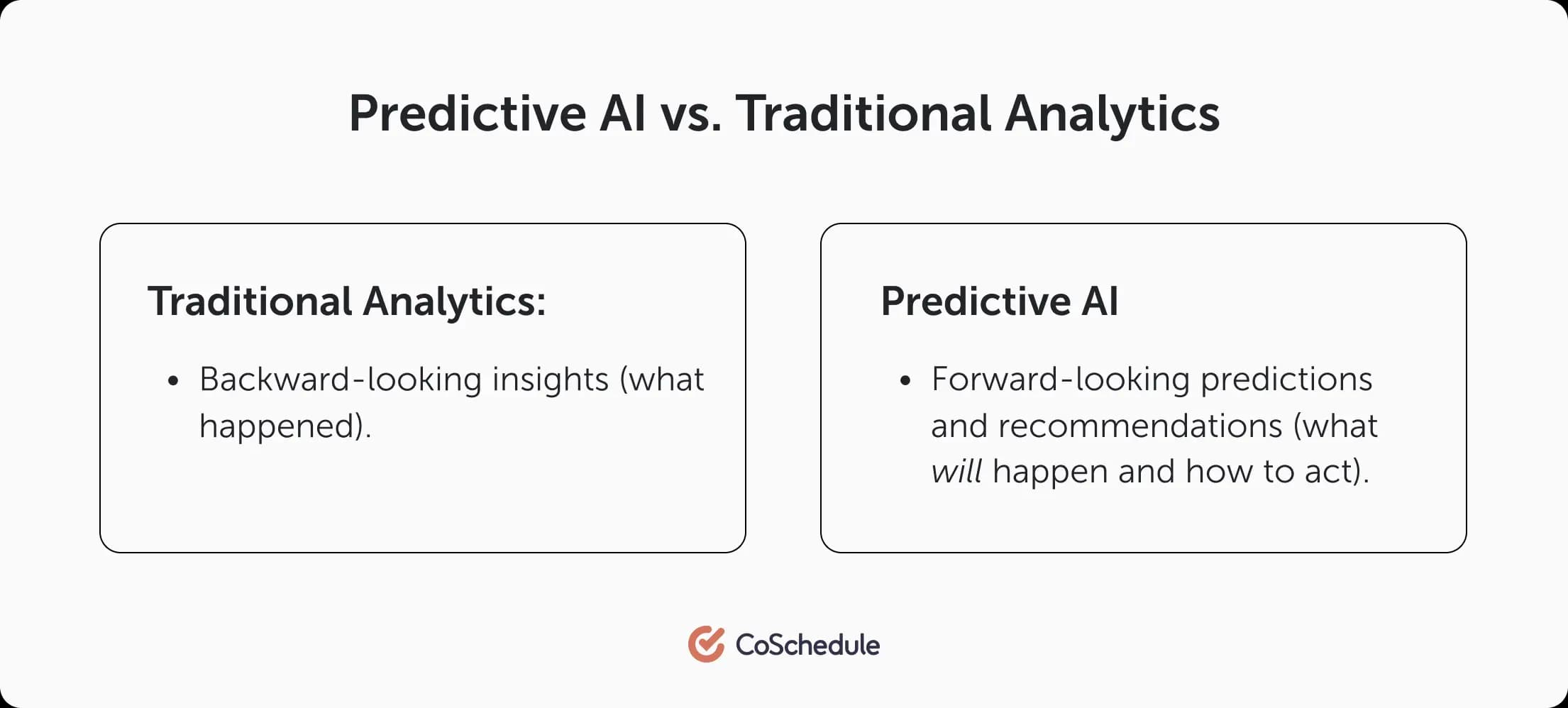
Prescriptive analytics is a type of advanced analytics that recommends actions based on data, predicted outcomes, and defined goals. Instead of stopping at analysis or forecasting, it answers the question of what action should be taken to achieve the best possible result.
Unlike descriptive analytics, which focuses on past performance, and predictive analytics, which estimates future outcomes, prescriptive analytics is action-oriented. It evaluates different options, compares potential results, and surfaces recommendations designed to optimize performance.
For marketers, prescriptive analytics shifts analytics from passive reporting into an active decision-making tool. The focus is not just on understanding performance, but on identifying the next best step to take.
What Prescriptive Analytics Can Do For You
Prescriptive analytics works by combining multiple analytical processes into a single decision framework. These steps build on one another to produce recommendations rather than isolated insights.
- Prescriptive analytics begins with data collection and integration, pulling information from performance metrics, historical campaigns, and audience behavior to establish a reliable foundation.
- It then applies predictive modeling to estimate how different actions are likely to perform based on past patterns and trends.
- Optimization models and simulations are used to compare potential options and identify which actions are most likely to deliver the desired outcome.
- Finally, recommended actions and scenario testing allow marketers to evaluate tradeoffs and choose the best path forward.
In practice, prescriptive analytics supports real-world marketing decisions. It can help teams choose the most effective content formats, allocate budget across channels more efficiently, and determine optimal publishing frequency and timing. These recommendations reduce reliance on guesswork and make planning more intentional.
Types Of Prescriptive Analytics
Prescriptive analytics can be implemented in several ways, depending on the system and use case. Each type supports decision-making through a different approach.
- Rule-based systems use predefined logic to recommend actions based on specific conditions, such as adjusting publishing frequency when engagement drops below a threshold.
- Optimization-based systems evaluate constraints and objectives to determine the most efficient allocation of resources, such as distributing budget across channels.
- Machine learning-driven recommendations adapt over time by learning from outcomes and improving future suggestions.
- Simulation and scenario modeling test multiple outcomes by modeling different variables and conditions before decisions are made.
In marketing workflows, optimization-based systems and machine learning-driven recommendations are most common. These approaches balance structure with adaptability, making them well-suited for ongoing campaign management.
Techniques Used In Prescriptive Analytics
Prescriptive analytics relies on several analytical techniques that work together to support decision-making.
- Predictive modeling and forecasting estimate likely outcomes based on historical performance, such as forecasting email engagement rates.
- Mathematical optimization techniques help identify the most effective combination of actions within defined constraints.
- Heuristics and algorithmic decision models simplify complex choices by applying rules and logic to large data sets.
- Machine learning and reinforcement learning allow systems to improve recommendations as new data becomes available.
- Scenario analysis and what-if modeling enable marketers to test different approaches before committing resources.
For example, prescriptive analytics can forecast how different send times may affect email performance or optimize posting schedules based on engagement trends.
Key Components Of An Effective Prescriptive Analytics System
An effective prescriptive analytics system requires several foundational components to produce reliable recommendations.
- High-quality unified data sources ensure insights are based on accurate and complete information.
- Predictive models estimate the outcomes of potential actions using historical and real-time data.
- Optimization engines evaluate options and surface the best possible decisions based on defined goals.
- Automation enables ongoing recommendations without requiring constant manual analysis.
- User-friendly dashboards present insights in a way that non-technical marketers can easily understand and apply.
Benefits Of Prescriptive Analytics For Marketers
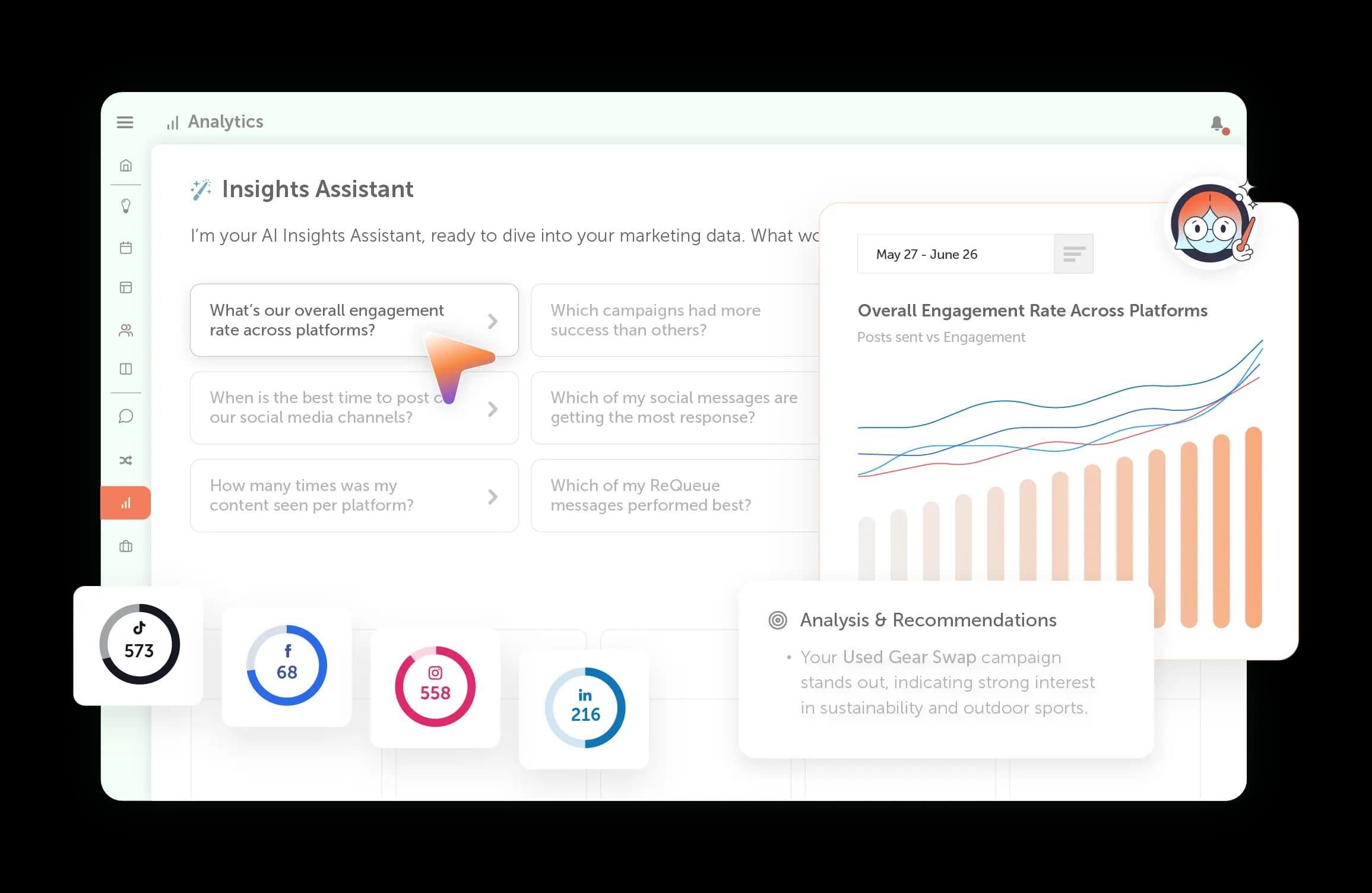
Prescriptive analytics delivers tangible benefits by improving how decisions are made and executed.
- It supports better decision-making by grounding actions in data rather than assumptions.
- It improves ROI by optimizing campaigns before resources are committed.
- It reduces guesswork and shortens planning cycles by providing clear direction.
- It enables more personalized content and channel strategies based on performance patterns.
- It supports smarter resource and budget allocation across campaigns.
- It strengthens performance forecasting and helps reduce risk.
- It accelerates A/B testing by identifying stronger options earlier in the process.
Practical Use Cases For Marketing Teams
Prescriptive analytics can be applied across a wide range of marketing activities.
- In content marketing, prescriptive analytics helps optimize topics, formats, and publishing cadence.
- In social media, it supports scheduling decisions and platform prioritization.
- In email marketing, it improves send-time optimization and content planning.
- In audience segmentation, it guides personalization strategies based on behavior.
For agencies, prescriptive analytics also improves client work.
- It enhances client reporting by pairing performance data with recommended next steps.
- It streamlines decision-making when managing multiple clients by reducing manual analysis.
These use cases help teams move faster while maintaining consistency.
How Marketers Can Get Started With Prescriptive Analytics
Getting started with prescriptive analytics does not require perfect data or advanced infrastructure. The key is to begin with what is available and build over time.
- Marketers can start by using existing performance data rather than waiting for ideal conditions.
- Choosing tools with built-in intelligence removes the need for custom modeling.
- Starting small with a single campaign or channel helps teams learn without added complexity.
- Monitoring outcomes and refining recommendations over time improves accuracy and confidence.
Using CoSchedule’s AI Insights provides an accessible entry point for marketers who want prescriptive analytics without technical overhead.
CoSchedule’s AI Insights For Prescriptive Marketing Recommendations
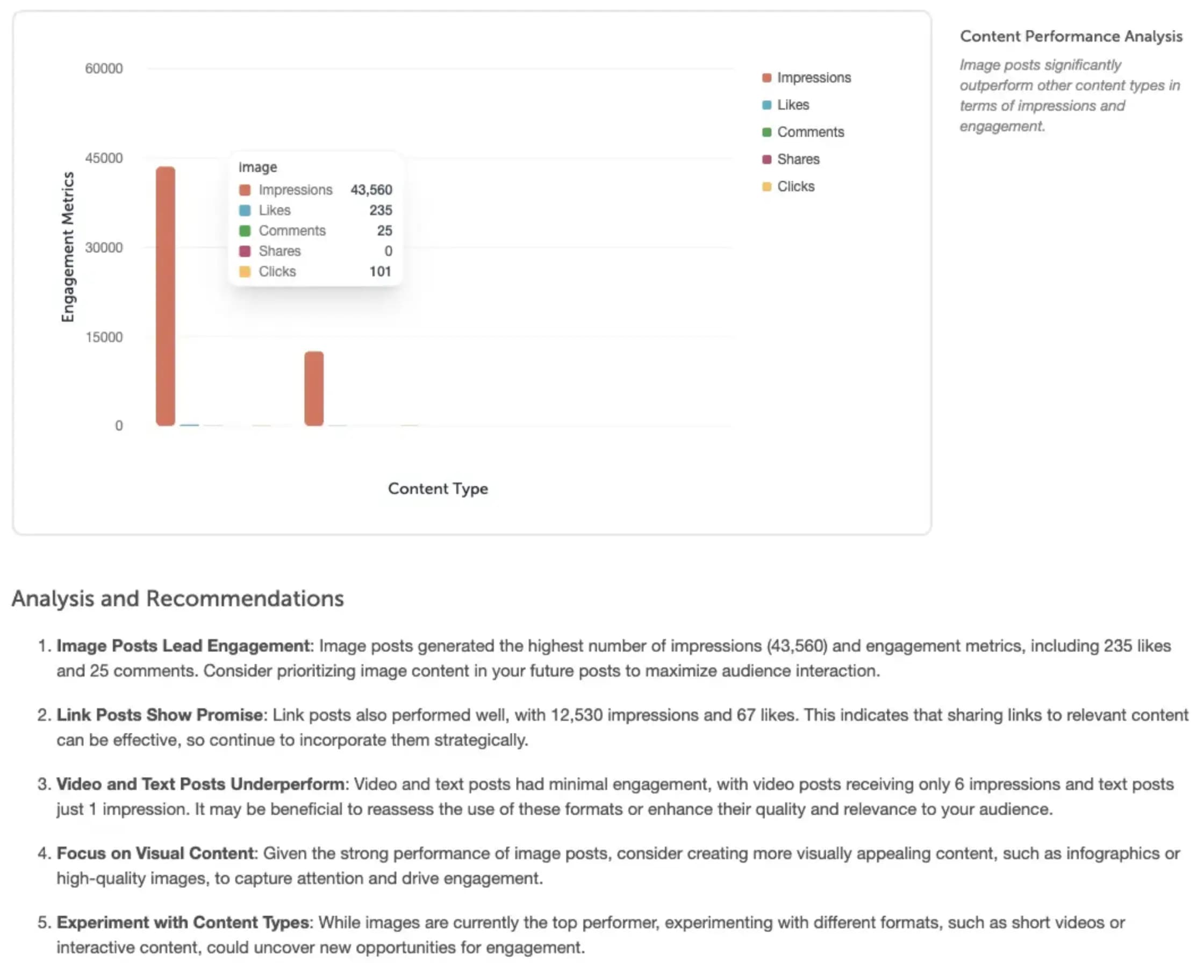
CoSchedule’s AI Insights applies prescriptive analytics to help marketers make better decisions faster. It analyzes performance data across social content and activity to identify patterns and opportunities.
Marketers receive actionable recommendations designed to improve results, not just reports on past performance. These insights help teams adjust strategy with confidence.
Examples of AI Insights recommendations include suggested content topics or keywords, ideal posting times, and follower growth insights. Marketers and agencies can use these suggestions to refine campaigns, improve consistency, and drive stronger outcomes.
By turning analytics into action, CoSchedule helps teams move from insight to execution with less friction.
Try CoSchedule’s AI-powered marketing recommendations and put prescriptive analytics to work.