Manufacturer marketing looks very different than it did even a few years ago.
Today’s industrial buyers do not wait for a sales conversation to begin evaluating vendors. They research solutions independently across search engines, social platforms, AI-powered discovery experiences, industry publications, customer reviews, and educational content long before they reach out.
That shift has created a new challenge for manufacturing marketers.
Traditional tactics like trade shows, sales collateral, and outbound outreach still matter, but they are no longer enough on their own. Marketing teams now need systems that help them organize campaigns, coordinate content, publish consistently, track engagement, and demonstrate measurable business impact.
That means using the right tools.
In this guide, we compare the best marketing tools for manufacturers in 2026 and explain what to look for when evaluating platforms for social media management, campaign planning, collaboration, and reporting.
Key Takeaways
- Manufacturers need marketing tools that support long buying cycles and multi-channel campaigns.
- Social media management is becoming increasingly important for manufacturer visibility and lead generation.
- The best manufacturer marketing software centralizes planning, publishing, collaboration, and reporting.
- CoSchedule stands out as a strong option for manufacturing teams that want better marketing campaign organization and execution.
What To Look For In Manufacturer Marketing Software
Not every marketing platform is designed for the realities of manufacturing teams.
Marketing departments inside manufacturing organizations frequently support multiple business units, coordinate with sales teams, and manage campaigns with long timelines and complex approvals.
The best manufacturer marketing software helps simplify that complexity.
Here are the capabilities that matter most.
Content Calendar And Campaign Planning
Manufacturing marketing often includes dozens of moving parts.
Product announcements, seasonal campaigns, trade events, distributor communications, and social content all need to stay coordinated.
Look for software that allows your team to:
- Organize campaigns in one location
- Build visual marketing calendars
- Coordinate across departments
- Standardize execution
- Reduce bottlenecks
A centralized planning environment creates visibility and keeps initiatives moving.
Social Media Management
Social media for manufacturers has evolved from a brand awareness channel into a business growth channel.
Manufacturers now use social media to:
- Showcase products
- Support recruiting
- Share customer stories
- Drive website traffic
- Build industry credibility
Your platform should support:
- Multi-platform scheduling
- Publishing workflows
- Content approvals
- Engagement tracking
- Performance reporting
Content Creation And Collaboration
Manufacturing content often requires multiple contributors.
Marketing teams may need approvals from product experts, leadership teams, distributors, legal stakeholders, and sales organizations.
Look for tools that support:
- Content collaboration
- Approval workflows
- Asset management
- Editorial planning
- Faster production cycles
Strong manufacturing content marketing depends on removing friction.
Analytics And Attribution
Reporting matters because manufacturing marketers increasingly need to prove business outcomes.
Choose tools that make it easier to:
- Measure campaign performance
- Track engagement
- Understand audience behavior
- Improve future initiatives
- Communicate results internally
The right analytics help teams make better decisions instead of relying on assumptions.
The Best Marketing Tools For Manufacturers In 2026
To build this list, we evaluated platforms based on:
- Social publishing capabilities
- Collaboration features
- Manufacturing team fit
- Reporting functionality
- Ease of implementation
- Scalability
1. CoSchedule
Best Overall Marketing Tool For Manufacturers
Manufacturing marketing teams often struggle with disconnected tools.
Campaign planning happens in spreadsheets. Content creation happens elsewhere. Social scheduling lives in another platform.
CoSchedule helps eliminate those gaps.
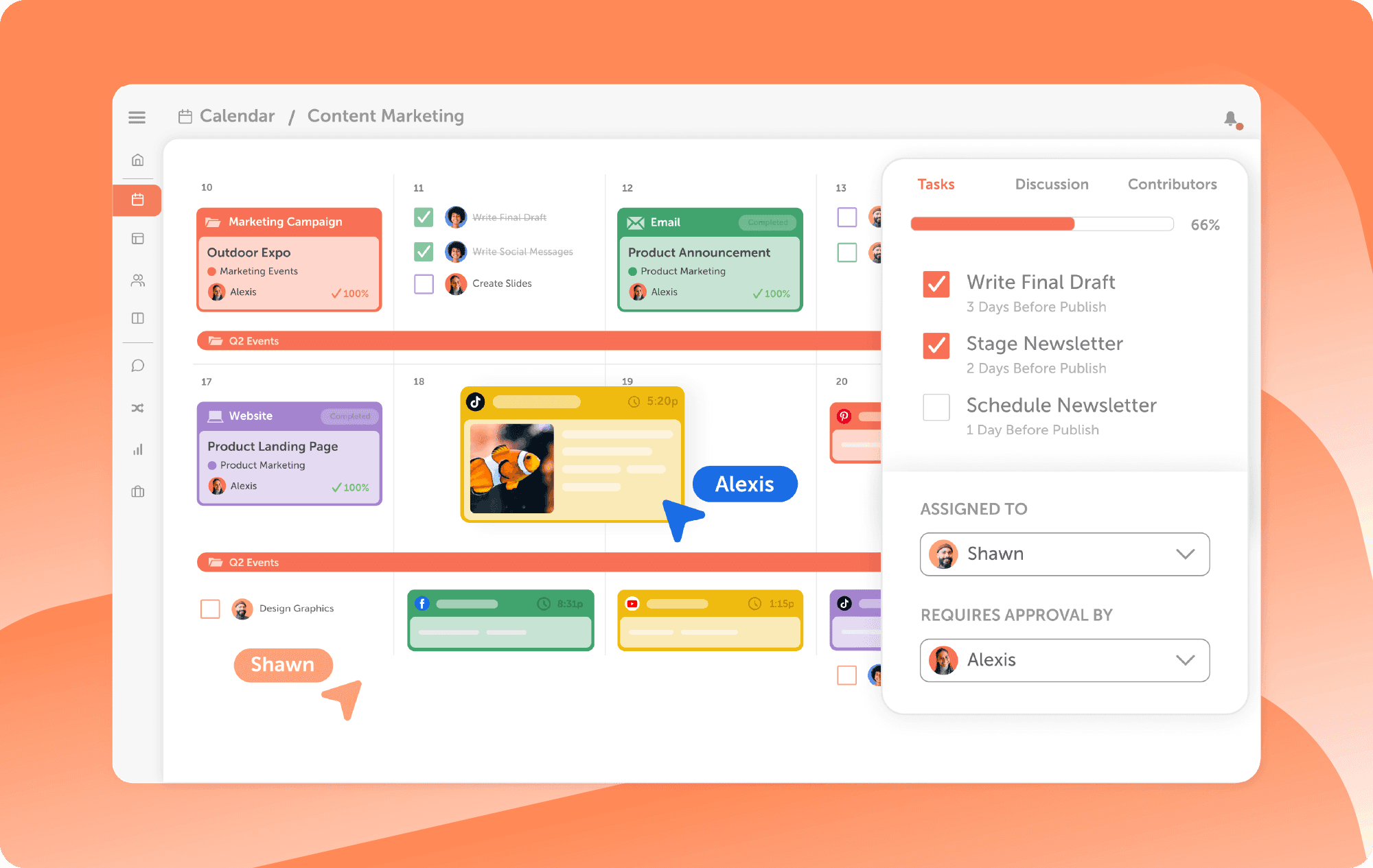
By centralizing campaign planning, content organization, and social publishing into one calendar-first workspace, CoSchedule gives manufacturing teams a clearer view of everything happening across marketing.
Why Manufacturers Choose It
Manufacturing teams frequently need to coordinate launches, educational content, sales support initiatives, recruiting campaigns, and social execution simultaneously.
CoSchedule helps teams manage those moving pieces without losing visibility.
Key Features
- Social Publishing
- Marketing calendar
- Content planning
- Campaign organization
- Approval workflows
- AI writing support
Pros
- Excellent campaign visibility
- Simple implementation
- Designed specifically for marketing teams
- Easy collaboration across stakeholders
Cons
- Advanced reporting functionality may require higher-tier plans
Pricing
- Free plan: $0 forever
- Starter: $29 per user/month
- Professional: $49 per user/month
- 14 day free trials available in paid plans
Best For
Manufacturing teams that want one platform for campaign planning and social media planning and publishing.
See how CoSchedule helps manufacturers stay organized.
2. Sprout Social
Best For Social Analytics
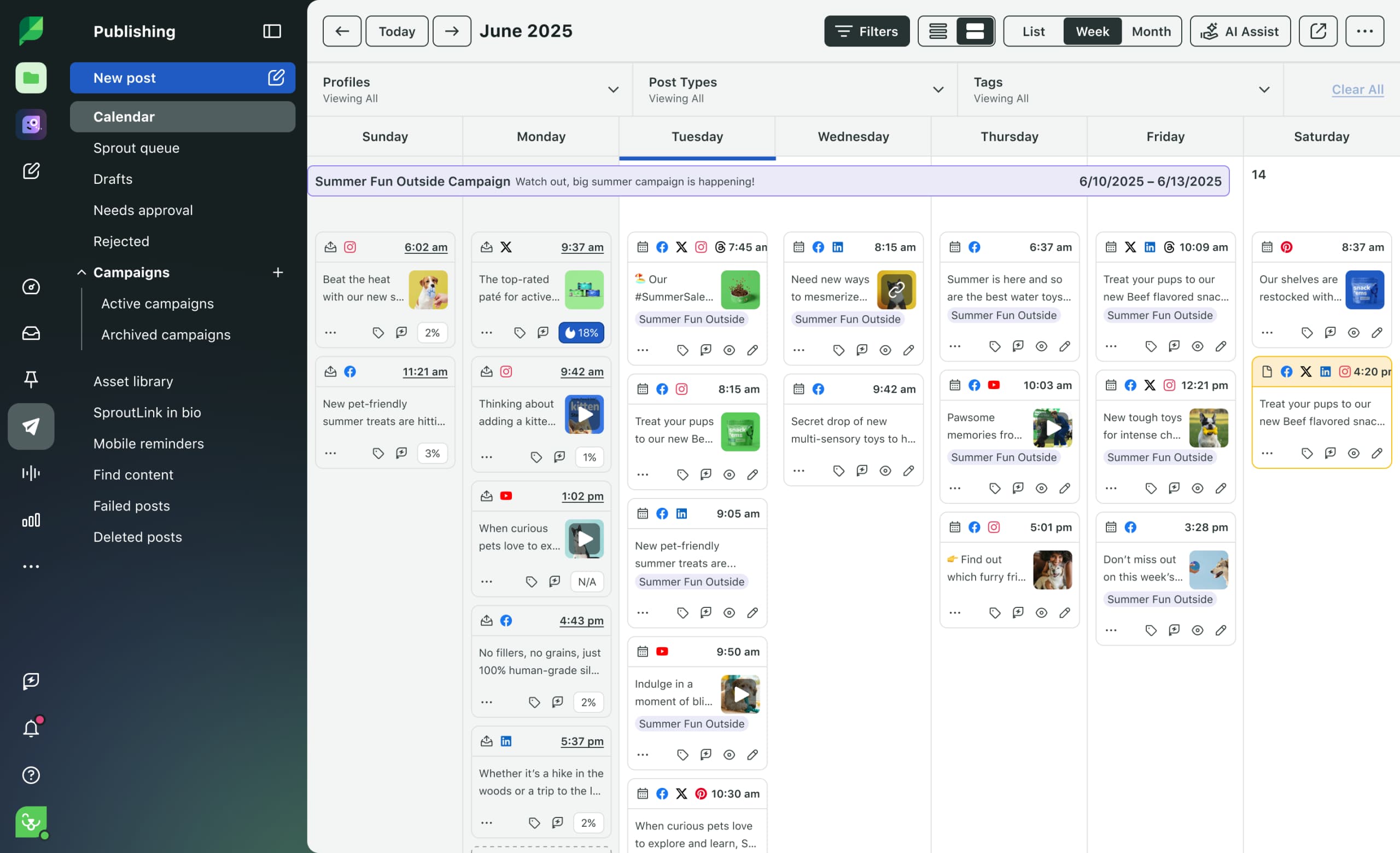
For manufacturers focused on measuring social performance and understanding audience behavior, Sprout Social offers a reporting-heavy approach to social media management.
The platform combines publishing, engagement, and analytics into a centralized workspace that helps teams understand how social content contributes to larger marketing goals.
For manufacturing organizations investing heavily in social media for manufacturers, visibility into performance can help justify ongoing investment.
Key Features
- Social scheduling
- Reporting dashboards
- Engagement tools
- Team workflows
- Competitive benchmarking
Pros
- Strong analytics and reporting
- User-friendly dashboards
- Good engagement management
Cons
- Pricing can become expensive as teams scale
- Less campaign planning depth than calendar-first tools
Pricing
- Standard: $199 per user/month
- Professional: $299 per user/month
- Advanced: $399 per user/month
Best For
Manufacturers prioritizing social analytics and performance measurement.
3. Hootsuite
Best For Large Manufacturing Organizations
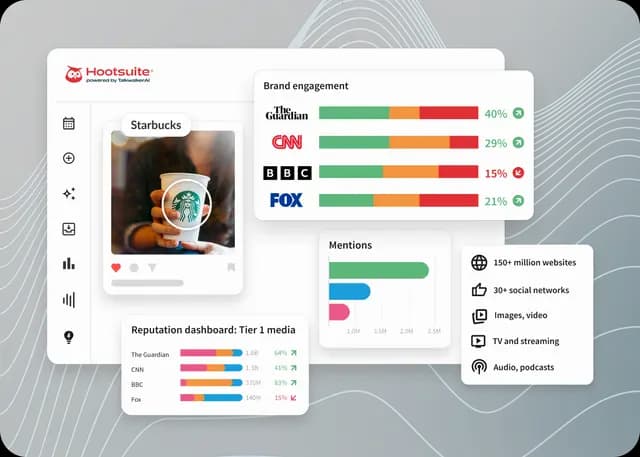
Hootsuite has long been recognized as a scalable social media platform for organizations managing large publishing volumes across multiple brands and locations.
Manufacturing organizations with distributed teams or complex approval requirements may appreciate its governance capabilities.
Its broad integration ecosystem can also support larger operational environments.
Key Features
- Multi-channel publishing
- Team permissions
- Monitoring tools
- Social listening
- Analytics
Pros
- Enterprise-ready
- Strong integration capabilities
- Mature platform
Cons
- Can feel complex for smaller teams
- Interface may require more onboarding
Pricing
- Standard: $99 per user/month
- Advanced: $249 per user/month
Best For
Large manufacturing organizations managing multiple brands or business units.
4. Buffer
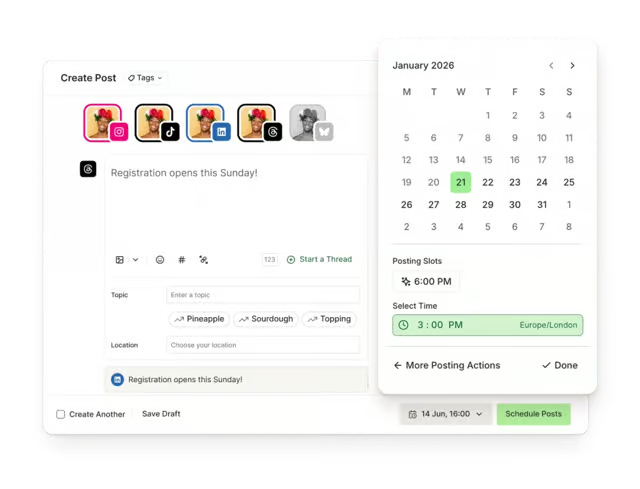
Best For Small Manufacturing Teams
Buffer is designed for simplicity.
For smaller manufacturers or lean marketing departments, Buffer offers a lightweight way to maintain publishing consistency without introducing unnecessary complexity.
It focuses primarily on content scheduling and basic reporting.
Key Features
- Content scheduling
- Lightweight collaboration
- Reporting
- Publishing calendar
Pros
- Easy to learn
- Affordable entry point
- Fast setup
Cons
- Limited advanced campaign management
- Less robust reporting
- Pay per social channel you publish on
Pricing
- Free plan: $0 forever
- Essentials: $5 per channel/month
- Team: $10 per channel/month
Best For
Small marketing teams that want straightforward scheduling.
5. Agorapulse

Best For Social Engagement
Manufacturers that prioritize customer conversations and community engagement may benefit from Agorapulse.
Its unified inbox and engagement workflows make it easier to manage interactions across multiple social channels.
For teams investing heavily in social media for manufacturers, stronger engagement processes can improve response speed and audience relationships.
Key Features
- Unified inbox
- Social scheduling
- Reporting
- Team collaboration
Pros
- Engagement-focused workflows
- Easy to manage incoming conversations
- Strong usability
Cons
- Fewer campaign planning features
- Not built around full marketing calendars
Pricing
- Standard: $79 per user/month
- Professional: $119 per user/month
- Advanced: $149 per user/month
Best For
Teams focused on managing conversations and engagement.
6. Later
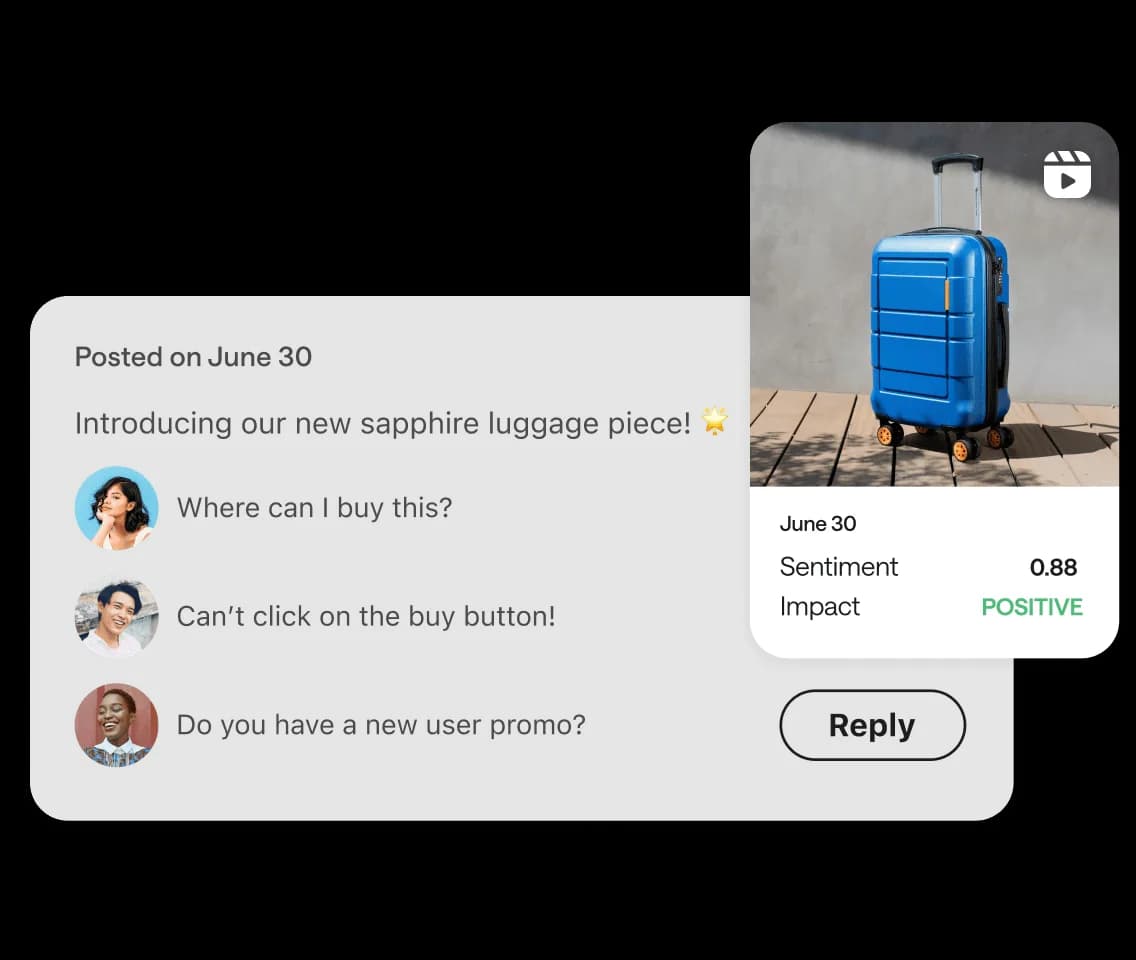
Best For Visual Manufacturing Brands
Later is often associated with visually driven industries, but manufacturing brands with strong visual storytelling strategies can also benefit.
Product demonstrations, facility tours, employee spotlights, recruiting content, and behind-the-scenes campaigns all fit naturally into visual publishing workflows.
Key Features
- Content scheduling
- Visual planning
- Publishing tools
- Media organization
Pros
- Excellent visual planning experience
- Easy publishing workflows
- Good content organization
Cons
- Less campaign management depth
- Reporting capabilities are lighter
Pricing
- Starter: $25 per user/month
- Growth: $50 per user/month
- Scale: $110 per user/month
Best For
Manufacturers producing visual-first content.
7. Brandwatch
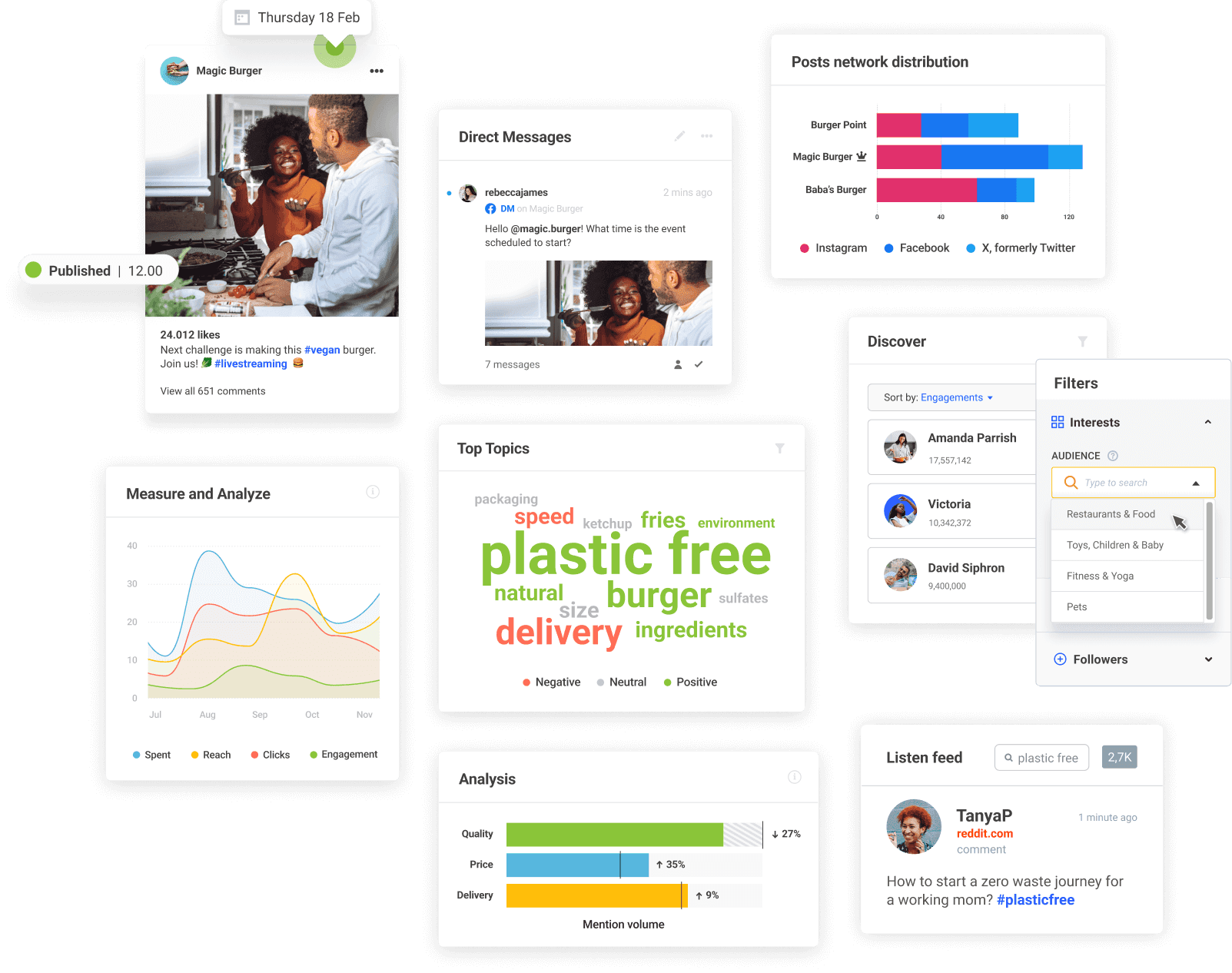
Best For Enterprise Listening And Insights
Brandwatch focuses on helping organizations understand conversations happening across digital channels.
For enterprise manufacturing teams, those insights can support market research, brand perception analysis, and audience intelligence.
While more specialized than traditional social management platforms, it can complement broader marketing strategies.
Key Features
- Social listening
- Audience insights
- Analytics
- Trend identification
Pros
- Advanced intelligence capabilities
- Strong enterprise support
- Deep audience analysis
Cons
- Higher complexity
- Larger implementation requirements
- Hidden pricing only revealed through a sales call
Pricing
- Entry-Level / Small Teams: $800 to $1,000 per month
- Mid-Market / Pro Teams: $2,000 to $5,000 per month
- Enterprise: Exceeds $5,000 to $15,000+ per month
Best For
Enterprise manufacturing organizations focused on insight gathering.
How Manufacturers Can Build A Better Marketing Workflow
Technology only creates results when paired with repeatable processes.
Here is a practical framework manufacturers can use to improve marketing execution.
Step 1
Create A Central Marketing Calendar
Marketing breaks down when teams operate independently.
Create one place where everyone can see:
- Campaign timelines
- Publishing schedules
- Ownership
- Deadlines
- Upcoming launches
Visibility reduces confusion and improves execution.
Step 2
Build Repeatable Campaign Processes
Document how campaigns move from idea to launch.
Create templates for:
- Product launches
- Social campaigns
- Content approvals
- Reporting workflows
Repeatable systems increase speed and consistency.
Step 3
Schedule Content In Advance
Publishing consistently matters more than publishing constantly.
Build content schedules that allow teams to:
- Maintain visibility
- Support launches
- Balance priorities
- Reduce last-minute work
Planning ahead also creates room for flexibility.
Step 4
Measure Performance Across Channels
Use reporting to identify:
- Top-performing campaigns
- Engagement trends
- Channel effectiveness
- Opportunities for improvement
The best marketing teams treat reporting as a decision-making tool.
Platforms like CoSchedule help connect planning, publishing, and measurement into one workflow.
Which Marketing Tool Is Best For Manufacturers?
The right platform depends on your team structure and goals.
Choose CoSchedule if:
- You manage multiple campaigns simultaneously
- You need stronger team alignment
- You want better campaign visibility
- You need planning and publishing together
Choose Sprout Social if:
- Reporting is your highest priority
Choose Hootsuite if:
- Governance and scale matter most
Choose Buffer if:
- Simplicity and affordability are priorities
Choose Agorapulse if:
- Engagement management is the primary focus
Choose Brandwatch if:
- Audience intelligence drives decisions
Frequently Asked Questions
What is the best marketing software for manufacturers?
The best manufacturer marketing software depends on team size and goals. Many manufacturers prioritize tools that combine planning, collaboration, publishing, and reporting in one place to reduce operational complexity.
What should I post about for my manufacturing business?
Manufacturers often publish:
- Product launches
- Customer success stories
- Behind-the-scenes content
- Industry education
- Employee highlights
- Recruiting campaigns
- Company updates
Consistency and educational value usually outperform promotional content alone.
What channels work best for manufacturing marketing?
Most manufacturing organizations prioritize:
- Search
- Social media
- Email marketing
- Content marketing
- Video
- Industry publications
- Events and trade shows
Channel mix should align with audience behavior.
Why do manufacturers need a content calendar?
Content calendars improve visibility, reduce bottlenecks, coordinate campaigns, and help teams maintain consistent publishing schedules.
How do manufacturing companies generate leads?
Manufacturers generate leads through:
- SEO
- Content marketing
- Social media
- Email campaigns
- Events
- Paid advertising
- Referral programs
Strong lead generation typically combines multiple channels.
Conclusion
Manufacturer marketing in 2026 requires more than publishing content consistently.
The strongest manufacturing brands build repeatable systems that connect planning, publishing, collaboration, and measurement across every campaign.
Choosing the right marketing platform helps teams stay organized, move faster, and create better customer experiences while demonstrating business impact.
For manufacturers looking to unify campaign planning and social execution in one place, CoSchedule remains one of the strongest places to start.