
How Setting Social Media Marketing Goals Helps
It’s easy to think of social media as a daily task—publishing posts, responding to comments, and keeping up with trends. But the most successful marketing teams approach it differently. They treat every post as part of a larger strategy designed to accomplish a specific business objective.
Setting clear social media marketing goals creates a roadmap for your entire marketing program. Instead of asking, “What should we post today?” you’ll begin asking, “What content moves us closer to our goals?”
Here are some of the biggest benefits of establishing measurable social media goals.
Make Better Marketing Decisions
Goals give your team a clear framework for deciding what deserves your time and resources. Rather than chasing every new trend or platform update, you can focus on initiatives that directly support your business objectives.
For example, if your primary goal is lead generation, you’ll prioritize educational content, product demonstrations, and calls to action over posts that simply generate likes.
Create More Focused Content
Without clear objectives, content often becomes inconsistent. One week you’re promoting products, the next you’re jumping on viral trends, and the week after you’re sharing company news.
When every piece of content supports a defined goal, your messaging becomes more intentional. You’ll naturally develop stronger content pillars, more cohesive campaigns, and a better experience for your audience.
Simplify Reporting
One of the biggest challenges marketers face is proving the value of social media.
If you haven’t established goals ahead of time, reporting becomes little more than listing social media metrics like impressions or engagement.
Goals give those numbers context.
Instead of saying:
“Our posts reached 75,000 people.”
You can say:
“We exceeded our quarterly brand awareness goal by increasing reach 24%.”
That kind of reporting is much more meaningful to leadership and stakeholders because it demonstrates progress toward real business outcomes.
Improve Team Collaboration
Marketing campaigns rarely involve just one person.
Designers create graphics. Writers develop copy. Social media managers schedule posts. Marketing leaders review campaigns and analyze performance.
When everyone understands the objective behind a campaign, collaboration becomes much smoother. Teams know their priorities, deadlines are clearer, and projects move forward with fewer bottlenecks.
Increase Your Social Media ROI
Ultimately, every marketing investment should contribute to business growth.
Setting measurable goals makes it much easier to improve your social media ROI because you can identify what’s working, eliminate what’s not, and continuously optimize your strategy based on performance.
Over time, those small improvements compound into stronger engagement, higher-quality leads, increased conversions, and more efficient marketing campaigns.
CoSchedule Tip
Planning campaigns in a single Marketing Calendar keeps everyone aligned around the same objective. Team members can see campaign timelines, upcoming deadlines, assigned work, and publishing schedules in one place, reducing confusion while helping every project stay focused on measurable marketing goals.
Key Takeaways
- Every successful social media strategy starts with clear, measurable marketing goals that align with your overall business objectives.
- Using the SMART framework helps you create goals that are specific, measurable, achievable, relevant, and time bound.
- Choosing the right social media KPIs makes it easier to track progress and measure success.
- A social media content calendar helps you stay consistent and ensures every post supports a larger marketing goal.
- Regularly reviewing social media analytics allows you to optimize your strategy and improve results over time.
- CoSchedule helps marketers plan campaigns, organize content, collaborate with their team, schedule posts, and measure performance from one centralized Marketing Calendar.
Step 1 Start With Your Business Objectives
The most effective social media objectives start with your business.
Before setting follower growth targets or engagement benchmarks, ask yourself what your organization is trying to accomplish over the next quarter or year. Your social media strategy should help move those larger initiatives forward.
When social media operates independently from the rest of your marketing efforts, it’s easy to create content that performs well on the platform but contributes little to the company’s overall success. Aligning your goals with business priorities ensures every campaign has a purpose beyond earning likes or shares.
Common Business Objectives And Matching Social Media Goals
Here’s how broader business goals can translate into measurable social media objectives.
Common Business Objectives And Matching Social Media Goals
| Business Objective | Social Media Goal |
|---|---|
| Increase brand awareness | Grow social reach by 20% over the next quarter |
| Generate leads | Increase demo requests from LinkedIn by 15% |
| Improve customer retention | Increase community engagement by 25% |
| Launch a new product | Drive 5,000 landing page visits during launch month |
| Increase website traffic | Grow referral traffic from social media by 30% |
| Build thought leadership | Increase content shares and save rate across key platforms |
Notice that each social media goal directly supports a broader organizational priority. This alignment makes it much easier to demonstrate how social media contributes to business growth.
Ask Yourself These Questions
If you’re unsure where to begin, answer these questions before creating any campaigns:
- What is our company trying to accomplish this quarter?
- Which business goals can social media influence?
- Who are we trying to reach?
- What action do we want our audience to take?
- How will we know if we’ve been successful?
Your answers will help define goals that are meaningful, measurable, and relevant to your organization.
Avoid Goals That Don’t Support The Business
It’s tempting to focus on metrics that are easy to measure, such as gaining followers or increasing impressions. While those metrics can indicate progress, they shouldn’t become the goal unless they directly support a business objective.
For example:
- Growing followers is valuable if you’re trying to increase brand awareness.
- Driving website clicks matters if your goal is generating leads.
- Increasing comments and conversations makes sense if you’re focused on customer engagement and retention.
Always ask one simple question:
“If we achieve this social media goal, how does it help the business?”
If the answer isn’t clear, it’s worth refining the goal before moving forward.
How CoSchedule Helps
Once you’ve established your business objectives, the next challenge is keeping every campaign connected to them.
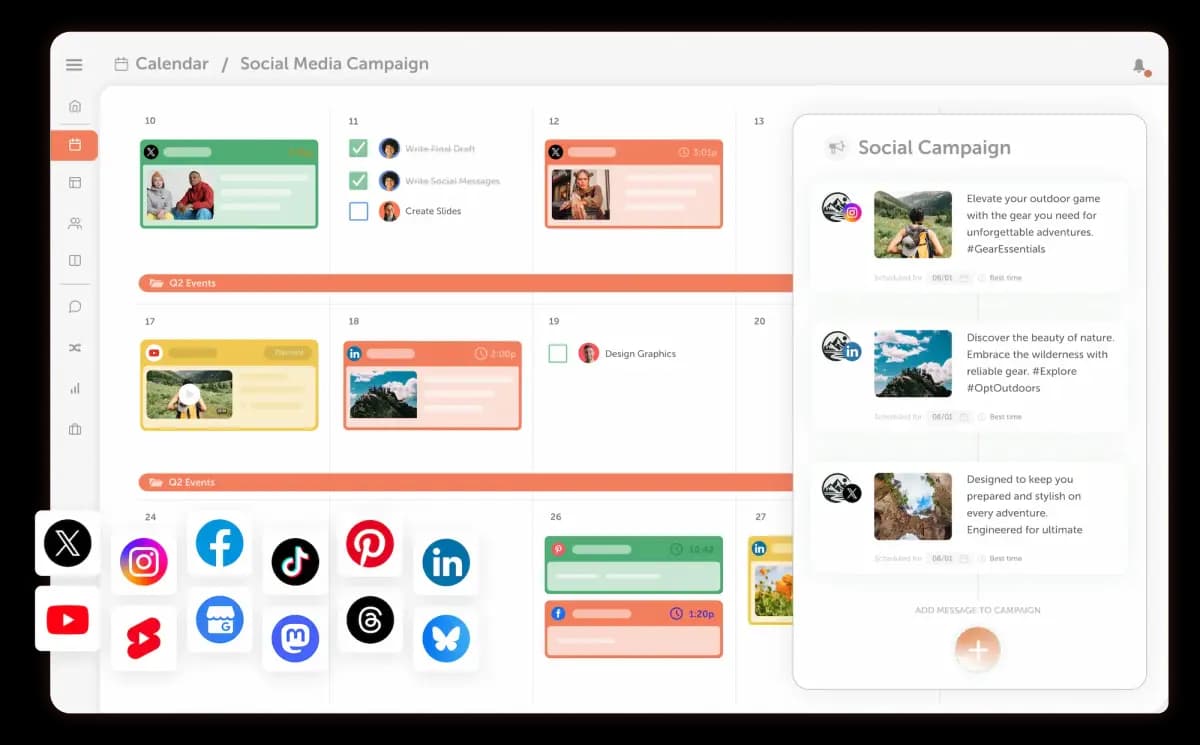
With CoSchedule Campaigns and the Marketing Calendar, you can organize every social initiative around larger marketing priorities. Instead of viewing social posts as isolated tasks, you can group them into campaigns alongside blog posts, emails, events, product launches, and other marketing activities.
This gives your team a complete view of what’s happening across marketing while ensuring every social campaign supports a measurable business objective. As priorities shift throughout the year, your calendar makes it easy to adjust timelines, reallocate resources, and keep everyone aligned around the goals that matter most.
Once your business objectives are defined, it’s time to turn them into SMART social media goals. The SMART framework transforms broad ambitions into measurable targets that are much easier to execute and evaluate.
Step 2 Create SMART Social Media Goals
Now that you’ve identified your business objectives, it’s time to turn them into actionable goals your team can actually achieve.
One of the most effective ways to do that is by using the SMART framework. SMART goals eliminate ambiguity by giving every objective a clear target, measurement, and deadline. Instead of setting broad aspirations, you’ll create goals that your team can plan for, execute, and evaluate.
Here’s what SMART stands for.
SMART Social Media Goals
| SMART Element | What It Means | Example |
|---|---|---|
| Specific | Clearly define what you want to accomplish. | Increase LinkedIn engagement. |
| Measurable | Include a metric that shows progress. | Increase engagement by 20%. |
| Achievable | Set a realistic target based on past performance. | Increase engagement from 5% to 6%, rather than expecting to double it overnight. |
| Relevant | Align the goal with a business objective. | Support a thought leadership campaign for your executive team. |
| Time Bound | Set a deadline for achieving the goal. | Reach the target by the end of Q4. |
When all five elements come together, your goals become much more actionable.
For example, instead of writing:
Increase engagement on LinkedIn.
Write:
Increase LinkedIn engagement by 20% over the next three months by publishing three educational posts each week and encouraging employee advocacy.
The second goal gives your team a clear destination and a plan for getting there.
Examples Of SMART Social Media Goals
Not every organization has the same priorities. Here are a few examples of SMART social media goals based on different business objectives.
Brand Awareness
Increase Instagram reach by 25% during the next quarter by publishing four Reels each week and partnering with three industry influencers.
Lead Generation
Generate 100 demo requests from LinkedIn during the next 90 days by promoting educational content and product webinars.
Website Traffic
Increase website sessions from social media by 30% before the end of the quarter through consistent blog promotion and optimized calls to action.
Community Engagement
Increase average engagement rate from 4% to 5% within three months by publishing more interactive content, polls, and customer stories.
Each of these goals answers four important questions.
- What are we trying to accomplish?
- How will we measure success?
- Is the goal realistic?
- When should it be completed?
That clarity makes execution much easier across your entire marketing team.
Review Your Goals Regularly
SMART goals are not meant to be written once and forgotten.
As campaigns progress, review your performance to determine whether you’re on pace to hit your targets. If business priorities change or new opportunities emerge, adjust your goals accordingly.
For example, if a product launch is moved back by a month, your publishing schedule and campaign goals should shift with it. Likewise, if you’re outperforming expectations, you may decide to increase your target or expand the campaign.
The important thing is maintaining goals that reflect your current marketing priorities.
CoSchedule Tip
Once you’ve defined your SMART social media goals, map every campaign directly onto your CoSchedule Marketing Calendar. Assign deadlines, schedule content, and visualize your publishing timeline in one place so every project stays aligned with your target completion dates. Instead of juggling spreadsheets and scattered task lists, your entire team can see exactly what needs to happen and when to achieve each goal.
Step 3 Choose The Right KPIs
After you’ve established your goals, you need a way to measure your progress.
That’s where social media KPIs come in.
Key performance indicators help you determine whether your strategy is delivering the results you expected. Instead of relying on assumptions or gut feelings, you can use data to evaluate every campaign and make smarter marketing decisions.
The key is choosing KPIs that align with your goals. Not every metric matters for every campaign.
For example, if your objective is increasing brand awareness, website conversions probably are not your primary success metric. Likewise, if you’re trying to generate leads, reach alone doesn’t tell the full story.
Focus on the social media metrics that best measure your desired outcome.
Common Social Media KPIs
Here are some of the most valuable KPIs marketers track.
Common Social Media KPIs
| KPI | What It Measures | Best Used For |
|---|---|---|
| Reach | The number of unique users who see your content | Brand awareness |
| Engagement Rate | Likes, comments, shares, saves, and other interactions | Audience engagement |
| Click Through Rate | How often people click your links | Traffic and lead generation |
| Website Traffic | Visits driven from social media | Content promotion and awareness |
| Leads | Form submissions, demo requests, or other lead actions | Demand generation |
| Conversions | Purchases, signups, or completed goals | Revenue and business growth |
Rather than trying to improve every metric at once, identify one or two primary KPIs for each campaign. This keeps your reporting focused and helps your team understand what success looks like.
Look Beyond Vanity Metrics
It’s easy to celebrate metrics like followers or post impressions because they’re highly visible.
While these numbers can indicate growth, they don’t always reflect business impact.
For example, gaining 5,000 new followers sounds impressive, but if those followers never visit your website, engage with your content, or become customers, the growth may not contribute much to your overall marketing objectives.
Instead, ask questions like:
- Did we reach more people in our target audience?
- Did engagement increase on the content that matters most?
- Did this campaign drive more website traffic?
- Did social media help generate qualified leads?
- Did our audience interact with our brand more consistently over time?
- Which types of content performed best and why?
These are the metrics that demonstrate the true value of your marketing efforts.
Build A Reporting Rhythm
Tracking KPIs isn’t something you should only do at the end of a campaign.
Create a consistent reporting schedule so you can identify trends before they become problems.
Many marketing teams review performance:
- Weekly to monitor campaign health
- Monthly to evaluate progress toward goals
- Quarterly to identify larger trends and adjust strategy
Regular reporting helps you spot opportunities, uncover underperforming campaigns, and continuously improve future results.
Turn Data Into Better Decisions
Data is only valuable if you use it to make informed decisions.
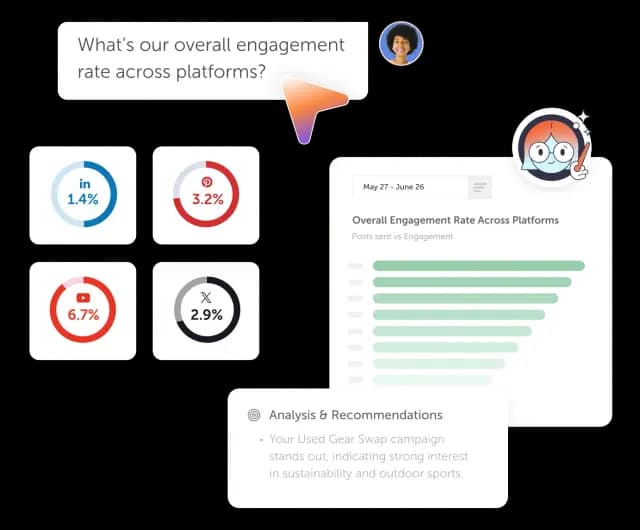
Suppose you notice that educational carousel posts consistently generate more engagement than promotional graphics. Instead of continuing to split your efforts evenly, you can increase your investment in the content that’s already working.
Likewise, if a platform consistently underperforms compared to others, you may decide to shift your time and budget toward channels that produce better results.
The more consistently you measure performance, the easier it becomes to refine your strategy over time.
CoSchedule Tip
Monitoring performance becomes much easier when your publishing and reporting live in the same platform. CoSchedule’s analytics and reporting dashboards help marketers track campaign performance, monitor key metrics, and identify trends without switching between multiple tools. With your content calendar and reporting connected, it’s easier to understand which campaigns are driving results and where to optimize next.
Step 4 Build A Social Media Marketing Strategy
Once you’ve established your goals and chosen the right KPIs, it’s time to build the strategy that will help you achieve them.
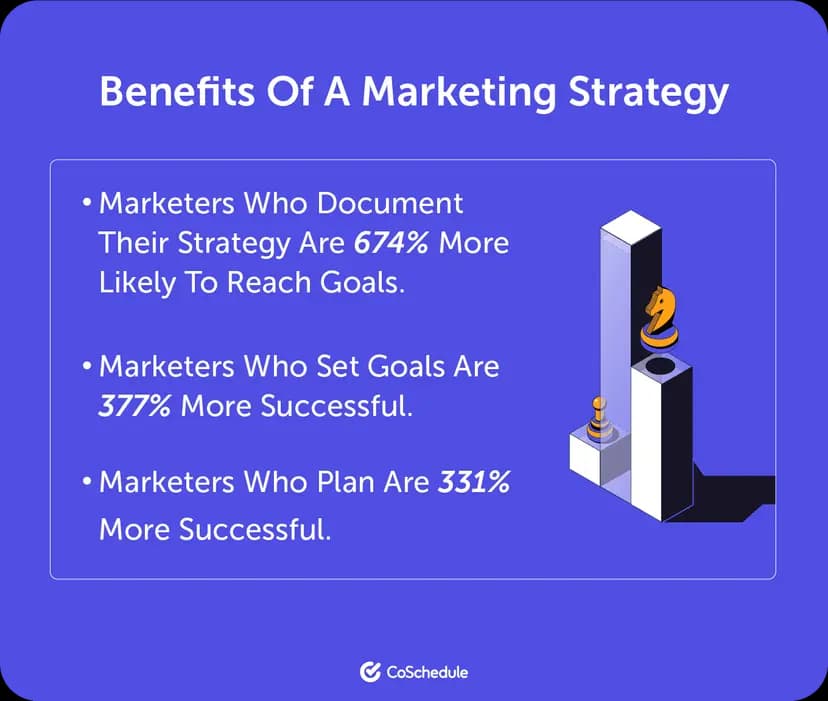
A social media marketing strategy is your roadmap. It outlines who you’re trying to reach, what you’ll publish, where you’ll publish it, and how your content will support your business objectives.
Without a strategy, it’s easy to fall into a reactive approach where you’re constantly searching for something to post. A documented plan keeps your team focused and ensures every piece of content has a purpose.
Define Your Target Audience
Your strategy should begin with a clear understanding of who you’re trying to reach.
Consider questions like:
- Who is our ideal customer?
- What challenges are they trying to solve?
- Which social platforms do they use most often?
- What type of content do they engage with?
- What motivates them to take action?
The better you understand your audience, the easier it becomes to create content that resonates with them.
Focus On The Right Platforms
You don’t need to be active on every social network.
Instead, prioritize the platforms where your audience spends the most time and where your content performs best.
For example:
- LinkedIn is often the best choice for B2B marketing, thought leadership, and lead generation.
- Instagram works well for visual storytelling, product promotion, and brand awareness.
- Facebook can help build communities and promote events.
- X is effective for real time conversations and industry news.
- TikTok excels at short form video and reaching younger audiences.
Choosing fewer platforms often leads to better results because your team can focus on creating higher quality content rather than spreading themselves too thin.
Establish Content Pillars
Content pillars are the core topics your brand consistently publishes about.
Rather than creating random posts, build your strategy around a handful of recurring themes that support your audience’s interests and your business goals.
For example, a software company might publish content about:
- Product education
- Customer success stories
- Industry trends
- Marketing tips
- Company culture
Having defined content pillars makes brainstorming easier while ensuring your messaging stays consistent over time.
Create A Consistent Posting Cadence
Consistency is one of the biggest drivers of long term social media success.
That doesn’t mean posting constantly. It means publishing on a schedule your team can realistically maintain.
For example:
- LinkedIn three times each week
- Instagram five times each week
- Facebook twice each week
- X once each weekday
A consistent publishing cadence helps your audience know what to expect while providing enough data to measure and improve your performance over time.
Plan Campaigns Instead of Individual Posts
The most successful marketing teams think in campaigns, not isolated posts.
Instead of creating content one day at a time, build campaigns around launches, seasonal promotions, webinars, events, product updates, or educational initiatives.
Campaign planning helps you:
- Keep messaging consistent across channels.
- Coordinate supporting content.
- Assign work to the right team members.
- Ensure every post contributes to a larger objective.
This approach also makes it easier to measure performance because you’re evaluating the success of an entire campaign instead of individual posts.
How CoSchedule Helps
Managing campaigns becomes much easier when everything lives in one place.
With CoSchedule, marketers can build campaigns, organize creative assets, assign tasks, collaborate with teammates, and schedule social posts from a centralized Marketing Calendar. Instead of relying on spreadsheets, email threads, and disconnected project management tools, your entire team has visibility into every campaign from planning through publishing.
Having one source of truth helps reduce missed deadlines, improve collaboration, and ensure every campaign stays aligned with your marketing goals.
Step 5 Plan Content Around Your Goals
Once you’ve built your strategy, it’s time to put it into action.
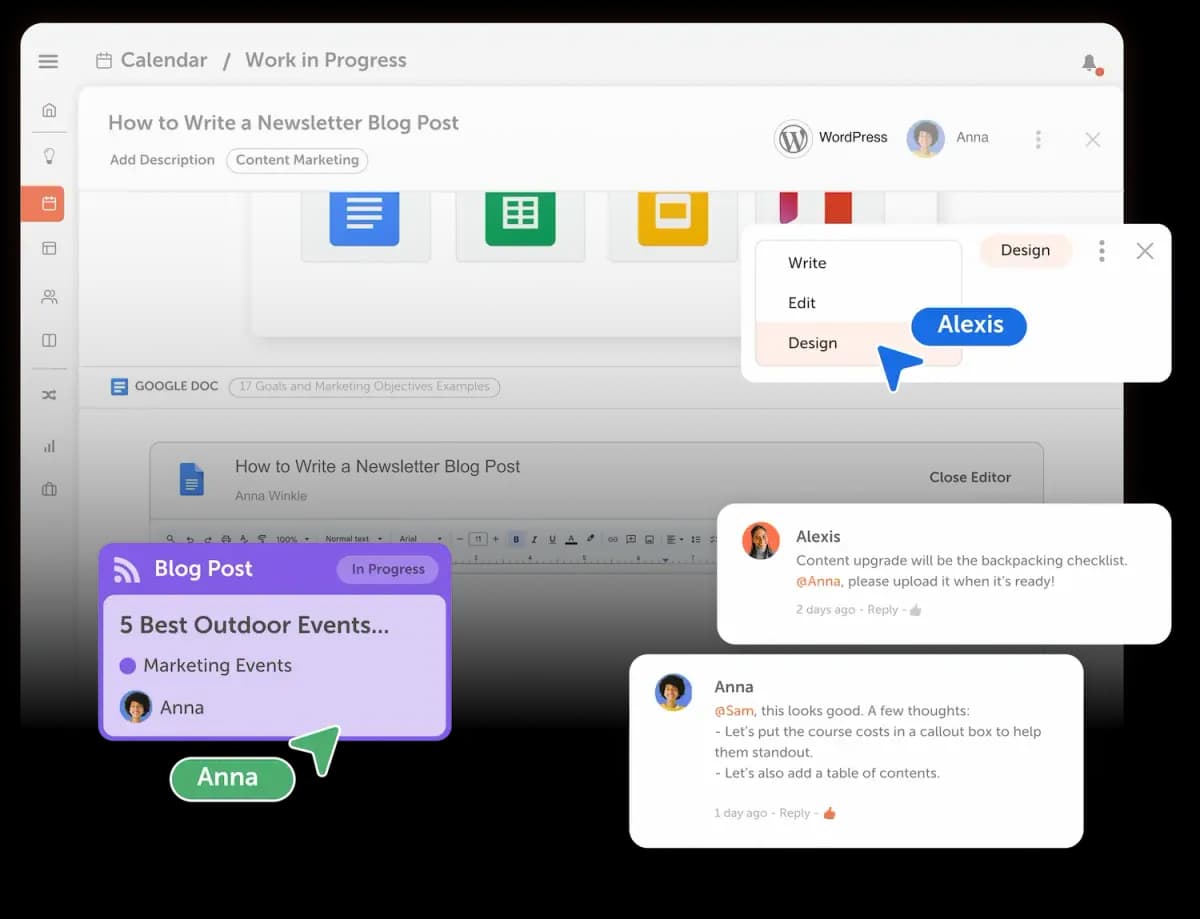
A social media content calendar bridges the gap between planning and execution. Instead of deciding what to post each day, you can organize weeks or even months of content in advance, ensuring every post supports a specific marketing objective.
Planning ahead also gives your team more time to create better content, collaborate effectively, and adapt when priorities change.
Map Every Post To A Goal
Every piece of content should have a purpose.
Before scheduling a post, ask yourself what you want it to accomplish.
For example:
- Build brand awareness
- Drive website traffic
- Generate leads
- Increase engagement
- Promote an upcoming event
- Educate your audience
- Support a product launch
If a post doesn’t support one of your goals, it may not deserve a place on your calendar.
This simple exercise helps keep your content focused and ensures your publishing efforts contribute to measurable business outcomes.
Plan Campaigns in Advance
Creating content one post at a time often leads to inconsistent messaging and unnecessary stress.
Instead, plan campaigns several weeks or months ahead.
For example, if you’re launching a new product, your calendar might include:
- Teaser posts
- Product announcement graphics
- Educational videos
- Customer testimonials
- Blog promotion
- Live event reminders
- Follow up content
Planning the entire campaign at once creates a more cohesive experience for your audience and makes it easier for your team to stay organized.
Maintain Consistency
Consistency is one of the most important factors in social media success.
Publishing regularly helps build trust with your audience while providing more opportunities to reach potential customers.
A content calendar makes consistency much easier by giving your team visibility into upcoming posts, campaign timelines, and publishing schedules.
Instead of scrambling to fill empty days, you’ll always know what’s coming next.
Balance Promotional And Educational Content
Not every post should ask your audience to buy something.
The strongest social media strategies combine promotional content with educational, entertaining, and community focused posts.
A balanced calendar might include:
- Industry insights
- How to articles
- Customer success stories
- Product updates
- Behind the scenes content
- User generated content
- Promotional campaigns
This variety keeps your audience engaged while positioning your brand as a valuable resource rather than just another company promoting its products.
CoSchedule Tip
CoSchedule makes it easy to consistently execute your social media strategy with tools designed for modern marketing teams. Use CoSchedule’s Starter Plan to plan and schedule every post, AI Assistant to generate and refine content faster, Best Time Scheduling to automatically publish when your audience is most active, and ReQueue to keep your best performing evergreen content in rotation. Built in approval workflows also make it simple to collaborate with teammates and ensure every post is reviewed before it goes live.
Step 6 Measure Results And Optimize
Creating a strategy and publishing content are important, but they only tell part of the story.
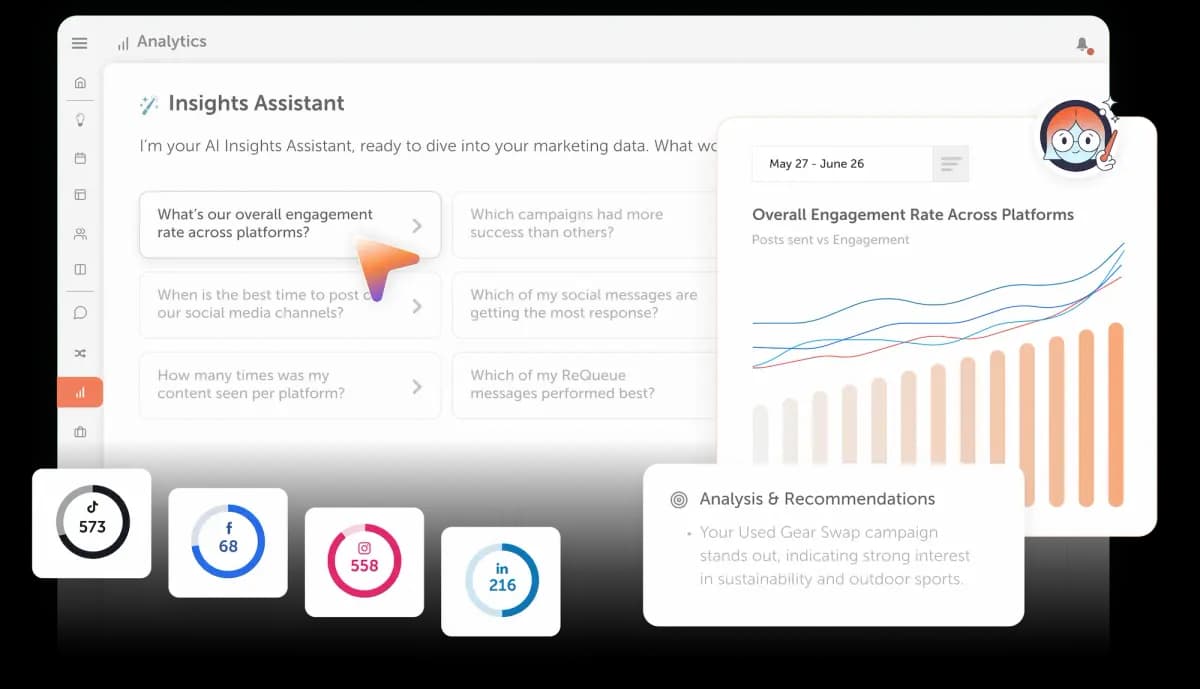
To improve your results over time, you need to regularly evaluate what’s working, identify what’s falling short, and make informed adjustments. Reviewing your social media analytics helps you understand whether you’re achieving your goals and where new opportunities exist.
Optimization isn’t about making dramatic changes after every post. It’s about consistently learning from your data and using those insights to strengthen future campaigns.
Review Performance Every Month
A regular reporting schedule helps you stay proactive instead of reactive.
Each month, review the KPIs you established earlier and compare them against your goals.
Ask questions like:
- Did we reach our target audience?
- Which posts generated the most engagement?
- Did social media drive the expected website traffic?
- Are we on pace to achieve our quarterly goals?
- Which campaigns delivered the best return?
Monthly reviews make it easier to identify trends before they become larger issues and give your team time to adjust upcoming campaigns.
Compare Results Against Your Goals
Metrics only matter when they’re measured against a benchmark.
For example, if your goal was to increase LinkedIn engagement by 20 percent, compare your current engagement rate to where you started. If your objective was generating leads, evaluate whether social media produced the number of demo requests or form submissions you expected.
This comparison helps determine whether your strategy is moving your business in the right direction.
Learn From Your Best Performing Content
Some content will always outperform the rest.
Instead of simply celebrating those wins, analyze why they were successful.
Look for patterns such as:
- Topics your audience engages with most
- Content formats that consistently perform well
- The best publishing times
- Platforms driving the highest quality traffic
- Calls to action that generate the most conversions
These insights can shape your future content strategy and help you produce better results with every campaign.
Refine Future Campaigns
Optimization is an ongoing process.
As you gather more data, use it to improve your future campaigns.
You might decide to:
- Publish more educational content because it consistently generates engagement.
- Shift your posting schedule based on audience activity.
- Invest more heavily in your highest performing platforms.
- Update your content pillars to reflect changing audience interests.
- Reallocate your marketing budget toward campaigns that produce stronger results.
Small improvements made consistently can have a significant impact over time.
CoSchedule Tip
Reviewing performance shouldn’t require hours of manually compiling reports. CoSchedule’s analytics and reporting features help marketers quickly identify what’s working, measure campaign performance, and uncover opportunities for improvement. With your planning, publishing, and reporting connected in one platform, it’s easier to optimize future campaigns using real performance data instead of guesswork.
Turn Your Social Media Marketing Goals Into Results With CoSchedule
Setting effective social media marketing goals is only the first step. Achieving them requires a repeatable process for planning campaigns, coordinating your team, publishing consistently, and measuring performance.
That’s exactly what CoSchedule is built to do.
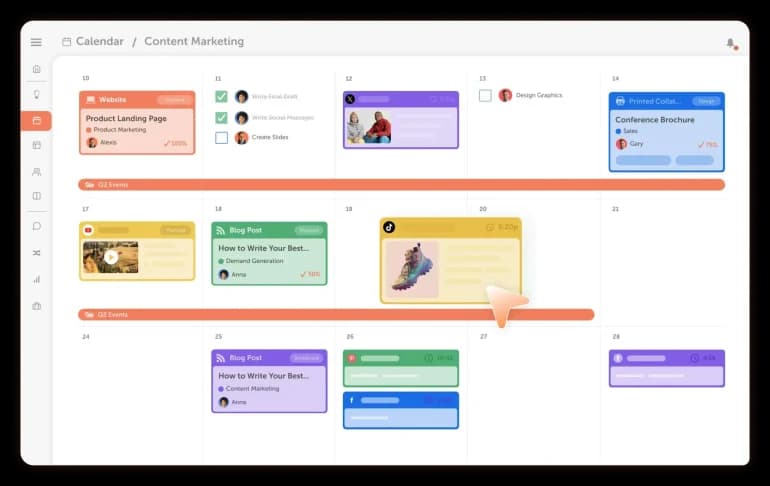
Instead of managing your marketing across disconnected spreadsheets, project management tools, and scheduling platforms, CoSchedule brings everything together in one centralized Marketing Calendar.
With CoSchedule, you can:
- Plan campaigns that align with your business objectives.
- Organize projects and marketing initiatives in one place.
- Collaborate with teammates using shared calendars, task assignments, and approval workflows.
- Schedule and publish social media posts across your channels from a single platform.
- Monitor campaign performance with built in analytics and reporting.
- Apply performance insights to continuously improve future campaigns.
When every campaign, project, and social post is connected to a measurable goal, your team spends less time managing workflows and more time delivering results.
Ready to turn your social media marketing goals into measurable business growth?
Start your free CoSchedule calendar today and see how easy it is to plan smarter campaigns, stay organized, and achieve your marketing goals.
Frequently Asked Questions
What are social media marketing goals?
Social media marketing goals are measurable objectives that define what you want your social media efforts to accomplish. These goals should support broader business priorities, such as increasing brand awareness, generating leads, driving website traffic, improving customer engagement, or increasing sales.
What are examples of SMART social media goals?
A SMART social media goal is specific, measurable, achievable, relevant, and time bound. For example, “Increase LinkedIn engagement by 20 percent over the next three months by publishing three educational posts each week” is a SMART goal because it includes a clear objective, measurement, and deadline.
How do you measure social media marketing goals?
You measure social media marketing goals by tracking relevant KPIs, such as reach, engagement rate, click through rate, website traffic, leads, conversions, or revenue. Compare these metrics against your original goals to determine whether your campaigns are achieving the desired results.
What are the most important social media KPIs?
The most important KPIs depend on your objectives. Common metrics include reach for brand awareness, engagement rate for audience interaction, click through rate for traffic generation, website visits, qualified leads, and conversions for measuring business impact.
How often should you review your social media goals?
Review your performance monthly to monitor progress and identify optimization opportunities. Conduct a more comprehensive review each quarter to determine whether your goals still align with your business priorities and make adjustments as needed.
How can CoSchedule help you achieve your social media marketing goals?
CoSchedule helps marketers connect every social media activity to larger business objectives. With a centralized Marketing Calendar, campaign planning, social media scheduling, team collaboration, AI powered content tools, approval workflows, and built in analytics, CoSchedule makes it easier to execute your strategy consistently and measure the results.